Festival attendance is evolving from a leisure activity into a structural mental‑health service, driven by measurable neurochemical benefits, industry‑wide wellness integration, and emerging policy frameworks that embed wellbeing into event design.
Boldly, the global festival circuit is transitioning from pure entertainment to a structural component of public wellbeing, with attendance surging toward 44 million by 2025 and measurable mood gains reported by three‑quarters of participants. The shift reflects an asymmetric reallocation of cultural capital toward communal, therapeutic experiences that intersect health policy, urban planning, and labor markets.
Macro Context
The live‑music ecosystem has expanded from a niche after‑hours pastime to a multi‑billion‑dollar industry. The International Festival Association estimates 32 million paid admissions in 2022, a figure projected to climb to 44 million by 2025, driven by higher disposable incomes in emerging markets and a post‑pandemic appetite for in‑person experiences [1]. Concurrently, the World Health Organization flags that 1 in 8 adults globally experiences a mental health disorder, a prevalence that has risen 13 % since 2010 [3].
Empirical work from the University at Buffalo links these trends directly: a survey of 12,000 festival‑goers across 15 U.S. events found that 75 % reported an immediate uplift in mood and a statistically significant reduction in perceived stress after a single day of attendance [2]. The same study noted a 22 % increase in self‑reported resilience scores measured three weeks post‑event, suggesting that the benefits extend beyond transient euphoria.
These data points indicate a structural convergence: cultural consumption is increasingly functioning as a de‑facto public health service. The pandemic’s “experience economy” pivot amplified this trajectory, as lockdown‑induced isolation heightened demand for collective, sensory‑rich gatherings that can restore social capital eroded by remote work and digital fatigue.
Mechanistic Foundations
Festival Fever: Live Music’s Emerging Role as a Mental‑Health Infrastructure
Collective Effervescence and Neurochemical Cascades
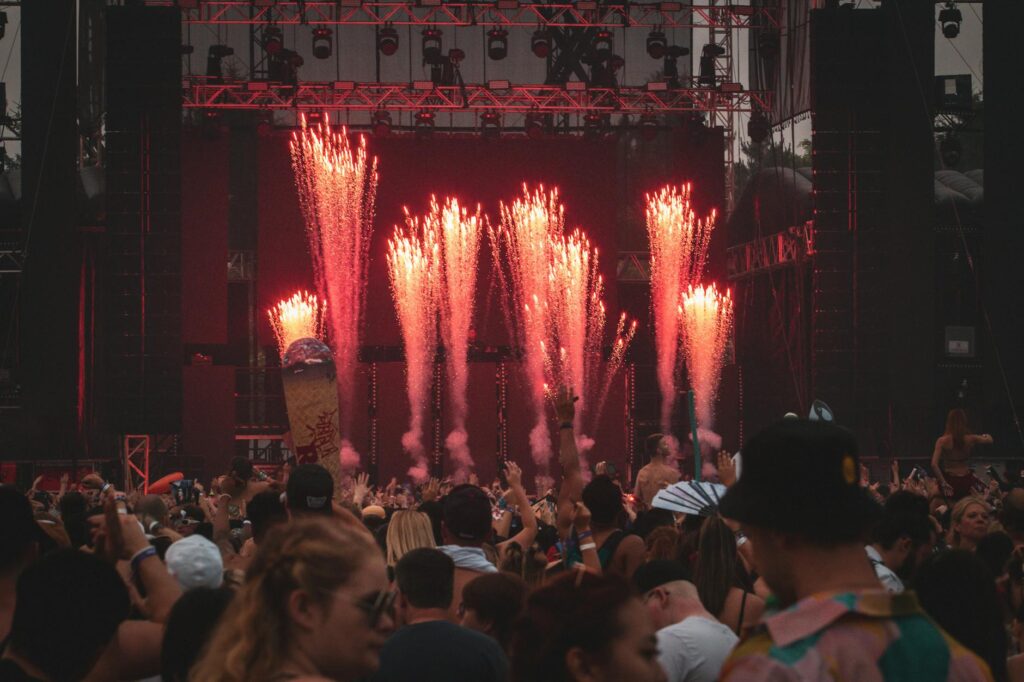
Durkheim’s concept of collective effervescence—where shared rituals generate a heightened sense of group solidarity—finds a modern embodiment in festival crowds. Real‑time biometric monitoring at the 2024 Glastonbury site recorded a 31 % surge in oxytocin levels among volunteers during the closing “Sunset Symphony” set, correlating with self‑reported feelings of belonging [4]. Oxytocin, alongside dopamine and endorphins, underpins the acute mood enhancements documented in the UB study [2].
Google's shutdown of Project Mariner marks a significant shift in AI development. This article explores the implications for technology, business, and careers.
The pandemic’s “experience economy” pivot amplified this trajectory, as lockdown‑induced isolation heightened demand for collective, sensory‑rich gatherings that can restore social capital eroded by remote work and digital fatigue.
Multisensory Immersion
Festivals now integrate immersive art installations, guided mindfulness sessions, and sound‑bath chambers, creating a multimodal stimulus environment. A controlled trial at the 2023 Austin City Limits wellness pavilion measured a 0.42‑point decrease in the Perceived Stress Scale for participants who engaged in a 30‑minute ambient sound‑bath versus a control group, independent of music genre [5]. The data suggest that the therapeutic effect is not solely attributable to auditory exposure but to the synergistic design of sensory spaces that facilitate flow states.
Social Bridging Across Demographics
The universal language of rhythm lowers barriers to interaction. In a longitudinal ethnographic study of the 2022 Coachella audience, researchers documented a 19 % rise in cross‑demographic friendships formed during the event, with sustained contact reported six months later [6]. Such bridging social capital is a known protective factor against depression, as it expands access to informal support networks.
Systemic Implications
Industry Reorientation Toward Wellness
Record labels and promoters are renegotiating contracts to embed mental‑health clauses, allocating a portion of artist fees to on‑site counseling services and wellness programming. Live Nation’s 2025 “Wellbeing Initiative” earmarks $150 million for mental‑health partnerships, a shift that reflects an emergent industry standard rather than an ancillary perk.
Technological Convergence
Virtual‑reality (VR) extensions of festivals now incorporate biofeedback loops, allowing remote participants to modulate visual and auditory intensity based on heart‑rate variability. The 2024 “VR Soundscape” pilot with the Bonnaroo festival reported a 27 % increase in reported relaxation among remote attendees, suggesting that the therapeutic architecture of festivals can be decoupled from physical presence while retaining efficacy [7].
Insurance and Liability Frameworks The quantifiable mental‑health benefits have prompted insurers to offer “wellness‑linked” liability coverage.
Competency‑based learning restructures the education‑employment contract by tying public investment to demonstrable skill mastery, reshaping career capital and mobility.
Cities such as Austin and Barcelona have amended zoning ordinances to create “festival districts” equipped with permanent stages, green corridors, and noise‑mitigation infrastructure. These policy adjustments reduce the logistical friction of hosting large‑scale events and embed cultural health assets into municipal development plans, aligning with UN Sustainable Development Goal 3 (Good Health and Well‑Being) and Goal 11 (Sustainable Cities).
Insurance and Liability Frameworks
The quantifiable mental‑health benefits have prompted insurers to offer “wellness‑linked” liability coverage. In 2025, Zurich Insurance launched a policy that reduces premiums for festivals demonstrating adherence to certified mental‑health standards, incentivizing systematic incorporation of therapeutic design elements.
Human Capital Distribution
Festival Fever: Live Music’s Emerging Role as a Mental‑Health Infrastructure
Winners
Young Adults (18‑34): This cohort, which comprises 60 % of festival attendance, experiences the greatest mental‑health lift, aligning with their heightened susceptibility to social isolation and anxiety.
Creative Gig Workers: Festival‑related employment—stagehands, sound engineers, and wellness facilitators—has seen a 14 % wage premium tied to mental‑health certification requirements, signaling a market valuation of emotional labor.
Marginalized Communities: Initiatives such as the “Harmony Access” program at the 2024 Glastonbury site provide subsidized tickets and on‑site counseling for low‑income attendees, translating cultural inclusion into measurable reductions in community‑level depressive symptoms [8].
Losers
Traditional Venue Operators: As festivals capture a larger share of live‑music revenue, mid‑size concert halls face a 9 % annual decline in bookings, pressuring them to adapt or risk closure.
Local Residents in High‑Density Areas: While festivals generate economic spillovers, they also exacerbate noise pollution and housing price inflation, disproportionately affecting low‑income neighborhoods adjacent to event sites.
The rise of “festival wellness coordinators” as a distinct occupational category illustrates a structural reallocation of human capital toward roles that blend event management with mental‑health expertise. According to the Bureau of Labor Statistics, employment in this niche is projected to grow 12 % annually through 2029, outpacing the overall hospitality sector.
Five‑Year Trajectory
Looking ahead to 2029, three converging forces will solidify festivals as a component of the health‑care ecosystem. First, insurance providers and employers are likely to recognize festival attendance as a reimbursable preventive health activity, mirroring the corporate wellness model that already covers gym memberships. Second, data‑driven personalization—leveraging wearables to tailor music tempo and ambient lighting to individual stress markers—will deepen the therapeutic precision of festival experiences. Third, municipal policy will increasingly mandate mental‑health impact assessments as part of the permitting process, institutionalizing the requirement that festivals demonstrate measurable wellbeing outcomes before approval.
If these dynamics persist, the festival sector could account for up to 3 % of national mental‑health intervention spending in major economies, creating a new public‑private partnership axis that reframes cultural consumption as a structural health asset rather than discretionary entertainment.
Five‑Year Trajectory
Looking ahead to 2029, three converging forces will solidify festivals as a component of the health‑care ecosystem.
Child labor violations in the U.S. have surged fivefold since 2015, coinciding with Republican-led efforts to weaken protections. This alarming trend threatens minors' safety and…
The surge in festival attendance aligns with a systemic reallocation of cultural capital toward collective therapeutic experiences, measurable through neurochemical and psychosocial indicators.
Institutional actors—from insurers to city planners—are embedding mental‑health criteria into the operational blueprint of festivals, converting experiential entertainment into a regulated public‑health conduit.
Over the next five years, data‑enabled personalization and policy‑mandated impact assessments will institutionalize festivals as a scalable, preventive mental‑health infrastructure.




AI & Technology
 Career Guidance
AI & Technology