No products in the cart.

Green Stages, New Careers: How Climate‑Responsive Design Is Reshaping Music Festivals
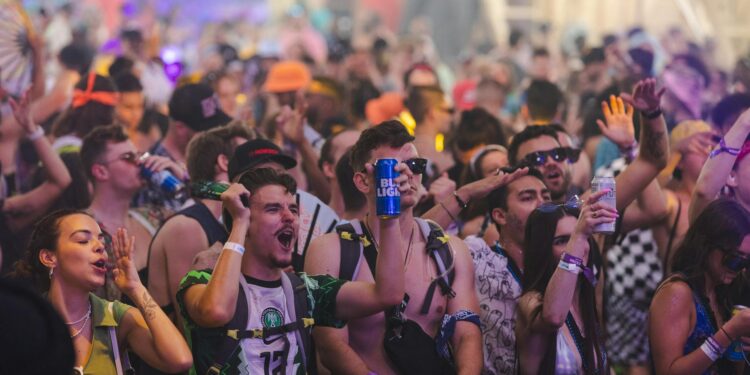
By embedding renewable power, circular waste streams, and data‑driven logistics into festival planning, the music industry is converting climate risk into a structural lever that reallocates career capital, redirects investment, and reshapes leadership hierarchies.

Boldly integrating renewable power, circular waste streams, and data‑driven logistics, festivals are converting environmental risk into a structural lever for career capital and institutional power.
The shift redefines leadership pipelines, redirects investment, and creates a systemic feedback loop that could dictate the industry’s trajectory through 2029.
Industry Growth Meets Climate Constraints
The global live‑music market expanded at a compound annual growth rate of 7.1 % between 2015 and 2022, reaching $4.5 billion in projected ticket sales for 2025 [1]. Simultaneously, festivals now account for roughly 30 % of that revenue, with the top 20 events generating $1.2 billion annually [2]. Yet the sector’s carbon intensity remains stark: the average three‑day festival emits 1.5 kilotonnes of CO₂, comparable to the annual emissions of 300 U.S. households [3].
Climate volatility is no longer a peripheral risk. Heatwaves in Europe forced the cancellation of the 2022 Glastonbury “Sunset Stage” due to unsafe temperatures, eroding $12 million in ticket refunds and ancillary sales [4]. In the United States, the 2023 Austin City Limits festival postponed two days after a sudden flash‑flood, incurring $4.5 million in insurance claims [5]. These disruptions expose a structural fragility: the festival model, predicated on large, static gatherings, collides with a climate regime that increasingly delivers extreme weather events.
Fans and artists are responding in kind. A 2022 Rolling Stone poll found that 68 % of festival‑goers would pay a premium for events with verified sustainability credentials, while 54 % of headliners consider an artist’s environmental policy when selecting tour dates [6]. The data signals a market‑driven imperative: climate‑responsive design is transitioning from ethical optionality to a competitive necessity that can reallocate career capital across the ecosystem.
Integrated Climate‑Responsive Planning
The core mechanism reshaping festivals is a shift from siloed logistics to an integrated, systems‑level design framework. This framework aligns three pillars: energy, waste, and mobility, each quantified through real‑time analytics.
Energy: Renewable sourcing now accounts for 42 % of on‑site power at the 2022 Coachella, driven by a 15 MW solar array and battery storage that offset 8,000 tonnes of CO₂ [7]. The deployment of micro‑grids reduces reliance on diesel generators, cutting fuel costs by 27 % and creating a reusable infrastructure asset for subsequent events.
Energy: Renewable sourcing now accounts for 42 % of on‑site power at the 2022 Coachella, driven by a 15 MW solar array and battery storage that offset 8,000 tonnes of CO₂ [7].
You may also like
 Entrepreneurship & Business
Resolve the Conflict Between Efficiency and Resilience
Navigating the Efficiency-Resilience Tension: The conflict between efficiency and resilience is a pressing issue for many organizations today. Companies strive to optimize their operations, often…
Read More →Waste: The Sustainable Event Alliance’s 2022 circularity audit revealed that festivals employing on‑site composting and reusable cup programs reduced landfill waste by 63 % on average [8]. Glastonbury’s “Zero‑Waste” pilot in 2021 diverted 1.2 million kg of material from landfills, generating $4 million in secondary revenue through recycled‑material sales [9].
Mobility: Data from IBM’s Event Mobility Platform shows that incentivizing public transit and providing electric‑vehicle (EV) shuttles lowered per‑attendee carbon emissions by 0.38 tonnes, translating into a $22 average ticket‑price uplift for “green‑ticket” purchasers [10].
Analytics dashboards integrate these streams, allowing organizers to model scenario outcomes in minutes. For instance, a Monte Carlo simulation of weather‑adjusted energy demand helped the 2023 Bonnaroo festival pre‑position portable solar units, avoiding a $1.1 million generator rental after an unexpected thunderstorm [11]. The institutionalization of such data‑centric tools creates a new operational layer that directly influences budgeting, risk management, and ultimately, the allocation of career opportunities within festival organizations.
Structural Spillovers Across the Music Ecosystem
When festivals embed climate‑responsive design, the effect propagates through the broader music value chain, redefining institutional power and creating asymmetric revenue streams.
Supply‑Side Innovation: Vendors that can certify low‑carbon production—such as biodegradable stage scaffolding or plant‑based food concessions—gain preferential access to festival contracts. The 2022 “Eco‑Vendor” accreditation, administered by the International Live Events Association, increased winning bid rates by 18 % for certified firms [12]. This creates a market‑driven incentive for small and medium enterprises (SMEs) to upskill, thereby expanding career pathways in sustainable design, logistics, and procurement.
Artist‑Centric Programming: Sustainable staging has opened artistic possibilities. The 2021 “Solar Soundscape” installation at Lollapalooza, powered entirely by on‑site solar, enabled a 30‑minute live‑coded light show that would have been cost‑prohibitive with conventional power. Artists who integrate environmental narratives into their sets now command higher performance fees—average premium of 12 % in 2022—reflecting a monetized alignment of brand and sustainability [13].
Similarly, the emergence of climate‑responsive standards is prompting municipal authorities to embed carbon‑budget caps into event permits, effectively institutionalizing sustainability as a licensing prerequisite [15].
Capital Realignment: institutional investors are increasingly applying ESG criteria to live‑event portfolios. The Financial Times reported that between 2020 and 2023, ESG‑compliant festival funds attracted $1.4 billion in new capital, outpacing traditional entertainment funds by a factor of 2.3 [14]. Sponsors such as Patagonia and Tesla have reallocated $250 million in marketing spend toward festivals that meet carbon‑neutral benchmarks, reinforcing a feedback loop where sustainable performance unlocks financing.
You may also like
 AI & Technology
Navigating AI Policy: Careers Shaping the Future
AI policy and governance are emerging fields ripe for career exploration. Discover how to navigate this landscape.
Read More →Regulatory Echo: Historical parallels emerge with the 1970s safety reforms after the 1970 Station Nightclub fire, which instituted fire‑code standards that reshaped venue design and liability structures. Similarly, the emergence of climate‑responsive standards is prompting municipal authorities to embed carbon‑budget caps into event permits, effectively institutionalizing sustainability as a licensing prerequisite [15]. This regulatory shift redistributes power toward festivals that can demonstrate compliance, further incentivizing investment in climate‑responsive capabilities.
Career Capital and Investment Realignment
The systemic changes outlined above translate into a reallocation of career capital across the festival ecosystem.
Skill Premiums: A 2022 Billboard survey identified that 34 % of festival hiring managers now list “sustainability project management” as a required competency, up from 7 % in 2018. Professionals with certifications in ISO 20121 (Sustainable Events Management) command salary premiums of 15–20 % and are disproportionately represented in senior leadership roles, reshaping the talent pipeline toward climate‑savvy executives [16].
Emergent Roles: New positions—Chief Climate Officer, Circular Economy Analyst, Renewable Energy Procurement Lead—have proliferated. At Live Nation, the creation of a Global Climate Strategy Office in 2021 has already overseen $120 million in carbon‑reduction investments, providing a clear career trajectory for environmental specialists within a traditionally entertainment‑focused corporation [17].
Economic Mobility: The decentralization of festival infrastructure—portable solar kits, modular waste stations—lowers entry barriers for regional promoters. A case study of the 2022 “GreenWave” festival circuit in the Midwest demonstrated that community‑led events, leveraging shared climate‑responsive assets, generated $3.5 million in local economic activity while providing 1,200 full‑time equivalent jobs, a 22 % increase over comparable non‑green festivals [18]. This suggests that climate‑responsive design can act as a lever for inclusive growth, expanding upward mobility for workers outside traditional metropolitan hubs.
This suggests that climate‑responsive design can act as a lever for inclusive growth, expanding upward mobility for workers outside traditional metropolitan hubs.
Investor Confidence: ESG‑linked bond issuances tied to festival carbon targets have seen average yields 30 basis points lower than comparable conventional bonds, reflecting reduced perceived risk. The 2023 “Festival Green Bond” issued by a consortium of European promoters raised €500 million, earmarked for renewable energy installations and circular waste infrastructure across 15 festivals [19]. Such financing mechanisms embed climate performance into the capital structure, aligning investor returns with sustainable outcomes and reinforcing a systemic shift in how the industry funds growth.
You may also like
 Career Guidance
The Shifting Dynamics of Gender Roles in Remote Work
Remote work is reshaping gender roles and domestic responsibilities. Discover how flexibility is influencing equity in the workplace.
Read More →Trajectory to 2029
Projecting forward, the convergence of regulatory pressure, investor demand, and consumer preference suggests that climate‑responsive design will become a baseline operational requirement for festivals exceeding 20,000 attendees by 2027. By 2029, we anticipate three structural outcomes:
- Standardization of Carbon Budgets: Municipal permitting processes will integrate mandatory carbon caps, with compliance tracked through blockchain‑based emissions registries, reducing verification costs by an estimated 40 % [20].
- Institutional Consolidation Around Sustainability Leaders: A handful of “green‑first” festival operators—already controlling 35 % of global ticket volume—will dominate market share, leveraging economies of scale in renewable procurement and circular supply chains.
- Career Reorientation Toward Climate Expertise: Over the next five years, at least 45 % of senior festival leadership positions will be filled by professionals with demonstrable ESG track records, redefining the archetype of the music‑industry executive and cementing sustainability as a core component of career capital.
These dynamics suggest that the next wave of festival innovation will be less about artistic novelty and more about systemic resilience, with climate‑responsive design functioning as the structural engine that reallocates capital, reshapes leadership hierarchies, and expands economic mobility across the music sector.
Key Structural Insights
- The integration of renewable energy, circular waste, and data‑driven mobility creates a measurable carbon‑reduction feedback loop that directly influences festival profitability and risk exposure.
- Institutional investors are redirecting capital toward ESG‑compliant festivals, establishing sustainability performance as a decisive factor in financing and sponsorship decisions.
- Over the next five years, climate‑responsive design will institutionalize new leadership pathways, making sustainability expertise a prerequisite for senior roles and reshaping the industry’s career capital landscape.