No products in the cart.

Why SES AI is Leading the Battery Industry’s AI Revolution
Discover how SES AI is pivoting from traditional battery manufacturing to AI-driven materials discovery, reshaping the battery industry landscape.

The Battery industry’s AI Pivot: A strategic Shift
The CEO of SES AI, Qichao Hu, says almost every Western battery company will either die or struggle to survive. This is because Chinese companies like CATL and BYD now produce more than half of the world’s battery cells. The prognosis for U.S.-based manufacturers is not good.
A New Era for Battery Companies: From Lithium to AI
SES AI’s story began at MIT, where Hu researched batteries that could withstand high heat. The team developed a solid polymer lithium-metal architecture that could store more energy than traditional lithium-ion cells. However, the market for these batteries was small, so the company shifted its focus.
The technology spun out of MIT in 2012 as Solid Energy. Early prototypes showed promising results, but the market for high-temperature batteries was too small. The company’s commercial outlook changed quickly.
This pivot became the core of the business plan, with the original cell-manufacturing line relegated to niche applications.
By 2021, the company rebranded as SES AI and shifted its focus to applying AI methods to discover new battery materials. This pivot became the core of the business plan, with the original cell-manufacturing line relegated to niche applications.
SES AI’s Pivot: From Advanced Lithium Metal Batteries to AI Materials Discovery
The new platform ingests a growing database of synthesized molecules, electrolyte formulations, and charge-cycle logs. According to Hu, the system can propose a viable electrolyte recipe in under 48 hours, a timeline that would traditionally require 12 to 18 months of experimentation.
SES AI now has two revenue streams. First, the company licenses the discovery engine to other battery makers, charging a fee that scales with production volume. Early contracts have generated multi-million-dollar deals. Second, SES AI sells pre-validated material “kits” that can be dropped into existing production lines.
The Impact on the Industry: A Shift in the Balance of Power
For EV makers, the economics remain challenging. The current floor price for a kilowatt-hour of cell output is about $89. SES AI’s internal models suggest that a large-scale plant would require significant capital expenditures and a selling price just to break even.
You may also like
 Career Guidance
Aligning Hiring and Retention Strategies in a Remote World
Learn how companies can align hiring and retention strategies with today's work culture to enhance employee satisfaction and productivity.
Read More →By contrast, the commercial drone segment is growing rapidly, with small-UAV contracts from the U.S. Army calling for thousands of 2- to 4-Ah cells each month. This is the sweet spot for SES AI’s high-energy, low-volume chemistry.
First, the company licenses the discovery engine to other battery makers, charging a fee that scales with production volume.
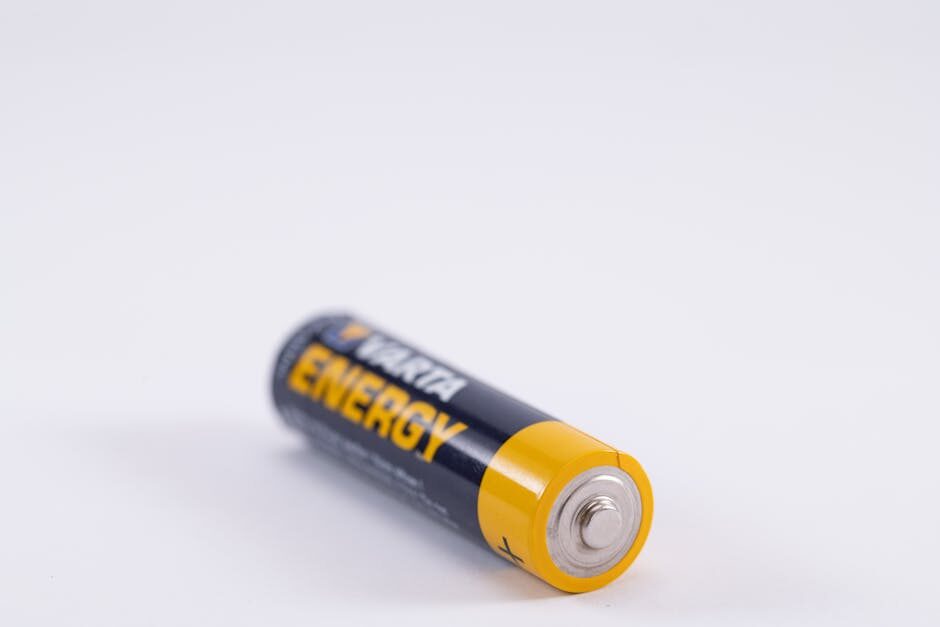
strategic Perspective: The Long-Term View for Battery Companies
The shift from hardware-heavy manufacturing to data-centric services mirrors a broader trend in the energy sector. The Inflation Reduction Act’s tax credit rewards domestic cell production, but its requirement that at least 40 percent of material value come from U.S. or free-trade-agreement sources makes lithium-metal anodes financially untenable for most U.S. firms.
Critical Insights: Three Scenarios for 2030
- Licensing dominates. If the platform scales, SES AI could become a leading supplier of validated material sets to a diversified set of non-Chinese cell makers and stabilize its market cap.
- Commodity rebound. A sharp rise in lithium carbonate prices might revive the economics of large-format lithium-metal cells, prompting a partial reversal of the AI pivot.
- Open-source erosion. If major AI labs release comparable materials-discovery models, licensing fees could collapse, forcing SES AI to reposition as a specialty-chemicals supplier.
Critical Insights: The Future of the Battery Industry
The SES AI case illustrates a fundamental unbundling of the battery value chain. Capital-intensive cell factories are increasingly concentrated in a handful of Asian players, while the intellectual capital that predicts performance, longevity, and safety migrates to data platforms.