No products in the cart.

Mistral AI Secures €830 Million for Paris Data Center
Mistral’s €830 Million Bet: A Data-City Rises Outside Paris There’s a quiet valley south of Paris where cows still outnumber servers—for now.

Mistral’s €830 Million Bet: A Data-City Rises Outside Paris
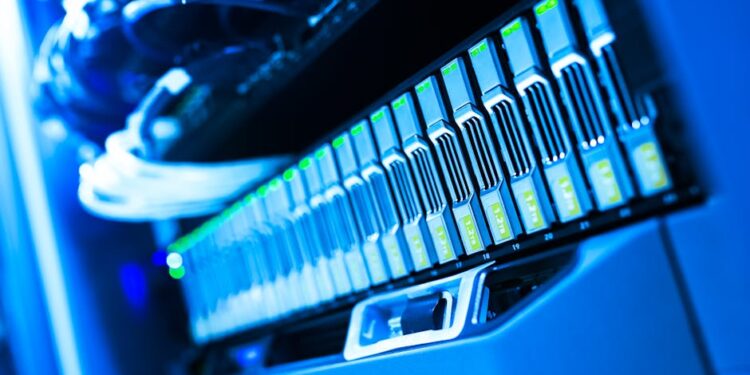
There’s a quiet valley south of Paris where cows still outnumber servers—for now. By the second quarter of 2026, Mistral AI plans to flip that ratio. The French start-up has just locked in €830 million in project-finance debt to pour concrete, string fiber, and rack Nvidia GPUs inside a former military site at Bruyères-le-Châtel. When the cranes leave, the bunker-like shell will house 200 megawatts of compute—enough to train frontier-scale models without sending jobs across the Atlantic.
Why Nvidia, Why Here
Mistral didn’t shop around. It went straight to Nvidia, pre-ordering Hopper and Blackwell accelerators on a five-year delivery schedule. The message to Brussels: if Europe wants sovereign AI, it needs silicon on European soil. Governments, telcos, and pharma giants have already reserved slices of the cluster; they’re willing to pay a premium for GDPR-certain workloads that never leave the bloc.
Paris Is Just the First Rack
The company’s longer ledger shows another €1.4 billion earmarked for Sweden—think cooler air, surplus hydro, and a grid that can be expanded in months, not years. Add the two builds together and Mistral’s capital commitments top €2.2 billion, a figure that dwarfs every European AI infra round outside the hyperscalers.
Governments, telcos, and pharma giants have already reserved slices of the cluster; they’re willing to pay a premium for GDPR-certain workloads that never leave the bloc.
Rebellions’ $400 Million Nudge
While Mistral digs, South Korea’s Rebellions is polishing a different piece of the puzzle. The Seoul-based chip designer closed a $400 million pre-IPO round this month at a $2.3 billion valuation. Its ATOM and Rebel lines don’t try to out-muscle Nvidia at training; they’re tuned for low-latency inference—exactly what you need when millions of users pepper a model with chat queries. Expect the proceeds to finance new masks at Samsung’s 4-nm node and sales teams in Tokyo, Riyadh, and Austin.
200 Megawatts Isn’t a Number—It’s a Statement
Industry rule of thumb: one modern GPU draws about a kilowatt. Do the math and Mistral’s 200 MW implies room for roughly 200,000 accelerators, or ten medium-sized models running in parallel. That’s still pocket change next to a single Microsoft or Google region, but it’s an order of magnitude larger than any European lab has ever controlled. More importantly, it gives Mistral bargaining power: it can auction spare cycles to researchers, startups, or even rival nations that suddenly need capacity.
Europe’s Window Is Narrow, Not Closed
You may also like
 Career Guidance
Regenerative Design Reshapes Value‑Driven Product Management and the Careers Built Around It
Regenerative product design is restructuring corporate purpose, reallocating institutional power, and creating new career capital pathways for product managers, suppliers, and executives alike.
Read More →Policy watchers keep repeating the same line: Europe missed the cloud wave, missed the mobile OS wave, and can’t afford to miss the AI wave. Mistral’s financing suggests the continent still has one advantage—cheap capital. With export controls locking Nvidia’s latest GPUs out of China, European utilities sitting on stranded renewables, and pension funds desperate for long-dated infrastructure yield, the pieces fit. Whether they fit fast enough is the question that’ll decide if Bruyères-le-Châtel becomes a footnote or the continent’s first AI gravity well.