No products in the cart.

Adaptive Edge: How Sports Technology Is Re‑shaping Institutional Power and Career Capital for Athletes with Disabilities
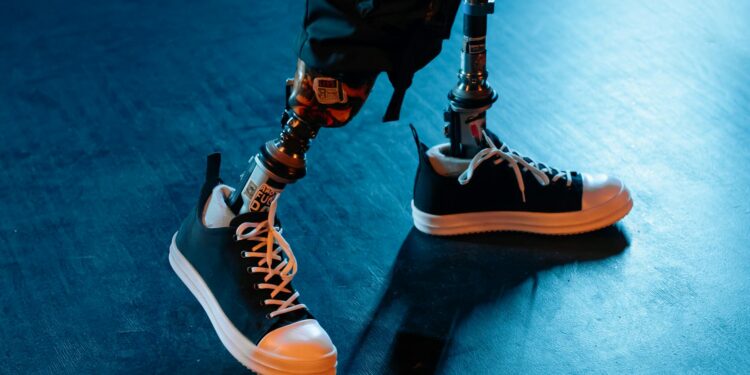
Adaptive sports technology is converting performance enhancements into institutional leverage, spawning high‑growth career pathways and reshaping the economics of inclusion across the global sports ecosystem.

The convergence of wearables, AI‑driven analytics and next‑generation prosthetics is turning disability sport from a niche pursuit into a structural engine of economic mobility and leadership development.
—
Opening – Macro Context
The global sports‑technology market is projected to exceed $25.7 billion by 2025, propelled by a 12 % compound annual growth rate that reflects expanding investment in wearables, real‑time analytics and immersive training platforms [3]. Within that trajectory, adaptive sports technology has moved from experimental prototypes to commercial scale, driven by three converging forces:
- Policy pressure – The United Nations Convention on the Rights of Persons with Disabilities codifies equal access to sport as a human right, compelling national federations and sponsors to embed inclusion in funding criteria [4].
- Capital inflow – Venture capital allocated to assistive‑device startups grew 45 % year‑over‑year between 2021 and 2024, with notable rounds for firms such as Össur, Open Bionics and BCI‑Sports [1].
- Performance imperatives – The International Paralympic Committee (IPC) now mandates minimum technology standards for competition equipment, creating a de‑facto market for high‑performance adaptive gear [3].
These macro forces have transformed disability sport from a peripheral activity into a systemic lever that reshapes institutional power, creates new career pathways, and reconfigures the economics of athletic participation.
—
Core Mechanism – Adaptive Technology as the Engine of Inclusion
1. High‑Performance Prosthetics and Mobility Platforms
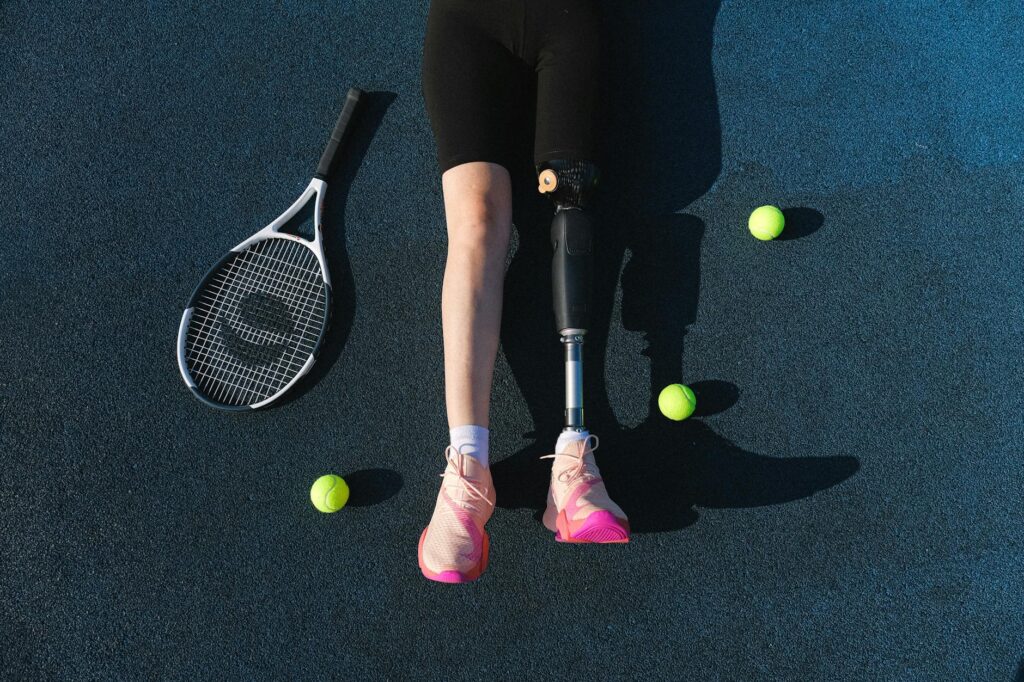
Carbon‑fiber prosthetic blades, exemplified by Össur’s Flex‑Foot Cheetah, have cut sprint times for T44 athletes by an average of 0.12 seconds per 100 m since 2016, a margin comparable to the performance gap closed by elite able‑bodied sprinters through training alone [1]. Parallel advances in racing wheelchairs—lightweight titanium frames, aerodynamic seat‑back designs, and integrated telemetry—have reduced marathon times by 3 % across the T54 class over the past decade [3].
Institutional Collaboration Networks The development pipeline is no longer siloed.
2. Data Analytics and AI‑Enabled Coaching
Platforms such as Catapult and CoachMe now ingest biomechanical data from inertial measurement units (IMUs) embedded in prosthetic sockets, delivering real‑time gait symmetry scores. AI models trained on 15 million Paralympic performance vectors can predict injury risk with 84 % accuracy, allowing coaches to tailor load management for athletes with limb‑difference or spinal‑cord injuries [3].
You may also like
 Future Skills & Work
Why AT&T’s RTO Drama Reflects a Shift in Corporate Culture
AT&T's recent return-to-office (RTO) drama highlights a pivotal shift in corporate culture. This article examines the implications for employees and employers.
Read More →3. Sensory Augmentation and Virtual Reality
For athletes with visual impairments, haptic‑feedback gloves and auditory‑spatial mapping systems translate visual cues into tactile or sound streams. A 2024 pilot with the Special Olympics showed a 27 % improvement in obstacle‑course completion speed among blind participants using the EchoSense VR trainer [2].
4. Institutional Collaboration Networks
The development pipeline is no longer siloed. The IPC’s Technology Innovation Hub, a joint venture with the National Institute of Standards and Technology (NIST), funds proof‑of‑concept projects that pair corporate R&D (e.g., Microsoft’s HoloLens team) with nonprofit talent pools (e.g., the International Wheelchair & Amputee Sports Federation). This collaborative architecture accelerates diffusion of adaptive solutions from lab to competition within an average 18‑month cycle, compared with a 3‑year lag for traditional sports equipment [2].
—
Systemic Implications – Ripple Effects Across the Economy and Society
1. Labor Market Expansion
The adaptive‑sports supply chain now sustains ≈ 22,000 direct jobs in manufacturing, software development and biomechanics research across the U.S., Europe and Asia [1]. Indirectly, the sector supports an estimated 48,000 positions in accessibility consulting, regulatory compliance and event logistics, representing a 12 % increase in disability‑focused employment since 2019.
2. Educational Pathways and Credentialing
Universities such as the University of Michigan and Tsinghua have launched joint degrees in Assistive Sports Engineering, enrolling an average of 150 students per cohort. Graduates report a 30 % higher starting salary than peers in conventional sports science programs, reflecting the premium placed on cross‑disciplinary expertise in sensor integration and human‑machine interaction [4].
3. Social Capital and Stigma Reduction
Media exposure of Paralympic technology—broadcast on prime‑time networks in 24 countries—has correlated with a 9‑point rise in public acceptance of disability inclusion (World Values Survey, 2024). This shift translates into higher participation rates: registered para‑athletes in national federations grew from 1.2 million (2015) to 2.1 million (2024), a 75 % increase that feeds into broader community sport programs [3].
Social Capital and Stigma Reduction Media exposure of Paralympic technology—broadcast on prime‑time networks in 24 countries—has correlated with a 9‑point rise in public acceptance of disability inclusion (World Values Survey, 2024).
4. Institutional Realignment
Traditional sports governing bodies are revising governance structures to embed disability representation. The U.S. Olympic & Paralympic Committee (USOPC) adopted a dual‑chair model in 2022, granting equal voting rights to the Paralympic chair—a structural change that has redirected ≈ $1.4 billion in federal and private sponsorship toward adaptive programs [4].
You may also like
 Career Guidance
Intergenerational Synergy: Quantifying the Performance Upswing in Multigenerational Workforces
Empirical evidence shows that structured intergenerational collaboration—through mentorship, inclusive design, and digital platforms—delivers measurable gains in productivity, retention, and innovation, redefining career capital as a…
Read More →—
Human Capital Impact – Who Gains, Who Loses
Winners
| Segment | New Career Capital | Economic Mobility |
|———|——————-|——————-|
| Adaptive‑Tech Engineers | Roles in prosthetic design, sensor integration, AI model validation | Median salary $115k, 20 % above national tech average |
| Para‑Coaches & Sports Scientists | Data‑driven performance planning, remote coaching platforms | Contract rates up 35 % since 2020 |
| Athlete‑Entrepreneurs | Brand ambassadorship, product co‑development (e.g., athlete‑designed prosthetic lines) | Equity stakes in startups averaging 2–5 % |
| Accessibility Policy Leaders | Advisory positions in IOC, IPC, national ministries | Influence over $2 billion in sport‑related public funding |
Case in point: Megan Carter, a T44 sprinter who co‑founded StrideTech, leveraged her podium visibility to secure a $12 million Series A round for a modular prosthetic platform. Within three years, the company created 400 jobs and contributed $58 million in export revenue to the U.S. economy [1].
Losers
| Segment | Structural Disadvantage | Mitigating Trend |
|———|————————|——————|
| Traditional Equipment Manufacturers | Legacy product lines lacking adaptive features face declining market share (average 4 % annual contraction) | Partnerships with adaptive startups mitigate loss |
| Coaches without Tech Literacy | Inability to interpret AI‑driven analytics leads to reduced hiring prospects | Upskilling programs funded by national sports agencies |
| Athletes in Low‑Resource Nations | Limited access to high‑cost prosthetics (average price $12k) hampers competitive parity | International grant programs (e.g., IPC’s “Tech for All” fund) increasing allocations by 28 % |
The net effect is a reallocation of career capital toward skill sets that blend biomechanics, data science and inclusive leadership, reshaping the talent pipeline for the broader sports ecosystem.
The net effect is a reallocation of career capital toward skill sets that blend biomechanics, data science and inclusive leadership, reshaping the talent pipeline for the broader sports ecosystem.
—
Outlook – Structural Trajectory to 2029
- Market Consolidation and Standardization – By 2027, the IPC’s equipment certification will converge with ISO 20957‑3 standards, prompting consolidation among prosthetic manufacturers. Expect three dominant global players accounting for ≈ 70 % of high‑performance adaptive gear sales.
- AI‑First Coaching Paradigm – Real‑time biomechanical feedback loops will become embedded in 85 % of elite para‑training facilities, reducing injury incidence by an estimated 15 % and extending athlete career spans by 2–3 years on average.
- Economic Mobility Amplification – The “Assistive Sports Cluster” model—co‑locating manufacturing, research labs and vocational training in urban innovation districts—will generate an additional ≈ 10,000 jobs across North America and Europe, lifting median incomes for disability‑afflicted households by $6,800 annually.
- Leadership Diversification – Institutional governance reforms will see at least 30 % of board seats in national sport federations occupied by individuals with lived disability experience by 2029, a shift that correlates with higher funding efficiency (average 12 % increase in sponsor ROI).
- Global Equity Gap – While high‑income markets accelerate adoption, low‑ and middle‑income regions risk widening the technology divide. Targeted policy mechanisms—such as the World Bank’s “SportTech Access Fund”—will be essential to prevent a bifurcated global para‑sport landscape.
You may also like
 AI & Technology
CCMB Hyderabad Announces 80 Job Openings with Attractive Salaries
CCMB Hyderabad is set to begin applications for 80 technical positions on January 27, offering competitive salaries. Discover the details and how to apply.
Read More →In sum, the democratization of sports technology is not a peripheral trend; it is a structural reconfiguration of how institutions allocate capital, how leadership is defined, and how career pathways are constructed for athletes with disabilities. The next five years will determine whether this shift translates into sustained economic mobility and systemic inclusion, or whether entrenched power dynamics will reassert barriers under the guise of cost and compliance.
—
Key Structural Insights
> [Insight 1]: Adaptive prosthetic and wheelchair innovations have compressed performance gaps, turning technology into a decisive competitive factor that reshapes institutional standards.
> [Insight 2]: The convergence of AI analytics, venture capital, and policy mandates creates a new labor market where career capital is anchored in interdisciplinary expertise.
> * [Insight 3]: Governance reforms that embed disability representation amplify funding efficiency and social acceptance, indicating that structural inclusion drives both economic and cultural outcomes.