No products in the cart.

Climate‑Resilient Cities as Career Engines: Singapore’s Institutional Blueprint
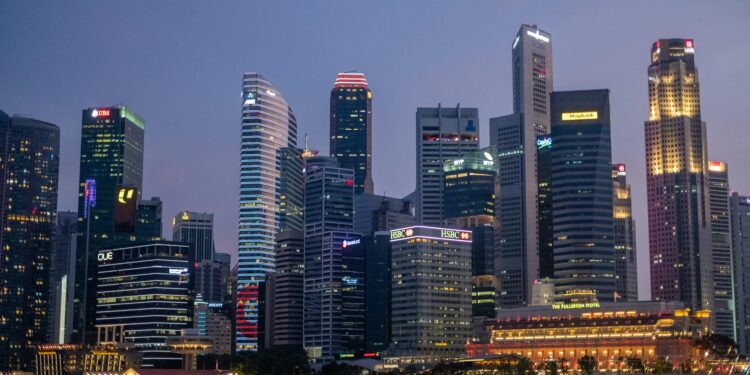
Singapore’s climate‑resilience agenda reconfigures institutional power and creates a new hierarchy of career capital, rewarding interdisciplinary expertise while pressuring traditional labor streams to adapt or face reduced mobility.

The city‑state’s adaptation agenda is reshaping institutional power, creating high‑skill pathways, and redefining economic mobility for a generation of planners, engineers, and data scientists.
—
Urbanization and the Imperative for Climate‑Resilient Planning
By 2050, 68 % of the global population will reside in urban areas, concentrating exposure to sea‑level rise, heat stress, and extreme precipitation [1]. The economic cost of inaction is projected to exceed US $2 trillion annually in lost productivity, health expenditures, and infrastructure repair worldwide [2]. Singapore, a land‑scarce city‑state with a GDP per capita of US $78 k, has positioned climate resilience as a central pillar of its long‑term growth strategy, designating 2026 the “Year of Climate Adaptation” and unveiling a National Adaptation Plan that integrates coastal defence, flood mitigation, heat‑resilience, and water security [4].
The macro significance extends beyond physical safeguards. Climate‑resilient urban planning is a structural lever for talent development, institutional legitimacy, and cross‑sectoral leadership. As cities worldwide grapple with similar exposure, Singapore’s model offers a replicable template for aligning public policy, private investment, and human capital formation.
—
Institutional Architecture of Singapore’s Adaptation Strategy

Integrated Governance
Singapore’s adaptation framework rests on a hierarchical yet collaborative governance matrix. The Ministry of Sustainability and the Environment (MSE) anchors policy direction, while the Heat Resilience Policy Office (HRPO)—established in 2026—coordinates inter‑agency efforts across the Urban Redevelopment Authority (URA), National Climate Change Secretariat, and the Agency for Science, Technology and Research (ASTAR) [4]. This institutional layering mirrors the “whole‑of‑government” approach adopted by Rotterdam after the 1953 flood, but with a tighter data‑centric feedback loop.
Since 2020, heat‑island indices have been mandated for new developments, prompting a 30 % increase in vegetated roof coverage and a 15 % reduction in surface temperature across the central business district [3].
Planning and Design Mechanisms
You may also like
 AI & Technology
AI Reshapes the Operating Model of Indian IT
AI is revolutionizing the Indian IT landscape, driving efficiency and opening new career avenues. Explore the effects and future trends.
Read More →The URA embeds climate metrics into every planning stage. Since 2020, heat‑island indices have been mandated for new developments, prompting a 30 % increase in vegetated roof coverage and a 15 % reduction in surface temperature across the central business district [3]. Flood‑risk zoning now incorporates probabilistic sea‑level rise scenarios up to 2100, driving the construction of four new tidal barriers that collectively protect 1.2 km of shoreline and an estimated S$1.5 bn of commercial assets [1].
Technological Innovation and Data Infrastructure
Singapore leverages smart‑city sensors, AI‑driven climate modeling, and open data portals to translate granular environmental signals into actionable policy. The City‑wide Climate Dashboard, launched in 2023, aggregates real‑time temperature, humidity, and rainfall data from over 5,000 IoT nodes, enabling the HRPO to issue heat‑alert advisories within minutes. This digital backbone has spurred a 45 % growth in climate‑analytics start‑ups between 2022 and 2025, positioning the city as a regional hub for climate‑tech talent [3].
Funding and Incentive Structures
Public investment in resilience totals S$4 bn through 2030, with 70 % allocated to coastal defence and water security and 30 % to heat‑mitigation and green infrastructure [4]. The Resilience Innovation Grant offers up to S$5 m per project for private‑sector pilots, while tax incentives reward developers that exceed baseline green‑roof ratios by 20 % or more. These financial levers have catalyzed over 200 public‑private partnerships and generated approximately 12,000 new skilled jobs in engineering, data science, and environmental design since 2021.
—
Systemic Economic and Social Ripple Effects
Macro‑Economic Stabilization
By internalizing climate risk, Singapore has reduced projected infrastructure loss from S$3 bn (2025 baseline) to S$1.2 bn by 2030, a 60 % mitigation that directly protects national productivity [2]. The resilience agenda also enhances Singapore’s credit rating, lowering sovereign borrowing costs by an estimated 0.15 % and freeing fiscal space for further human‑capital investment.
Labor Market Reconfiguration
The adaptation agenda has reoriented demand toward high‑skill, interdisciplinary roles. According to the Ministry of Manpower, climate‑resilience occupations grew from 3.2 % to 7.8 % of total engineering hires between 2020 and 2025, outpacing overall engineering employment growth of 2.5 % annually. Notably, data‑analytics positions now command an average salary premium of S$20 k over comparable non‑climate roles, reflecting the asymmetry in market valuation of climate‑relevant expertise.
Labor Market Reconfiguration The adaptation agenda has reoriented demand toward high‑skill, interdisciplinary roles.
Social Equity and Inclusive Design
Heat stress disproportionately impacts elderly residents and low‑income households, who often lack access to air‑conditioned environments. Singapore’s Community Cooling Hubs—retrofit of existing community centres with passive cooling technologies—have delivered a 12 % reduction in heat‑related emergency visits in the past two years [1]. Moreover, flood‑risk insurance premiums have been subsidized for households below the median income, decreasing the financial burden of extreme events and preserving economic mobility for vulnerable groups.
Institutional Power Shifts
You may also like
 AI & Technology
Informed AI Decision‑Making Redefines Executive Capital and Institutional Power
Executive influence increasingly hinges on data literacy, as AI-driven decision frameworks reallocate capital, reshape governance, and redefine career trajectories within corporate hierarchies.
Read More →The HRPO’s cross‑agency mandate has rebalanced authority from traditional land‑use bodies toward data‑driven policy units. This shift mirrors the post‑Katrina restructuring of FEMA in the United States, where centralized risk assessment became a prerequisite for grant allocation. In Singapore, the centralization of climate data has elevated the Ministry of Sustainability and the Environment to a strategic gatekeeper for both public and private investment decisions, reinforcing its institutional clout within the broader governance ecosystem.
—
Human Capital Realignment: Winners, Losers, and Emerging Pathways
Winners
- Technical Specialists – Engineers with certifications in hydraulic modelling, thermal dynamics, and GIS now command premium salaries and accelerated career ladders within both public agencies and multinational firms.
- Data Scientists – Professionals who can translate sensor streams into predictive heat‑stress alerts are in high demand, with career capital measured by the ability to integrate climate variables into business intelligence platforms.
- Policy Entrepreneurs – Individuals who navigate the nexus of regulation, financing, and stakeholder engagement are emerging as institutional leaders, shaping the next wave of adaptation legislation.
Losers
- Traditional Construction Workers – The shift toward prefabricated, climate‑optimized modules reduces demand for low‑skill labor, pressuring this cohort to upskill or face wage stagnation.
- Legacy Real Estate Developers – Firms that continue to prioritize maximized floor‑area ratios over climate‑responsive design risk regulatory penalties and market exclusion, as URA’s heat‑resilience criteria become binding.
Emerging Career Pathways
- Resilience Strategy Analyst – Roles that synthesize economic impact modeling with climate scenarios, informing both public budgeting and corporate ESG reporting.
- Urban Climate Innovation Manager – Positions within multinational corporations overseeing pilot projects that align product development with city‑wide resilience goals.
- Community Climate Liaison Officer – Public‑sector posts dedicated to translating technical resilience measures into accessible community programs, bridging institutional power and grassroots participation.
These pathways illustrate how career capital is increasingly contingent on interdisciplinary fluency, aligning personal skill sets with systemic climate objectives. The asymmetric value of climate‑savvy expertise creates a new hierarchy within the urban labor market, rewarding those who can navigate both technical and institutional terrains.
—
Projection: Institutional and Career Trajectories to 2030
Over the next three to five years, Singapore’s resilience framework is expected to scale horizontally—extending beyond physical infrastructure to embed climate considerations into financial regulation, education curricula, and international trade agreements. The Monetary Authority of Singapore is already piloting climate‑risk stress tests for banks, a move that will embed climate data into capital‑allocation decisions and further elevate the status of climate‑analytics professionals.
Conversely, workers who remain siloed in traditional trades will face structural barriers to upward mobility, unless reskilling initiatives—such as the National SkillsFuture Resilience Track— succeed in delivering targeted upskilling at scale.
Concurrently, career trajectories will bifurcate. Professionals who acquire dual credentials—e.g., a Master’s in Sustainable Engineering combined with certification in Public Policy—will occupy strategic leadership nodes within ministries and multinational firms. Conversely, workers who remain siloed in traditional trades will face structural barriers to upward mobility, unless reskilling initiatives—such as the National SkillsFuture Resilience Track— succeed in delivering targeted upskilling at scale.
By 2030, the institutional power balance is likely to tilt toward data‑centric agencies that command both regulatory authority and funding streams. This realignment will reinforce Singapore’s position as a global testbed for climate‑resilient urban economies, attracting talent worldwide and reinforcing a feedback loop where human capital development fuels institutional innovation, which in turn deepens economic mobility for those positioned within the new hierarchy.
You may also like
 AI & Technology
The Cultural Impact of AI-Generated Music
AI-generated music is revolutionizing creativity, ownership, and ethics in the music industry. Explore the implications and future of this technology.
Read More →—
Key Structural Insights
[Insight 1]: Singapore’s climate‑adaptation architecture demonstrates that institutional centralization of climate data creates a strategic gatekeeper role, reshaping power dynamics across public and private sectors.
[Insight 2]: The asymmetric premium on interdisciplinary climate expertise translates directly into career capital, accelerating economic mobility for data‑savvy engineers while marginalizing low‑skill labor absent reskilling pathways.
[Insight 3]: Embedding resilience metrics into financial regulation and urban policy establishes a self‑reinforcing system where climate‑smart talent drives institutional legitimacy, which in turn expands high‑skill employment opportunities.