No products in the cart.

Retail’s Circular Shift Reshapes Capital, Careers, and Institutional Power
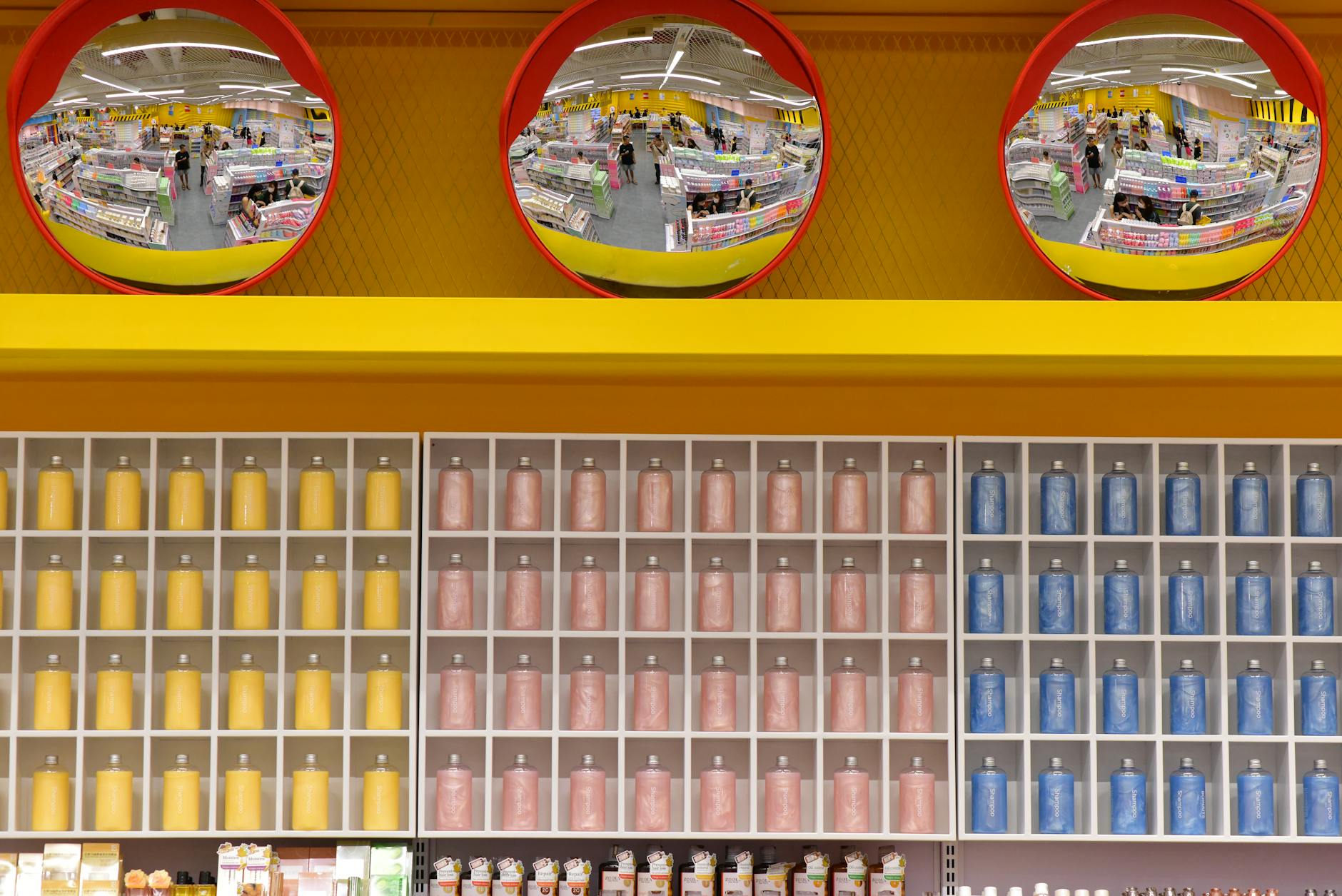
Circular business models are redefining retail by turning waste into growth, reallocating institutional power, and reshaping career capital, setting a structural trajectory that favors firms with regenerative governance and digital lifecycle expertise.

Dek: The adoption of circular business models is converting waste streams into growth engines, redefining the distribution of career capital and institutional influence across the retail sector. A systemic analysis reveals how regenerative design, policy scaffolding, and digital traceability are forging an asymmetric trajectory for economic mobility.
Retail’s Circular Transition and Macro Significance
The global retail sector, accounting for roughly 10 % of world GDP, is confronting a structural realignment driven by heightened consumer demand for environmental stewardship and an accelerating policy regime that penalizes linear consumption. A 2024 consumer sentiment survey found that 75 % of Millennials are willing to pay a premium for eco‑friendly products, a figure that rises to 82 % among Gen Z respondents [1]. Simultaneously, the International Resource Panel projects the circular economy market to reach $4.5 trillion by 2030, representing a 12‑fold increase over 2020 levels [2].
These macro forces intersect with institutional reforms such as the European Union’s Circular Economy Package (2023) and the United States’ Sustainable Materials Management Act (2024), which embed extended producer responsibility (EPR) and recycling targets into statutory frameworks [3]. The confluence of consumer capital, regulatory scaffolding, and emerging technology is not merely a trend; it reflects a structural shift in how value is created, captured, and redistributed within retail ecosystems.
Designing Regenerative Value Chains

Circular business models operationalize regeneration through three interlocking mechanisms: product‑as‑service (PaaS), closed‑loop material flows, and digital lifecycle governance.
- Product‑as‑Service and Leasing – Retailers such as IKEA and H&M have piloted furniture leasing schemes that retain ownership of assets, enabling take‑back, refurbishment, and redeployment. Empirical analysis of IKEA’s 2022 pilot indicates a 48 % reduction in raw material demand per unit compared with traditional sales, while generating a 12 % uplift in recurring revenue streams [4].
- Take‑Back and Upcycling Networks – Programs that collect post‑consumer goods for remanufacture have demonstrated waste reductions of up to 80 % in textile loops, as evidenced by Patagonia’s closed‑loop apparel initiative, which reclaimed 1.2 million pounds of polyester in 2023 [5].
- Digital Traceability Platforms – Blockchain‑enabled product passports and AI‑driven demand forecasting are central to reducing “ghost inventory” and aligning production with actual use cycles. A cross‑industry study by the World Economic Forum reported that retailers employing AI‑based lifecycle analytics achieved a 30 % improvement in material recovery rates and a 22 % decline in logistics emissions [2].
These mechanisms are underpinned by a shift in design philosophy: from “design‑for‑disposal” to “design‑for‑recovery.” The COM‑B framework applied to circular managers reveals that capability (digital fluency), opportunity (regulatory incentives), and motivation (brand legitimacy) are jointly driving the diffusion of regenerative design across the sector [3].
Structural Ripples Across Supply Chains and Policy
The diffusion of circular models propagates systemic implications that reverberate through upstream suppliers, logistics providers, and financial institutions.
Product‑as‑Service and Leasing – Retailers such as IKEA and H&M have piloted furniture leasing schemes that retain ownership of assets, enabling take‑back, refurbishment, and redeployment.
You may also like
 Career Trends
Gen Z’s Rejection of Grind Culture: A New Approach to Work
Gen Z is reshaping the workplace by rejecting grind culture in favor of sustainable ambition. This shift emphasizes balance and mental health, impacting future work…
Read More →Supply‑Side Decarbonization – Mandatory EPR schemes compel manufacturers to embed recyclability into component specifications. In the European textile sector, compliance with the 2025 recycled content quota has precipitated a 25 % reduction in Scope 3 greenhouse gas emissions, a correlation that aligns with the International Energy Agency’s projected pathway for a 1.5 °C scenario [3].
Packaging Innovation – Retailers are reengineering packaging to achieve material circularity. REI’s shift to 100 % recyclable packaging by 2024 eliminated 4.3 million pounds of single‑use plastic, translating into a 40 % waste reduction in its distribution network [5]. This structural adjustment has induced a cascade of procurement standards that now prioritize bio‑based polymers and modular container designs.
Financial Realignment – Venture capital flows have reallocated toward circular startups, with impact investors deploying $5.2 billion in 2023 alone, a 68 % increase from 2020 levels [1]. Institutional investors are integrating circularity metrics into ESG scoring models, thereby influencing capital allocation decisions across public retail equities.
Entrepreneurial Ecosystem – Platforms such as ThredUp and Poshmark have scaled second‑hand marketplaces to $51 billion in projected sales by 2025, creating a new digital infrastructure for peer‑to‑peer exchange that bypasses traditional retail intermediaries [1]. This emergence mirrors the early 2000s e‑commerce disruption, but with an added layer of resource efficiency that reshapes competitive dynamics.
Collectively, these ripples illustrate an asymmetric trajectory: firms that embed circularity early secure institutional legitimacy, lower compliance costs, and access to preferential financing, while laggards confront regulatory penalties and eroding market share.
Emergence of Specialized Roles – Job postings for sustainability analysts, circular design engineers, and product‑life‑cycle managers have risen 20 % year‑over‑year since 2022, outpacing overall retail hiring growth of 7 % [2].
Career Capital and Economic Mobility in a Circular Retail Landscape

The transformation of retail’s operating model reshapes the distribution of career capital—the combination of skills, networks, and institutional endorsement that determines upward mobility.
Emergence of Specialized Roles – Job postings for sustainability analysts, circular design engineers, and product‑life‑cycle managers have risen 20 % year‑over‑year since 2022, outpacing overall retail hiring growth of 7 % [2]. The skill set demanded includes expertise in LCA (life‑cycle assessment), blockchain integration, and reverse logistics optimization.
You may also like
 Business Insights
Research: What China’s AI Agents Reveal About the Future of Commerce
The concept of "agentic commerce" is emerging, where AI agents embedded in super-apps handle transactions with minimal user input. According to CNBC, major Chinese tech…
Read More →Institutional Power Reallocation – Large retailers are establishing internal “circular councils” that report directly to C‑suite executives, effectively elevating sustainability governance within corporate hierarchies. IKEA’s Global Circularity Board, instituted in 2023, now wields budgetary authority over $2.3 billion of capital expenditures, a structural shift that redefines decision‑making power away from traditional merchandising units [4].
Economic Mobility Pathways – The circular economy’s emphasis on repair, refurbishment, and local collection creates micro‑enterprise opportunities. In the United Kingdom, the “Repair and Reuse” grant program has facilitated the creation of 12,000 small‑scale repair workshops, providing entry‑level employment and upward mobility for workers without formal retail experience [3].
Leadership Development – Retail giants are partnering with academic institutions to embed circular economy curricula into MBA and executive education programs. H&M’s collaboration with the Copenhagen Business School launched a “Circular Leadership” certificate in 2023, signaling an institutional commitment to cultivating future leaders who can navigate regenerative value chains.
The net effect is a reconfiguration of human capital flows: talent with interdisciplinary competencies gains asymmetric leverage, while workers anchored in linear supply‑chain functions face displacement unless they acquire circular proficiencies.
This institutional investment in skill development will likely narrow the current talent gap, but the asymmetry will persist for firms that fail to embed circular competencies at the senior leadership level.
Trajectory Through 2029: Institutional Consolidation and Talent Realignment
Looking ahead, three structural dynamics will shape the retail sector’s circular trajectory over the next three to five years.
- Regulatory Convergence – The United Nations’ 2026 Sustainable Production Framework is expected to harmonize EPR standards across G20 economies, creating a level playing field that pressures multinational retailers to standardize circular practices globally.
- Capital Concentration – Private equity firms are forming dedicated “circular funds” that target mid‑market retailers with proven take‑back infrastructure, accelerating consolidation among firms that can demonstrate measurable material recovery rates.
- Talent Pipeline Realignment – Universities are integrating circular economy modules into core business curricula, while corporate apprenticeship programs in reverse logistics are expanding by an average of 15 % annually. This institutional investment in skill development will likely narrow the current talent gap, but the asymmetry will persist for firms that fail to embed circular competencies at the senior leadership level.
By 2029, retailers that have institutionalized circular governance and aligned their talent strategy with regenerative design are projected to achieve a 5‑7 % EBITDA premium relative to peers, according to a McKinsey simulation based on current adoption rates [2]. The structural shift toward circularity is thus poised to become a determinant of both market performance and the distribution of economic mobility within the retail labor market.
You may also like
 Business Insights
How Founders Can Prevent Burnout with a Simple Ritual
Burnout is a common challenge for founders. Learn how a 60-minute ritual can help you stay focused and prevent exhaustion.
Read More →Key Structural Insights
[Insight 1]: Circular business models are converting waste streams into measurable economic growth, with a projected $4.5 trillion market by 2030 reshaping institutional capital allocation.
[Insight 2]: The diffusion of regenerative design creates asymmetric power dynamics, privileging firms that integrate circular governance and digital traceability over linear competitors.
- [Insight 3]: Career capital is being reallocated toward interdisciplinary sustainability expertise, establishing a new hierarchy of talent that drives economic mobility in the retail sector.