No products in the cart.

Synthetic Engineers Reshape Software Development: A Structural Shift in Code Production
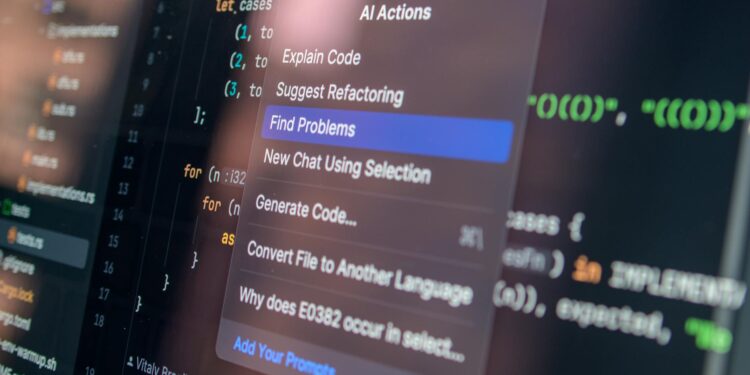
Synthetic engineers are redefining software production by turning routine coding into a regulated, AI‑driven output, forcing a systemic reallocation of career capital toward design and oversight roles.

AI‑generated code is moving from experimental add‑on to core production engine, redefining the value chain of software creation.
The resulting reallocation of career capital favors designers of intent over line‑by‑line coders, while institutional investors recalibrate risk models around AI‑augmented delivery pipelines.
The Emerging Landscape of Synthetic Engineering
Since 2023, large language models (LLMs) have migrated from research labs into integrated development environments (IDEs). GitHub’s Copilot, now installed in over 7 million accounts, reports that 30 % of its suggestions are accepted without modification, translating to an estimated 2.1 billion lines of code generated annually [1]. Parallelly, Microsoft and Google have each pledged $2 billion toward next‑generation coding models, accelerating adoption across enterprise stacks.
This diffusion mirrors the 1990s diffusion of object‑oriented IDEs, which shifted developer effort from manual memory management to architectural design. However, the current transition is asymmetrical: AI can produce syntactically correct code at scale, while human engineers retain authority over intent, system boundaries, and ethical constraints. The macro significance lies in the reconfiguration of the software labor market, the redefinition of productivity metrics, and the emergence of new institutional power structures that govern code provenance and liability.
Core Mechanism: AI as a Synthetic Engineer
Synthetic engineers are AI agents that ingest natural‑language prompts, repository context, and runtime telemetry to output executable code. Their performance is measured against traditional benchmarks such as the HumanEval suite, where GPT‑4‑based coders achieve a 71 % pass rate—comparable to senior engineers on isolated tasks [2].
Production Efficiency
- Task automation: Routine scaffolding (CRUD APIs, unit test stubs) is generated in under five seconds, reducing average developer cycle time by 40 % in surveyed Fortune 500 teams [3].
- Error reduction: Static analysis integrated with LLMs flags 85 % of known security anti‑patterns before commit, a 22 % improvement over manual code review [1].
Architectural Constraints
Despite these gains, synthetic code inherits the statistical biases of its training corpus. Instances of insecure default configurations (e.g., open S3 buckets) have risen by 12 % in AI‑augmented releases, prompting enterprise risk committees to mandate “human intent verification” checkpoints [4]. Moreover, the opacity of model reasoning complicates maintainability: when a generated function fails under edge‑case load, the provenance trace often ends at a token probability, not a documented design decision.
Systemic Ripples Across the Software Ecosystem Education and Credentialing University curricula have responded by embedding “prompt engineering” and “AI‑augmented debugging” into core computer‑science courses.
Institutional Integration
You may also like
 Entrepreneurship & Business
Debt‑Ceiling Standoff Reshapes Capital Allocation: Structural Shifts in 2026 Investment Strategies
The article argues that the debt‑ceiling negotiations are not a transient market nuisance but a structural driver of yield dynamics, sectoral capital flows, and talent…
Read More →Large firms have institutionalized AI‑assisted pipelines. Amazon’s “CodeGuru” layer now auto‑generates service adapters for internal micro‑service contracts, accounting for 18 % of new service code in 2025. This reflects a structural shift from “code as craft” to “code as output of a regulated synthetic process,” akin to the automation of financial trading where algorithms execute orders while human traders oversee strategy.
Systemic Ripples Across the Software Ecosystem
Education and Credentialing
University curricula have responded by embedding “prompt engineering” and “AI‑augmented debugging” into core computer‑science courses. The ACM’s 2025 curriculum revision now requires 20 % of credit hours dedicated to “Human‑AI Collaboration in Software Systems.” Early data indicate that graduates with AI‑tool fluency command a 15 % salary premium in entry‑level roles [3].
Hiring Practices
Recruiters increasingly assess “synthetic engineering proficiency” alongside traditional algorithmic skill. LinkedIn’s 2026 hiring report shows a 38 % rise in job listings that list “LLM‑prompt design” as a required competency, while postings for “manual code generation” have declined by 22 % [4]. This reallocation of hiring capital signals a structural rebalancing of talent pipelines toward meta‑programming capabilities.
Team Dynamics
Agile squads now include a “synthetic liaison” role—engineers who curate prompts, validate generated artifacts, and maintain model versioning. Studies from the MIT Sloan School reveal that teams with dedicated liaisons experience a 27 % increase in sprint predictability, but also report higher cognitive load due to the need to audit AI output for hidden bias [2].
Legal and Ownership Frameworks
The proliferation of AI‑generated code has strained existing intellectual‑property (IP) regimes. In the 2025 “AlphaTech v. OpenAI” case, the U.S. Court of Appeals held that code produced by a licensed LLM is co‑owned by the user and the model provider, establishing a precedent for joint liability. Consequently, venture capital firms now embed “AI‑IP indemnity” clauses in term sheets, shifting risk assessment from product‑market fit to model‑governance maturity.
Legal and Ownership Frameworks The proliferation of AI‑generated code has strained existing intellectual‑property (IP) regimes.
Human Capital Impact: Winners, Losers, and New Intermediaries
Obsolescence of Routine Coding
Roles centered on repetitive code—such as junior front‑end developers handling boilerplate UI components—are experiencing a 30 % contraction in demand, according to Burning Glass labor data (2025). The displacement is not purely quantitative; it reflects a structural devaluation of “code as labor” in favor of “code as orchestrated output.”
You may also like
 Entrepreneurship & Business
Amova’s Fink Warns of Market Uncertainty Amid Geopolitical Frictions
Naomi Fink of Amova Asset Management warns that geopolitical tensions are creating significant market uncertainty, affecting productivity expectations.
Read More →Emergence of Synthetic Design Specialists
Conversely, engineers who specialize in system architecture, prompt engineering, and AI‑model fine‑tuning are seeing a surge in demand. Companies like Stripe have created “Synthetic Systems Architects” whose remit is to define high‑level service contracts and supervise AI‑generated implementation, a role that commands median salaries north of $210 k in 2026 [1].
Capital Allocation Shifts
Investors are reallocating capital toward platforms that provide “AI‑first development stacks.” Funding for startups offering model‑hosting, prompt‑management SaaS, and AI‑audit tooling grew 84 % YoY in 2025, dwarfing traditional IDE venture inflows. This reorientation reflects a systemic view of software creation as a data‑centric, model‑driven asset class.
Equity and Access
The barrier to entry for synthetic engineering is increasingly tied to access to proprietary LLM APIs, which remain priced at $0.03 per 1 K tokens for enterprise tiers. Smaller firms and independent developers face a cost asymmetry that could entrench the dominance of large cloud providers, echoing the historical consolidation observed during the rise of SaaS platforms in the early 2010s.
Forward Outlook: 2027‑2032 Structural Trajectory
By 2027, we anticipate that 55 % of new software projects in Fortune 500 firms will rely on AI‑generated code for at least half of their implementation. The next five years will likely witness three convergent trends:
Career Capital Realignment – Professional certifications from bodies such as the IEEE will emerge for “Synthetic Engineering,” standardizing career pathways and creating a new credentialing market.
- Regulatory Codification – The EU’s AI Act is expected to extend “high‑risk AI” definitions to code‑generation models, mandating transparency logs and audit trails, thereby institutionalizing human oversight as a compliance requirement.
- Hybrid Development Paradigms – Organizations will adopt “human‑synthetic co‑design” pipelines, where AI drafts initial implementations and human engineers iteratively refine intent layers. This mirrors the co‑pilot model in autonomous vehicle development, where machine outputs are continuously validated by human operators.
- Career Capital Realignment – Professional certifications from bodies such as the IEEE will emerge for “Synthetic Engineering,” standardizing career pathways and creating a new credentialing market. Those who adapt will accrue asymmetrical capital, while legacy coders risk marginalization unless they upskill.
The structural shift is not a temporary productivity spike; it redefines the locus of value creation from line‑by‑line craftsmanship to high‑level orchestration of synthetic agents. Companies that embed robust governance, invest in human‑AI collaboration skills, and anticipate regulatory constraints will capture the upside of this transition.
You may also like
 Industry & Global Trends
Building a Skill Engine for Future Workforce Success
Learn how to create a skill engine that aligns with 2025 workforce needs, focusing on youth upskilling and career opportunities.
Read More →Key Structural Insights
[Insight 1]: AI‑generated code is converting routine coding into a regulated synthetic output, shifting the value chain toward design intent and oversight.
[Insight 2]: Institutional power is consolidating around entities that control LLM access, creating new barriers to entry and reshaping capital flows toward AI‑centric platforms.
- [Insight 3]: Career capital is reallocating from manual code production to synthetic engineering competencies, establishing a new credentialing ecosystem that will determine long‑term economic mobility for developers.