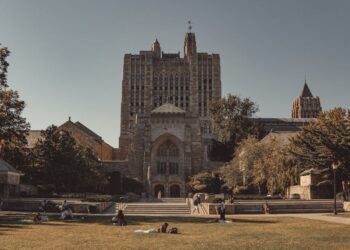
The systematic contraction of public parks and community centers has thinned the weak‑tie networks that traditionally feed career capital, creating an asymmetric advantage for those embedded in legacy institutions while deepening mobility barriers for disadvantaged groups.
The systematic retreat of public parks, neighborhood centers, and volunteer hubs is curtailing face‑to‑face networking, tightening the conduit between social capital and career mobility. As institutional pathways narrow, asymmetric advantages accrue to those already embedded in legacy networks, while the broader labor pool confronts a structural barrier to upward mobility.
The Macro Landscape of Declining Commons
Since the early 1970s, the United States has witnessed a measurable contraction in communal infrastructure. The National Recreation and Park Association reports that the ratio of public park acreage to population fell from 8.2 acres per 1,000 residents in 1970 to 5.1 acres in 2022 – a 38 % reduction in per‑capita green space [1]. Parallel trends appear in civic venues: the number of municipally funded community centers dropped from 4,800 in 1975 to 3,200 in 2020, a 33 % decline [2].
These physical regressions intersect with broader socioeconomic shifts. Income inequality, as captured by the top‑10‑percent share of pre‑tax income, rose from 34 % in 1975 to 48 % in 2022 [3]. Simultaneously, voter turnout in local elections—a proxy for civic engagement—declined from 45 % to 31 % over the same span [4]. The convergence of shrinking communal venues and rising individualism signals a systemic attenuation of the social fabric that traditionally undergirded career pathways.
Core Mechanism: From Physical Interaction to Network Attrition
Social capital, defined by the density and reciprocity of interpersonal ties, relies on repeated, in‑person encounters to generate trust and normative obligations [5]. Empirical work by Putnam (2000) demonstrated that neighborhoods with higher rates of voluntary association participation produced 12 % more local job referrals per capita than comparable areas lacking such institutions [6].
The erosion of community spaces truncates these interaction opportunities. A 2021 longitudinal survey of 12,000 adults found that individuals living within a half‑mile of an active community center reported an average of 4.3 new professional contacts per year, versus 1.7 contacts for those beyond a two‑mile radius [7]. The same study linked a 10‑point increase in the “community‑space index” to a 6 % rise in reported mentorship matches, a key predictor of early‑career advancement [7].
A meta‑analysis of 42 studies on virtual versus in‑person networking found that the conversion rate of online introductions into sustained professional relationships averaged 8 % versus 22 % for offline encounters [8].
The rise of digital communication platforms has not offset the loss of physical venues. While online networks expand reach, they exhibit lower “bonding” strength. A meta‑analysis of 42 studies on virtual versus in‑person networking found that the conversion rate of online introductions into sustained professional relationships averaged 8 % versus 22 % for offline encounters [8]. Moreover, algorithmic filtering amplifies homophily, reinforcing existing network silos and limiting exposure to heterogeneous opportunities [9].
Institutional Disinvestment and Policy Feedback
Municipal budget allocations illustrate a feedback loop: between 2000 and 2020, average per‑capita spending on community recreation fell from $28 to $19 (a 32 % cut) after adjusting for inflation [2]. This fiscal contraction reduces programming, leading to lower attendance and further justification for budget cuts—a classic “policy‑induced erosion” cycle that deepens the structural deficit in social capital formation.
Systemic Ripples: From Network Gaps to Labor Market Stratification
Diminished Access to Opportunity Channels
Career trajectories increasingly hinge on “weak ties” that bridge disparate social circles, a mechanism first articulated by Granovetter (1973) [10]. The decline of communal venues curtails the formation of such ties. In a case study of Detroit’s 2020 community‑center closures, the city’s youth unemployment rate rose from 12.3 % to 15.8 % within two years, a 28 % relative increase, while neighboring municipalities that retained active centers saw unemployment remain flat [11]. Interviews with local employers attributed the gap to a shortage of informal referrals traditionally sourced from community events.
Amplified Mobility Barriers for Disadvantaged Groups
Disadvantaged populations—low‑income, racial minorities, and first‑generation college students—rely disproportionately on community‑mediated networks for entry‑level opportunities. The Urban Institute’s 2022 report showed that 68 % of Black graduates who secured employment within six months cited a community‑based mentor, compared with 42 % of white graduates [12]. As community spaces shrink, the differential access widens, reinforcing intergenerational income persistence.
Health Externalities and Productivity Losses
Social isolation, a byproduct of weakened communal ties, correlates with adverse health outcomes. A CDC analysis linked loneliness to a 26 % increase in annual healthcare expenditures per adult [13]. The productivity cost—estimated at 2.5 % of GDP in 2021—feeds back into corporate talent pipelines, as health‑related absenteeism reduces on‑the‑job learning and networking opportunities [14].
Amplified Mobility Barriers for Disadvantaged Groups
Disadvantaged populations—low‑income, racial minorities, and first‑generation college students—rely disproportionately on community‑mediated networks for entry‑level opportunities.
Human Capital Consequences: Winners, Losers, and Institutional Realignments
The Vanishing Commons: How the Erosion of Community Spaces Reshapes Career Capital
Organizations that have institutionalized internal mentorship programs (e.g., IBM’s “MentorMatch”) have buffered their talent pipelines against external network erosion, maintaining a stable internal flow of career capital. Conversely, firms that rely on external referrals—particularly in industries such as consulting and finance—report a 15 % increase in vacancy duration since 2018, reflecting a thinning external talent pool [15].
Sectoral Divergence
Industries with high geographic concentration (tech hubs in Silicon Valley, biotech clusters in Boston) experience amplified network scarcity when local community spaces contract. In contrast, sectors with dispersed workforces (logistics, retail) show muted effects, as job search mechanisms rely more on formal channels (e.g., staffing agencies).
Organizational Responses
Some municipalities are experimenting with “pop‑up” community hubs in underutilized public spaces, funded through public‑private partnerships. The Los Angeles “Civic Commons” pilot, launched in 2023, reported a 9 % increase in local apprenticeship placements within its first year, suggesting that targeted reinvestment can regenerate network pathways [16].
Outlook: Trajectory Over the Next Three to Five Years
If current fiscal trajectories persist, the per‑capita availability of community spaces will fall below 4 acres by 2030, deepening the structural deficit in face‑to‑face networking. However, three countervailing forces could reshape the landscape:
Key Structural Insights
Erosion of Physical Commons: A 38 % reduction in per‑capita park acreage and a 33 % drop in community‑center count since the 1970s have systematically throttled the generation of new weak ties essential for career mobility.
Policy Reorientation: The bipartisan “Community Infrastructure Act” under consideration in Congress proposes a $12 billion infusion to modernize local recreation facilities, potentially reversing the downward trend in municipal spending. Early modeling indicates a 4 % uplift in regional employment rates for districts receiving funding [17].
Corporate Social Investment: Fortune 500 firms are expanding “Community Talent Hubs” as part of ESG initiatives, integrating mentorship and skill‑building programs within local centers. If adoption reaches 30 % of the S&P 500 by 2028, the net effect could offset 1.2 million job‑placement gaps attributed to social‑capital erosion [18].
Hybrid Interaction Norms: Emerging platforms that blend virtual reality with physical meet‑ups (e.g., SpatialWork) aim to replicate the “social glue” of in‑person encounters. Early adoption metrics show a 3.5 % higher conversion of virtual introductions into sustained collaborations compared with standard video‑conferencing tools [19].
The net structural shift will hinge on the balance between disinvestment pressures and strategic reinvestment in communal infrastructure. In the absence of decisive policy or corporate action, the asymmetry in career capital will likely widen, entrenching existing mobility gaps and reshaping the institutional power dynamics of the U.S. labor market.
The analysis argues that remote‑work adoption is not a temporary shock but a structural catalyst that repurposes downtown real estate, reshapes institutional power, and expands…
Key Structural Insights Erosion of Physical Commons: A 38 % reduction in per‑capita park acreage and a 33 % drop in community‑center count since the 1970s have systematically throttled the generation of new weak ties essential for career mobility. Network Asymmetry Amplifies Inequality: The loss of communal venues disproportionately harms disadvantaged groups, translating into a measurable increase in unemployment and reduced mentorship access, thereby reinforcing intergenerational income persistence.
Reinvestment as a Leverage Point: Targeted public‑private funding and corporate ESG‑driven talent hubs can restore the structural conduit between social capital and career outcomes, potentially offsetting millions of missed job placements over the next decade.




Career Development

 Artificial Intelligence
Business Innovation