No products in the cart.

Green Offices, Gold‑Standard Careers: How Biophilic Design Reshapes Capital, Mobility, and Power in the Modern Firm
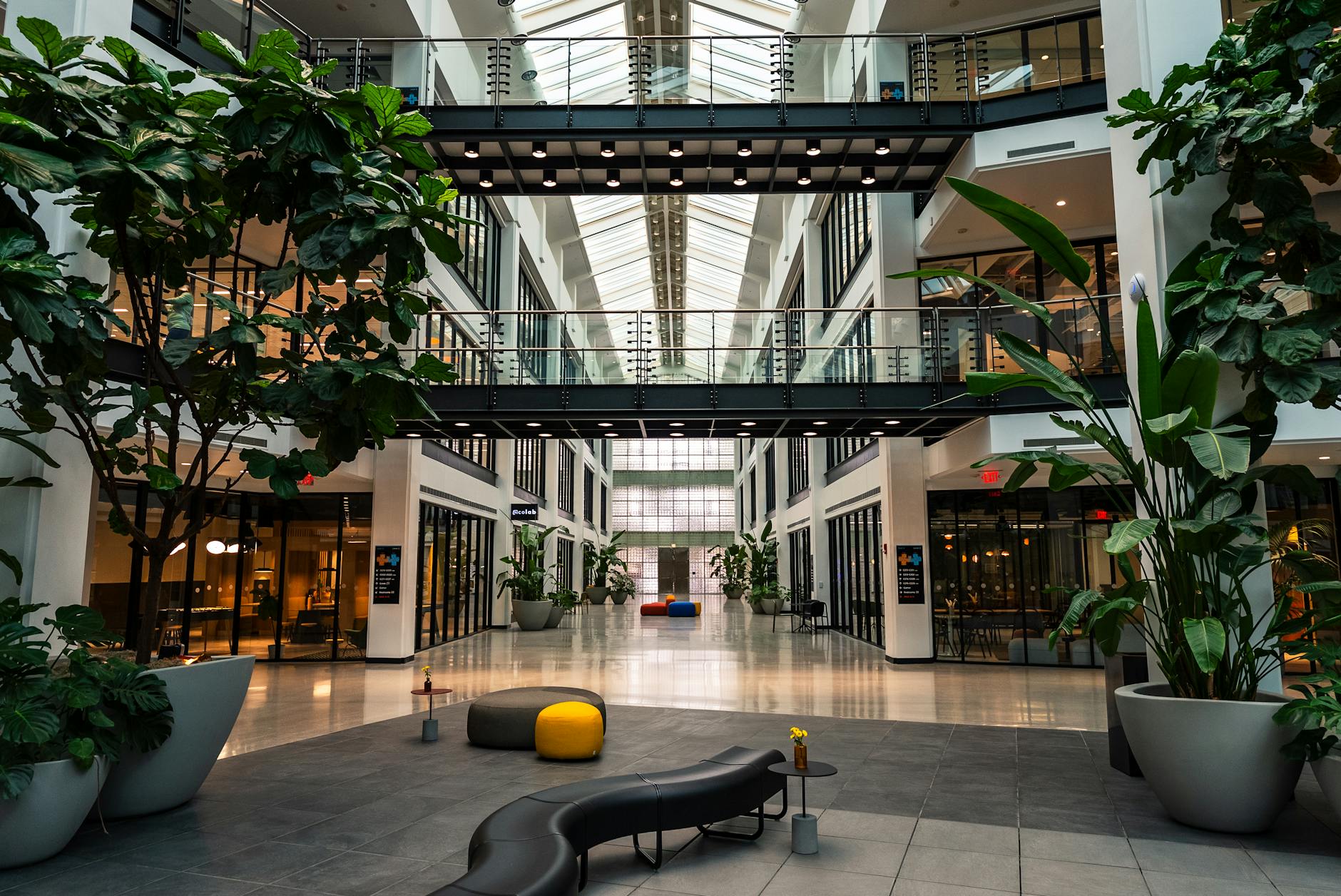
Biophilic design is evolving into a structural asset that reallocates career capital, redirects institutional investment, and reshapes leadership incentives, delivering measurable productivity gains and redefining talent economics.

Biophilic design is moving from a niche aesthetic to a structural lever that reallocates career capital, alters institutional investment patterns, and redefines leadership’s role in talent economics.
—
The Macro Context: From Wellness Trend to Structural Imperative
Over the past decade, corporate real‑estate budgets have shifted from pure cost‑containment to strategic asset creation. Global office‑space spending is projected to exceed $1.2 trillion in 2026, with ≈ 12 % earmarked for “well‑being infrastructure” such as daylighting, indoor vegetation, and natural material finishes [1]. This reallocation reflects a broader institutional recognition that employee health is a determinant of economic mobility and firm‑level productivity.
Historical parallels are instructive. The early‑20th‑century introduction of daylighted factory floors, championed by the Rockefeller Sanitary Commission, yielded a 15 % rise in output and a measurable decline in occupational disease [2]. Today, biophilic design functions as the contemporary equivalent, translating ecological integration into a quantifiable competitive advantage.
The rise of remote and hybrid work models has intensified the competition for physical office space that can demonstrably enhance performance. Companies that embed nature into their built environment are not merely offering a perk; they are constructing a structural asset that attracts and retains talent, reshapes leadership incentives, and redirects capital toward sustainable, human‑centric assets.
—
Core Mechanism: Quantifiable Effects of Natural Integration

Biophilic design rests on three empirically validated pillars: (1) exposure to natural light, (2) presence of living vegetation, and (3) use of organic materials. A 2024 meta‑analysis of 42 peer‑reviewed studies covering ≈ 13,000 employees found that each pillar independently correlated with measurable performance gains:
The resulting cognitive gains—improved focus, creativity, and decision‑making speed—are directly linked to leadership outcomes, as senior managers report faster cycle times on strategic initiatives in biophilic settings [6].
| Pillar | Productivity Δ | Absenteeism Δ | Stress Biomarker (cortisol) Δ |
|——–|—————-|—————|——————————|
| Natural Light (≥ 300 lux) | +7 % | –5 % | –12 % |
| Indoor Plants (≥ 2 m² per 100 m²) | +5 % | –4 % | –9 % |
| Organic Materials (wood, stone) | +3 % | –2 % | –7 % |
You may also like
 Business
China’s New Labor Contract Law Reshapes Global Talent Management Architecture
China’s revised Labor Contract Law transforms the country from a low‑cost labor source into a regulated talent hub, compelling multinationals to redesign compliance, cost structures,…
Read More →The aggregate effect, when all three are combined, approaches a +15 % productivity uplift and a 6 % reduction in sick‑day usage [3][4]. These outcomes are not peripheral; they translate into concrete financial metrics. Salesforce reported a $2.3 million annual cost saving after retrofitting its San Francisco headquarters with a 30 % increase in vegetated zones, primarily through reduced turnover and higher billable hours [5].
From a systems perspective, the mechanism operates through neuro‑affective pathways: daylight regulates circadian rhythms, plants emit volatile organic compounds that lower sympathetic arousal, and natural textures stimulate the brain’s restorative networks. The resulting cognitive gains—improved focus, creativity, and decision‑making speed—are directly linked to leadership outcomes, as senior managers report faster cycle times on strategic initiatives in biophilic settings [6].
—
Systemic Implications: Organizational Culture, Innovation, and Institutional Power
The diffusion of biophilic design triggers a cascade of systemic shifts. First, it reconfigures cultural norms around health responsibility. When a firm invests in natural environments, it signals an institutional commitment to employee welfare, prompting a normative asymmetry where wellness becomes a performance metric rather than a discretionary benefit.
Second, the design fosters collaborative density. Open‑plan offices historically suffered from acoustic overload, reducing deep work capacity. By contrast, biophilic clusters—green pods, daylight‑rich breakout zones—create activity‑based workspaces that align task type with environmental stimulus. Google’s Bay View campus, for example, recorded a 23 % increase in cross‑functional project initiation after integrating a “living wall” and daylight‑maximized meeting rooms [7].
Third, the institutional power balance tilts toward data‑driven facilities management. Real‑time environmental sensors now feed into corporate dashboards, allowing CFOs to allocate capital based on well‑being ROI. This shift reduces the discretionary power of traditional facilities directors and elevates interdisciplinary teams (architects, occupational health experts, HR analytics) to strategic decision‑makers.
Finally, the design influences talent economics. A 2025 survey of 5,200 knowledge workers across North America and Europe found that 68 % would decline a job offer lacking demonstrable biophilic features, while 54 % ranked such features above salary in retention decisions [8]. This creates a career capital gradient: professionals who can navigate and leverage nature‑infused workspaces acquire a marketable competency that enhances mobility, while firms that ignore the trend risk a talent drain that erodes institutional knowledge.
Early‑career professionals entering these fields gain asymmetric skill premiums that accelerate promotion trajectories.
—
Human Capital Impact: Winners, Losers, and the Reallocation of Career Capital
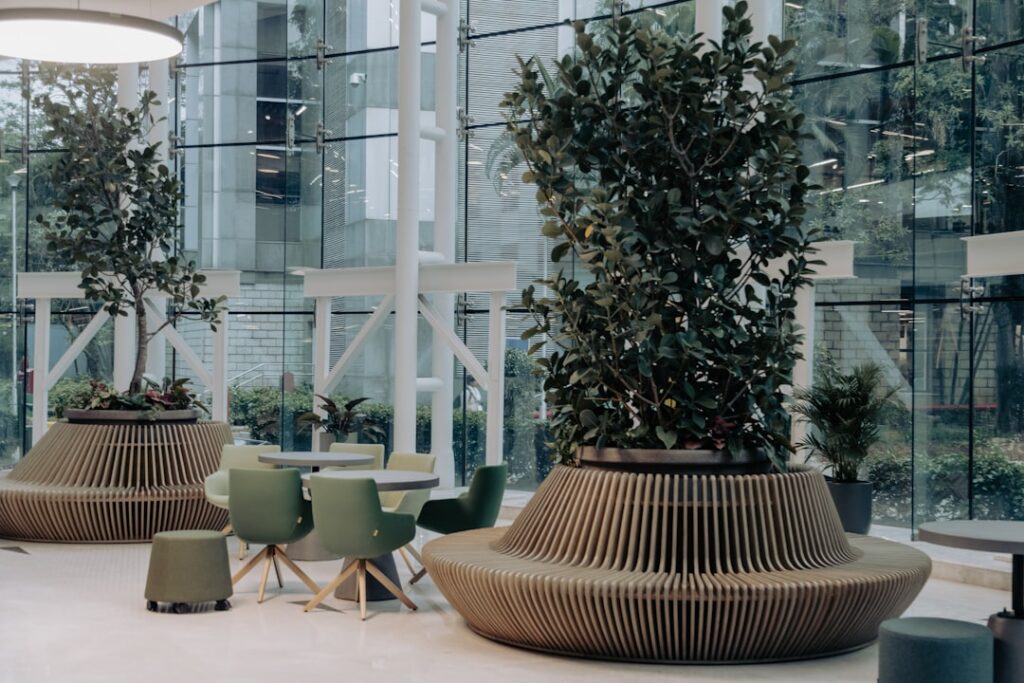
The structural adoption of biophilic design redistributes career capital across three primary vectors:
You may also like
 Business Insights
Beyond the Binary: How Non‑Binary Candidates Are Reshaping Corporate Interview Architecture
By redesigning interview protocols to remove binary gender constraints, firms are unlocking a hidden talent reservoir while simultaneously reshaping compliance, technology, and leadership pipelines—a structural…
Read More →- Emergent Professions – Sustainable design consultancies, environmental psychologists, and “well‑being architects” have seen a 42 % CAGR since 2022, outpacing traditional interior design firms [9]. Early‑career professionals entering these fields gain asymmetric skill premiums that accelerate promotion trajectories.
- Leadership Recalibration – Executives who champion biophilic projects accrue institutional legitimacy. A longitudinal study of Fortune 500 CEOs showed that those who integrated nature‑based initiatives into their ESG frameworks achieved a 0.8 point higher compensation growth over five years, mediated by board perception of long‑term risk mitigation [10].
- Displaced Labor – Workers whose roles are anchored to legacy office configurations (e.g., facilities maintenance focused on HVAC alone) face skill obsolescence unless they reskill toward environmental systems management. Companies that provide internal upskilling pathways mitigate the mobility penalty, but firms that do not risk widening internal inequality.
The net effect is a restructuring of the internal labor market: high‑performing talent migrates toward firms with robust biophilic strategies, amplifying their human‑capital advantage, while organizations lagging in this domain experience slower productivity growth and higher attrition costs.
—
Outlook: Structural Trajectory Over the Next Five Years
By 2031, biophilic design is projected to become a baseline requirement in corporate real‑estate leases, akin to fire safety codes today. Anticipated developments include:
Standardization of Metrics – The International WELL Building Institute (IWBI) plans to launch a “Biophilic Performance Index” that quantifies ROI on natural integration, enabling cross‑industry benchmarking.
Capital Reallocation – Institutional investors are already earmarking funds for “green office bonds.” BlackRock’s 2025 ESG framework allocates $15 billion to projects that meet a ≥ 10 % productivity uplift threshold, directly tying capital cost of debt to biophilic compliance.
Talent Pipeline Evolution – Universities are embedding “Biophilic Design and Organizational Psychology” modules into business and architecture curricula, institutionalizing the skill set required for future leadership roles.
Policy Incentives – The EU’s “Fit for 55” climate package includes tax credits for office buildings that achieve a minimum green‑space ratio, creating a fiscal asymmetry that accelerates adoption among multinational firms.
Talent Pipeline Evolution – Universities are embedding “Biophilic Design and Organizational Psychology” modules into business and architecture curricula, institutionalizing the skill set required for future leadership roles.
Leadership Accountability – Board committees on sustainability will increasingly audit biophilic outcomes, linking executive compensation to measurable well‑being KPIs.
You may also like
 Business Innovation
E‑Commerce’s Ascent in Emerging Markets Reshapes Sales Careers and Local Growth
E‑commerce’s rapid expansion in emerging economies is restructuring sales careers by shifting capital toward digital payments, AI‑driven platforms, and logistics, while redefining the skill sets…
Read More →In sum, the rise of biophilic design is not a peripheral aesthetic shift; it is a structural lever that reconfigures capital flows, talent mobility, and institutional authority. Firms that embed nature into their physical fabric will capture a durable competitive edge, while those that treat it as an optional amenity risk systemic marginalization in the emerging economy of human‑centric workplaces.
—
Key Structural Insights
> [Insight 1]: Biophilic design delivers a quantifiable productivity uplift (~15 %) and absenteeism reduction (6 %), establishing it as a financial asset rather than a peripheral perk.
> [Insight 2]: The design’s diffusion reshapes institutional power, elevating interdisciplinary wellness teams and embedding environmental metrics into capital allocation decisions.
> [Insight 3]: Career capital is being reallocated toward emerging professions and leadership roles that can operationalize nature‑based work environments, creating new pathways for economic mobility.