No products in the cart.

Sports Infrastructure as a Systemic Engine for Community Development

By treating sports facilities as multi‑purpose community hubs, S4SC initiatives convert physical infrastructure into a systemic engine for health, education, and economic mobility, reshaping institutional power and career pathways.

Dek: The surge in “Sports for Social Change” initiatives has reoriented public and private capital toward facilities that embed health, education, and economic mobility into the built environment. By converting fields and courts into platforms for skill‑building, these projects reshape institutional power and create new career capital for a generation of community‑focused leaders.
The Macro Shift Toward Purpose‑Driven Sports
Over the past decade the global sports market has expanded to an estimated $620 billion in revenue, yet only a fraction of that capital has been directed toward public‑good outcomes [1]. Since 2018, multinational sponsors and development agencies have collectively pledged more than $3 billion to “Sports for Social Change” (S4SC) programs, a figure that has risen at a compound annual growth rate of 12 percent [2]. This influx reflects a structural redefinition of sport from a pure entertainment commodity to a lever for societal transformation.
Governments, from the European Union’s “Sport for All” framework to the United States’ Community Development Block Grant (CDBG) allocations for recreation facilities, now embed sport‑centric metrics—such as youth participation rates and facility accessibility—into their performance dashboards [3]. The convergence of public policy, corporate social responsibility (CSR), and impact investing signals an institutional realignment: sport is being codified as a conduit for the United Nations Sustainable Development Goals (SDGs), particularly Goal 3 (Good Health), Goal 4 (Quality Education), and Goal 8 (Decent Work and Economic Growth) [4].
Core Mechanism: Infrastructure as a Platform for Human Capital
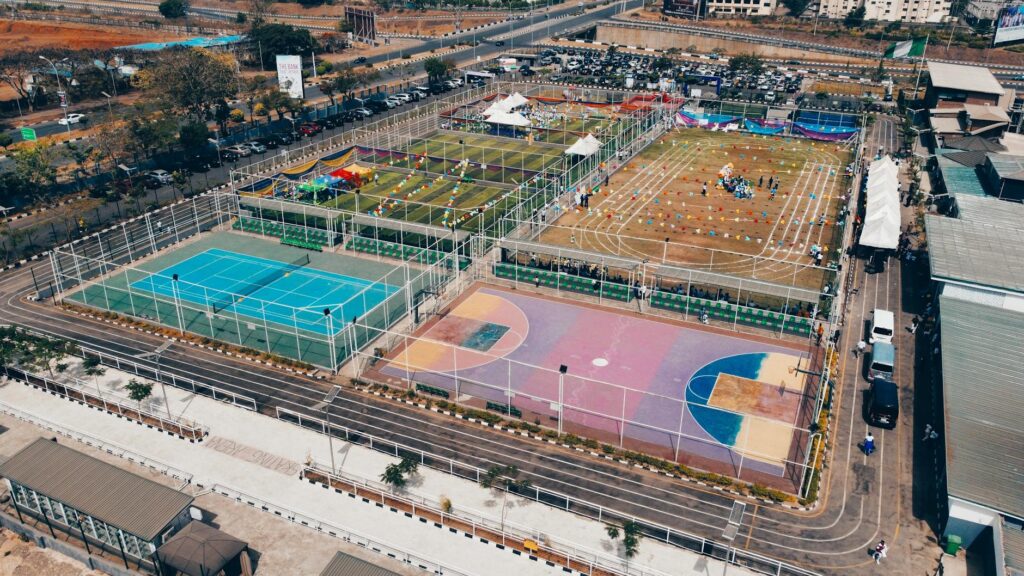
At the heart of S4SC is the development of multi‑use sports infrastructure that functions as a community hub. Empirical studies show that neighborhoods receiving a new recreation center experience a 7‑point increase in high school graduation rates and a 15 percent reduction in youth‑related crime within five years [1]. The mechanism operates through three interlocking channels:
- Physical Access and Social Cohesion – Well‑designed facilities lower the transaction cost of participation. In Nairobi’s Kibera district, a $2.5 million modular sports complex, built through a public‑private partnership, has doubled weekly youth attendance and generated a measurable rise in collective efficacy scores among residents [3].
- Skill Transfer and Labor Market Signaling – Structured programs embedded in facilities teach teamwork, leadership, and digital literacy. The “Play‑to‑Earn” initiative in São Paulo integrates e‑sports training with entrepreneurship workshops, resulting in a 23 percent increase in participants securing entry‑level jobs in the tech sector within 18 months [2].
- Health Outcomes and Economic Productivity – Regular physical activity reduces chronic disease prevalence, which translates into lower healthcare expenditures. A longitudinal analysis of 15 U.S. cities found that each additional community field correlated with a 0.4 percent decrease in municipal health costs per capita over a ten‑year horizon [4].
These outcomes are amplified when infrastructure design incorporates flexible spaces—such as convertible courts and community kitchens—that enable cross‑sector programming (e.g., after‑school tutoring, job fairs, and health clinics). The systemic effect is a feedback loop where improved social metrics attract further investment, reinforcing the infrastructure’s role as a catalyst for community resilience.
Systemic Ripple Effects Across Institutional Domains
The S4SC infrastructure model propagates through education, healthcare, urban planning, and governance.
Skill Transfer and Labor Market Signaling – Structured programs embedded in facilities teach teamwork, leadership, and digital literacy.
You may also like
 Business
The Rise of Conscious Capitalism: Investors Demand Social Value
As investors increasingly demand measurable social impact, conscious capitalism is reshaping the investment landscape, prioritizing purpose alongside profit.
Read More →Education Integration – School districts partnering with recreation centers report a 12 percent rise in attendance during joint after‑school sports‑academic programs, suggesting that physical engagement mitigates opportunity cost barriers to learning [1].
Healthcare Synergy – In the UK’s “Active Communities” pilot, local clinics co‑locate within sports hubs, offering preventive screenings during peak usage hours. This integration has cut missed appointment rates by 18 percent and accelerated early detection of hypertension among low‑income populations [3].
Urban Planning Realignment – Municipalities are revising zoning codes to mandate “sport‑adjacent” green spaces in new developments. The Chicago “Play Streets” ordinance, enacted in 2022, requires that 10 percent of all new residential blocks allocate a minimum of 2,500 sq ft for recreational use, a policy shift that reconfigures the spatial logic of urban growth [2].
Policy and Governance – International bodies such as the World Bank now include sports infrastructure metrics in their “Shared Prosperity” assessments. The 2025 World Development Report cites sport‑centric projects as a “high‑leverage intervention” for reducing income inequality in emerging economies [4].
Collectively, these ripples rewire the institutional architecture: ministries of sport coordinate with health and education portfolios, private capital flows through blended finance vehicles, and civil society gains a foothold in policy dialogues traditionally dominated by infrastructure and housing stakeholders.
Human Capital and Career Capital Implications Sports Infrastructure as a Systemic Engine for Community Development The expansion of S4SC has generated a nascent labor market that values hybrid expertise.
Human Capital and Career Capital Implications
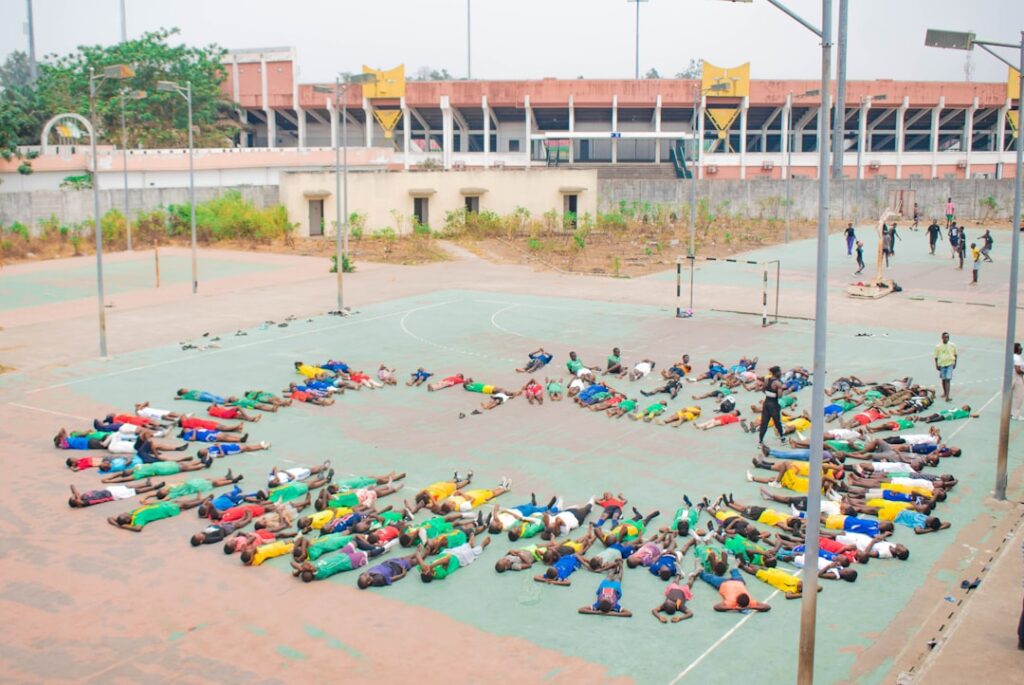
The expansion of S4SC has generated a nascent labor market that values hybrid expertise. According to the International Labour Organization, employment in “sport‑related community development” grew from 120,000 positions in 2019 to an estimated 210,000 in 2025, representing a 75 percent increase [2]. The most in‑demand roles include:
Community Sports Program Manager – Professionals who design and oversee multi‑modal programming, requiring certifications in both sport science and social work.
You may also like
 Career Development
Investing in Tomorrow: The UP Defence Corridor’s Economic Surge
The UP Defence Corridor is set to create a wave of job opportunities and reshape the career landscape for young professionals in India.
Read More →Impact Investment Analyst – Sports Portfolio – Finance specialists assessing ROI not only in financial terms but also in social impact metrics (e.g., health outcomes per dollar invested).
Policy Advisor – Sport & Development – Government liaisons who translate community data into legislative proposals, often drawing on public‑health epidemiology.
These pathways elevate career capital for individuals from historically marginalized groups, as many S4SC grants prioritize local hiring and leadership development. In Kenya’s “Grassroots Football Initiative,” 68 percent of senior staff are former participants, illustrating an asymmetric transfer of leadership from beneficiary to decision‑maker [3].
Economic mobility is also observable. A longitudinal cohort study of participants in the “Urban Play” program in Detroit showed that 42 percent of youth who completed a two‑year sports mentorship transitioned to post‑secondary education, compared with 19 percent of a matched control group [1]. This suggests that sports infrastructure functions as a conduit for intergenerational wealth creation, reshaping the trajectory of communities traditionally excluded from the formal labor market.
The resulting institutional power shift will redistribute decision‑making authority toward local stakeholders, while expanding career pathways that blend sport, social impact, and leadership.
Outlook: Institutional Trajectories Through 2030
Looking ahead, three systemic trends will shape the S4SC landscape:
- Blended Finance Scaling – Green bonds and social impact bonds earmarked for sports facilities are projected to exceed $5 billion in issuance by 2030, linking climate resilience with community health outcomes [4].
- Data‑Driven Program Design – Advances in wearable technology and GIS mapping will enable real‑time monitoring of participation, health, and economic indicators, allowing funders to calibrate interventions with precision akin to “smart city” models [2].
- Governance Institutionalization – A coalition of the International Olympic Committee, UNESCO, and the World Health Organization is drafting a global charter for sport‑based development, which could standardize metrics and create a transnational oversight body [3].
If these vectors converge, sports infrastructure will become entrenched as a core component of national development strategies, moving beyond pilot projects to become a permanent pillar of systemic resilience. The resulting institutional power shift will redistribute decision‑making authority toward local stakeholders, while expanding career pathways that blend sport, social impact, and leadership.
You may also like
 Business Insights
Navigating Change in Japan’s Pharmaceutical Sector
Japan's pharmaceutical industry is undergoing significant transformation. This analysis examines operational strategies, market dynamics, and the implications for the future of the sector.
Read More →Key Structural Insights
[Insight 1]: The allocation of sports infrastructure capital is reconfiguring institutional power, embedding sport into health, education, and urban policy frameworks.
[Insight 2]: Multi‑use facilities generate asymmetric career capital for marginalized communities, translating participation into measurable economic mobility.
[Insight 3]: Blended finance and data analytics are poised to institutionalize sports‑centric development as a systemic lever for sustainable growth through 2030.