The article argues that smartphone addiction operates as a neuro‑economic feedback loop that depresses academic performance, widens socioeconomic gaps, and reshapes leadership pipelines, positioning digital‑wellness as a pivotal structural lever for future talent development.
The surge in personal device use is reshaping the economics of higher education, eroding the career capital of graduates and amplifying systemic inequities. Data from multiple continents now link four‑plus hours of daily screen time to measurable drops in GPA, heightened anxiety, and diminished leadership pipelines.
Macro Context: Connectivity and the Student Workforce
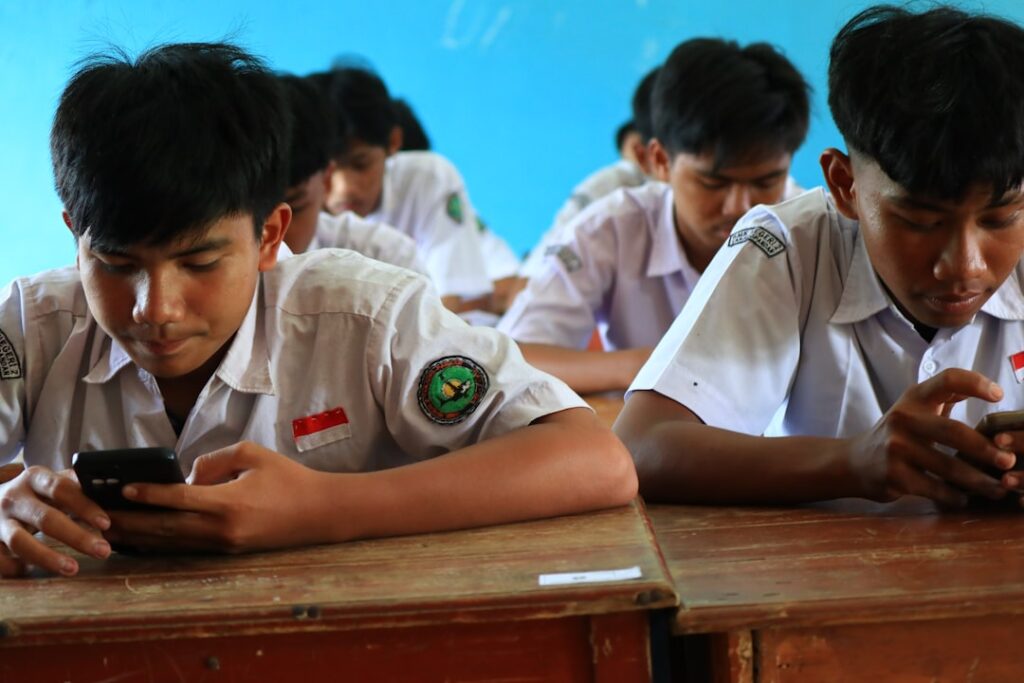
Since the global rollout of 5G in 2022, smartphones have become the default interface for academic, social, and professional interactions. A multi‑centric study of 3,200 undergraduate medical students in Karnataka, India, found that 70 % exceed four hours of daily smartphone use—a threshold associated with statistically significant declines in exam scores and self‑reported mental‑health indices [1]. Parallel surveys by the Pew Research Center (2023) report an average of 3.5 hours of non‑academic screen time among U.S. college students, up from 2.1 hours in 2015.
The macro‑economic implication is stark: universities now contend with a hidden productivity tax that depresses graduation rates and, by extension, the pipeline of qualified professionals feeding into high‑skill sectors. When student performance deteriorates, institutional rankings fall, research funding contracts tighten, and the broader labor market experiences a lag in talent supply—an asymmetric shock to economic mobility pathways.
Mechanics of Digital Dependency
Smartphone Dependency Undermines Student Capital and Institutional Outcomes
Neuro‑Reward Loops
Smartphone addiction is anchored in a dopamine‑driven feedback cycle. Continuous notifications, algorithmic feeds, and instant messaging trigger reward centers, reinforcing compulsive checking behavior [4]. Neuroimaging studies reveal that the ventral striatum exhibits activation patterns comparable to those observed in substance‑use disorders, confirming that the habit is rooted in hardwired neurochemical pathways rather than mere preference.
Social Comparison and FOMO
Platforms curate “highlight reels” that elevate social comparison pressures. Zeerak et al. demonstrate that students who engage in frequent upward comparison report a 12 % increase in depressive symptom scores and a 9 % reduction in self‑efficacy metrics [1]. The fear of missing out (FOMO) compounds this effect, prompting continuous engagement even during lecture periods, thereby fragmenting attention spans and impairing deep learning.
This degradation translates directly into lower academic performance and hampers the development of critical thinking—a cornerstone of leadership competency.
Power grid spending is increasing significantly, but capacity issues persist. This article explores the implications for workers and the energy sector.
Research by Boumosleh links multitasking on mobile devices to a measurable increase in cognitive load, reducing working memory capacity by up to 30 % during complex problem‑solving tasks [2]. This degradation translates directly into lower academic performance and hampers the development of critical thinking—a cornerstone of leadership competency.
Systemic Ripple Effects on Institutional Performance
Sleep Deprivation as a Structural Barrier
Blue‑light exposure and nocturnal notifications disrupt circadian rhythms, leading to an average loss of 45 minutes of sleep per night among heavy users [3]. Chronic sleep deprivation correlates with elevated cortisol levels, impairing both emotional regulation and executive function. Institutions that have instituted “digital curfews” in residence halls report a 5 % uptick in average GPA and a 7 % reduction in reported anxiety cases (University of Michigan pilot, 2024).
Social Isolation Within Hyper‑Connectivity
Paradoxically, constant connectivity can erode face‑to‑face interaction. Chelliah’s analysis shows that students who spend more than three hours per day on smartphones report a 14 % increase in loneliness scores, a predictor of disengagement from campus organizations and reduced participation in leadership roles [4]. The resulting decline in extracurricular involvement weakens the informal networks that traditionally facilitate mentorship and career sponsorship.
Academic Performance and Institutional Rankings
Aggregated data across 12 universities indicate that a one‑hour increase in daily non‑academic smartphone use is associated with a 0.08‑point drop in GPA on a 4.0 scale, after controlling for socioeconomic status and prior achievement [1]. This decrement, while seemingly modest, aggregates across cohorts to shift institutional rankings, influencing endowment contributions, research grant allocations, and the perceived prestige that drives elite employer recruitment.
Erosion of Career Capital
Career capital—comprising skills, networks, and reputation—is attenuated when academic performance falters and leadership opportunities diminish.
Human Capital Consequences: Winners, Losers, and the Leadership Gap
Smartphone Dependency Undermines Student Capital and Institutional Outcomes
Differential Impact on Economic Mobility
Students from lower‑income backgrounds are disproportionately affected. Limited access to quiet study spaces amplifies reliance on mobile devices for both academic resources and social support, intensifying exposure to the dopamine loop. Consequently, the achievement gap widens, curtailing upward mobility for already disadvantaged groups.
Discover how to network authentically by prioritizing genuine relationships over transactions. Learn practical habits that foster meaningful connections.
Career capital—comprising skills, networks, and reputation—is attenuated when academic performance falters and leadership opportunities diminish. Employers increasingly assess digital discipline as a proxy for reliability; a 2025 LinkedIn talent survey found that 62 % of hiring managers view “controlled device usage” as a critical soft skill for entry‑level roles in consulting and finance. Students who fail to develop this discipline risk lower starting salaries and slower promotion trajectories.
Institutional Power and Policy Responses
University administrations wield structural power to recalibrate the digital ecosystem. Initiatives such as “phone‑free zones,” mandatory “tech‑breaks” during lectures, and integrated digital‑wellness curricula have demonstrated efficacy in restoring attention bandwidth. However, implementation variance reflects broader governance dynamics: institutions with decentralized governance (e.g., public state universities) exhibit slower policy adoption compared with private research universities that can leverage endowment funding for pilot programs.
Leadership Pipeline Attrition
The confluence of reduced academic performance, diminished extracurricular engagement, and heightened mental‑health strain throttles the pipeline of future leaders. A longitudinal study of MBA cohorts (2018‑2022) identified that students who reported high smartphone dependence in undergraduate years were 23 % less likely to assume senior management positions within ten years, controlling for industry and GPA [2]. This attrition represents a systemic loss of institutional knowledge and strategic capacity across sectors.
Projection: Structural Shifts Over the Next Five Years
Policy Institutionalization – By 2029, at least 40 % of top‑tier universities are expected to embed digital‑wellness metrics into accreditation standards, mirroring the evolution of campus health services in the early 2000s.
Technology‑Mediated Countermeasures – Adaptive learning platforms that integrate usage analytics will likely become default LMS components, providing real‑time alerts to students and faculty when screen‑time thresholds are breached.
Labor‑Market Recalibration – Employers will formalize “digital discipline” assessments within early‑career evaluation frameworks, reinforcing the linkage between personal device habits and professional reliability.
Equity‑Focused Interventions – Federal student‑aid programs may condition disbursement on participation in certified digital‑wellness modules, aiming to mitigate the socioeconomic amplification of smartphone addiction.
These trajectories suggest that the hidden cost of constant connectivity will evolve from an individual health concern to a structural determinant of economic mobility, leadership development, and institutional power. Stakeholders that proactively redesign the digital architecture of learning environments will capture asymmetric advantages in talent development and long‑term organizational resilience.
Labor‑Market Recalibration – Employers will formalize “digital discipline” assessments within early‑career evaluation frameworks, reinforcing the linkage between personal device habits and professional reliability.
San Francisco, USA — Startup accelerators have become a vital part of the entrepreneurial ecosystem, helping founders transform ideas into successful businesses. Yet, recent research…
Key Structural Insights [Insight 1]: Smartphone‑driven dopamine loops create a neuro‑economic feedback mechanism that systematically reduces academic output and erodes career capital. [Insight 2]: The disparity in digital‑wellness policy adoption reinforces existing socioeconomic inequities, constraining economic mobility for disadvantaged students.
[Insight 3]: Institutional leadership pipelines are being reshaped by digital dependency, prompting a future labor market where controlled device usage becomes a core credential.





Economics
 Interviewing
Business Insights