No products in the cart.

Siemens Envisions Industrial AI Revolutionizing Infrastructure
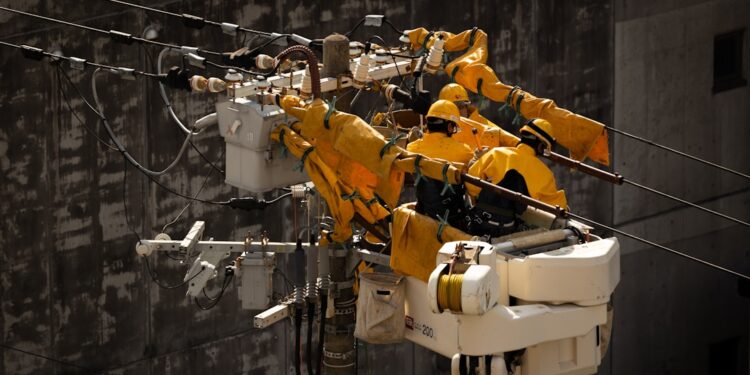
Siemens is at the forefront of industrial AI, revolutionizing infrastructure and energy management. This deep dive explores the implications for businesses and workers.

Transforming Infrastructure with Industrial AI
Germany — Siemens is redefining how we interact with the infrastructure that supports our daily lives. In a recent podcast, Peter Koerte, Siemens’s Chief Technology Officer, discussed the profound impact of industrial AI on sectors like transportation, energy, and construction. Unlike consumer AI, which often garners headlines for its flashy applications, industrial AI works quietly behind the scenes to optimize systems critical to society’s functioning.
Koerte emphasized that industrial AI enhances efficiency and sustainability. For instance, AI applications in buildings can save up to 30% on energy costs by optimizing heating and cooling systems. These innovations not only reduce operational costs but also contribute to significant reductions in greenhouse gas emissions, highlighting the dual benefit of economic and environmental sustainability.
Integrating Digital and Physical Systems
The core idea behind Siemens’s industrial AI initiatives is the seamless integration of digital technologies with the physical world. Koerte explained that this involves using advanced sensors and AI algorithms to monitor and adjust the performance of physical systems in real-time. For example, in transportation, AI can predict maintenance needs for trains, ensuring safety and efficiency.
This integration allows for the optimization of energy usage. By continuously analyzing data from various sources, AI can make real-time adjustments to energy consumption in buildings, maximizing efficiency and aligning with global sustainability goals.
Unlike consumer AI, which often utilizes large datasets from public sources, industrial AI relies on proprietary data from specific industries, crucial for training models that can predict failures or optimize processes effectively.
Data Quality and Policy Influence
Data plays a pivotal role in the success of industrial AI. According to MIT Sloan Management Review, the precision required in industrial applications demands high-quality, domain-specific data. Unlike consumer AI, which often utilizes large datasets from public sources, industrial AI relies on proprietary data from specific industries, crucial for training models that can predict failures or optimize processes effectively.
The policy landscape also influences the deployment of industrial AI. Analysts suggest that governments are increasingly recognizing AI’s potential to drive economic growth and sustainability. Policies that support AI research and development are becoming more common, enhancing the effectiveness of AI applications.
Navigating Challenges and Ethical Considerations
Despite the clear benefits of industrial AI, several challenges persist. One major concern is the potential for job displacement as AI systems automate tasks traditionally performed by humans. While some argue that AI will create new job opportunities, others worry that the transition may not be smooth for all workers. There is a pressing need for workforce retraining programs to ensure employees can adapt to new technologies.
Another debate centers around data privacy and security. As companies gather more data to fuel their AI systems, concerns about how this data is used and protected are rising. Stakeholders must navigate these challenges to build trust and ensure that AI implementations are ethical and responsible.
You may also like
 Career Guidance
Remote Work Redefines Career Capital: How the BLS Data Uncovers a Systemic Realignment of Talent and Power
The BLS data reveal that remote work is converting geographic flexibility into a new form of career capital, favoring digitally fluent workers and reshaping institutional…
Read More →Policies that support AI research and development are becoming more common, enhancing the effectiveness of AI applications.
Future Prospects for Industrial AI
The future of industrial AI looks promising, with continued advancements expected in technology and applications. As Siemens leads the charge, we can anticipate more intelligent systems that not only improve efficiency but also enhance the sustainability of various industries. The integration of AI with IoT (Internet of Things) devices will further revolutionize how industries operate, creating smarter and more responsive environments.
As governments implement supportive policies, the landscape for industrial AI will become increasingly favorable, accelerating innovation and adoption. The focus will also shift towards developing a skilled workforce that can thrive in an AI-driven economy.