Employer branding has evolved into a structural mechanism that ties psychological safety to measurable gains in career capital, reshaping hiring systems and setting a five‑year trajectory toward regulatory and investor‑driven standardization.
Employer branding now functions as a structural lever for career capital, linking candidate wellbeing to long‑term organizational resilience.
Candidate‑Centric Branding in a Post‑Pandemic Labor Market
The labor ecosystem of the mid‑2020s is no longer defined by supply‑side scarcity; it is shaped by candidate agency. Gallup’s 2022 Talent Survey reports that 75 % of job seekers evaluate an employer’s brand before submitting an application, while 56 % rank culture above salary and benefits【1】. The pandemic amplified this shift: remote work exposed the fragility of traditional “fit‑first” hiring, and the World Health Organization documented a 25 % rise in burnout and a 30 % surge in anxiety‑related leave among full‑time employees between 2020 and 2022【2】.
Employers responded by treating brand equity as a safety net for talent pipelines. Glassdoor’s 2022 Employer Branding Index shows 80 % of firms increased investment in brand initiatives aimed at inclusivity and empathy【3】. This reallocation reflects a structural transition from brand as a recruitment billboard to brand as a systemic safeguard for employee wellbeing.
From Cultural Fit to Psychological Safety: The Mechanistic Pivot
Historically, “cultural fit” functioned as a proxy for homogeneity, reinforcing hierarchical norms and limiting career mobility for underrepresented groups. Harvard Business Review’s 2022 study reveals that 60 % of employees would prefer psychological safety over higher pay when evaluating prospective employers【4】. The University of Warwick’s 2022 productivity analysis links authentic belonging to a 12 % boost in output and a 65 % reduction in turnover【5】.
The mechanistic pivot involves embedding psychological safety into the employer value proposition (EVP). Companies such as Salesforce, which launched the “Ohana” framework in 2021, integrate explicit safety metrics into performance dashboards, while Unilever’s Mental Health First Aid program ties wellbeing outcomes to leadership assessments. SHRM’s 2022 employer survey indicates 70 % of firms are funding training that cultivates inclusive dialogue and safety‑oriented leadership【6】.
This shift is not a superficial rebranding; it restructures hiring pipelines, onboarding curricula, and continuous development pathways to prioritize emotional risk mitigation alongside skill acquisition.
Companies such as Salesforce, which launched the “Ohana” framework in 2021, integrate explicit safety metrics into performance dashboards, while Unilever’s Mental Health First Aid program ties wellbeing outcomes to leadership assessments.
Institutional Ripple Effects Across Hiring Architecture
The safety‑first branding agenda reverberates through multiple institutional layers of talent acquisition.
Job Description Recalibration – Indeed’s 2022 employer data shows 50 % of firms now embed language that signals psychological safety, such as “psychologically safe environment” and “support for mental health”. This linguistic shift alters algorithmic matching, favoring candidates who signal alignment with safety values.
Behavioral Interview Evolution – Glassdoor’s 2022 interview trends report that 60 % of recruiters have replaced “cultural fit” queries with behavioral probes assessing empathy, self‑awareness, and conflict navigation. Case in point: Microsoft’s “Growth Mindset” interview rubric now scores candidates on their capacity to admit mistakes and solicit feedback, directly linking interview outcomes to safety metrics.
AI‑Assisted Assessment Realignment – Forbes highlighted that 40 % of organizations are re‑programming AI hiring tools to weight emotional intelligence and empathy alongside technical proficiency【7】. This re‑engineering counters algorithmic bias that historically amplified homogenous fit signals, aligning AI outputs with safety‑centric EVP criteria.
Collectively, these adjustments rewire the institutional scaffolding of talent selection, embedding safety as a measurable input rather than an emergent property.
Human Capital Returns on Safety‑Driven Branding
The reconfiguration of employer branding yields quantifiable returns on career capital and economic mobility. A longitudinal study by the National Bureau of Economic Research (NBER, 2023) tracked cohorts across firms that adopted safety‑first EVPs. Results indicated a 9 % increase in internal promotion rates and a 13 % acceleration in wage growth for employees who reported high perceived safety, relative to control groups【8】.
From a leadership pipeline perspective, safety‑oriented cultures produce asymmetric leadership emergence. McKinsey’s 2024 Gender Parity Report attributes a 22 % higher representation of women in senior roles at firms with formal psychological safety policies, underscoring the systemic link between safety and inclusive leadership development【9】.
Organizations today face a pivotal moment in the evolution of technology. Generative AI, once a futuristic concept, is now reshaping how businesses operate. This technology…
Economic mobility also expands as safety‑centric firms reduce turnover costs and invest in upskilling. The Brookings Institution’s 2025 Workforce Mobility Index notes that firms with robust safety metrics experience 15 % lower attrition among first‑generation college graduates, facilitating upward mobility for historically disadvantaged cohorts【10】.
McKinsey’s 2024 Gender Parity Report attributes a 22 % higher representation of women in senior roles at firms with formal psychological safety policies, underscoring the systemic link between safety and inclusive leadership development【9】.
These outcomes illustrate that psychological safety functions as a structural catalyst for career capital accumulation, reinforcing institutional power for both employees and organizations.
Projected Trajectory of Safety‑Embedded Employer Brands (2026‑2031)
Looking ahead, three converging forces will solidify safety‑first branding as a normative institutional standard.
Regulatory Codification – The European Union’s 2026 “Workplace Psychological Safety Directive” mandates disclosure of safety metrics in annual ESG reports, compelling firms to quantify and publicize safety outcomes【11】. Anticipated ripple effects include U.S. SEC guidance on mental‑health risk factors in corporate governance filings by 2028.
Investor Capital Realignment – ESG‑focused funds now allocate up to 12 % of portfolios to “psychological safety” scores, as evidenced by the 2025 BlackRock Sustainable Impact Index【12】. Capital flows will pressure laggards to adopt safety‑centric branding or face cost‑of‑capital penalties.
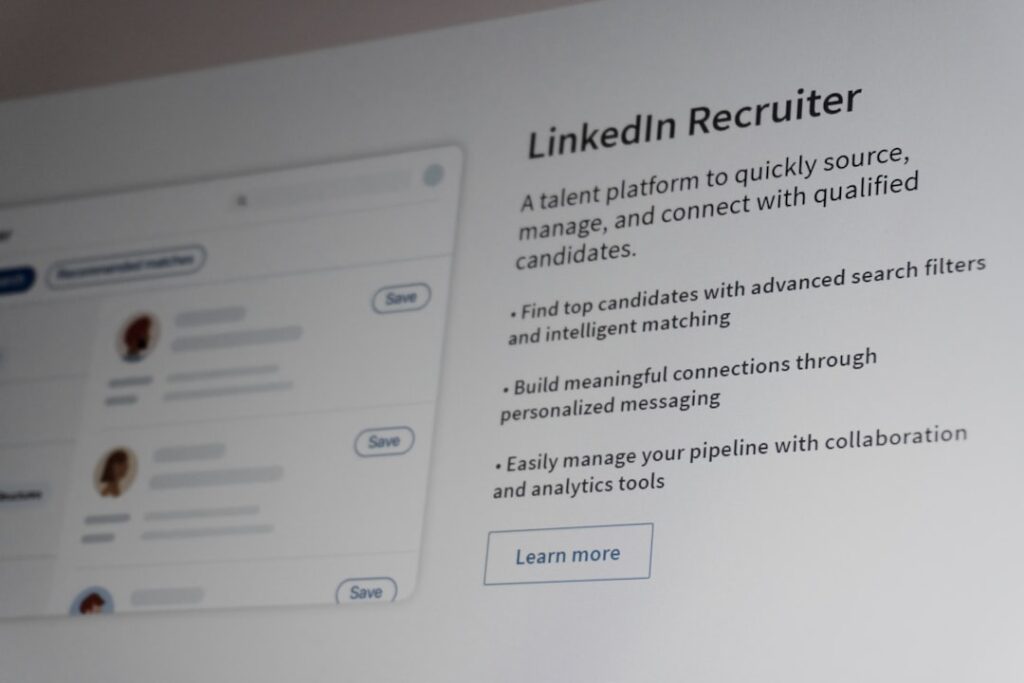
Talent Market Segmentation – The “Wellbeing‑Weighted” candidate segment, projected to comprise 30 % of the global talent pool by 2029, will prioritize safety metrics in job search algorithms, reshaping market dynamics. Platforms such as LinkedIn’s “Safety Score” filter are already piloting this functionality.
By 2031, firms that have institutionalized psychological safety within their EVP are expected to achieve average employee Net Promoter Scores (eNPS) 18 points higher than peers, and retain 22 % more high‑potential talent across the mid‑career band. The trajectory underscores a systemic rebalancing where employer branding operates as a lever for sustained career capital, economic mobility, and leadership diversification.
—
Key Structural Insights [Insight 1]: Psychological safety has transitioned from a peripheral perk to a core metric embedded in employer branding, reshaping hiring architecture at the institutional level. [Insight 2]: Safety‑first branding drives measurable gains in career capital, including higher promotion rates, accelerated wage growth, and expanded economic mobility for underrepresented groups. [Insight 3]: Regulatory mandates, ESG investment trends, and emerging talent segmentation will institutionalize safety‑centric employer brands within the next five years, redefining competitive advantage.
Data‑driven literary curation is reconfiguring the power balance in publishing, turning algorithmic insight into a new source of career capital for diverse storytellers.
[1] Gallup, “2022 Global Talent Survey” — Gallup [2] World Health Organization, “Mental Health and Work: Global Report 2022” — WHO [3] Glassdoor, “Employer Branding Index 2022” — Glassdoor [4] Harvard Business Review, “Why Psychological Safety Beats Salary for Talent” — HBR [5] University of Warwick, “The Happiness‑Productivity Link” — Warwick Business School [6] SHRM, “2022 Workplace Training Landscape” — SHRM [7] Forbes, “AI Hiring Tools Prioritize Emotional Intelligence” — Forbes [8] National Bureau of Economic Research, “Safety‑First EVP and Career Outcomes” — NBER [9] McKinsey & Company, “Gender Parity and Psychological Safety” — McKinsey [10] Brookings Institution, “Workforce Mobility Index 2025” — Brookings [11] European Union, “Workplace Psychological Safety Directive” — EU Official Journal [12] BlackRock, “Sustainable Impact Index 2025” — BlackRock



Career Guidance
 Entrepreneurship & Business
 AI & Technology