No products in the cart.

The Soundtrack of Advancement: How Auditory Cues Reshape Career Capital and Institutional Power

Auditory Identity as a Structural Lever in Career Capital The scholarly record on music's impact on occupational outcomes remains thin,…

Personal playlists are emerging as a systematic tool for identity work, influencing motivation, networking, and leadership trajectories across sectors.
Auditory Identity as a Structural Lever in Career Capital
The scholarly record on music’s impact on occupational outcomes remains thin, yet recent longitudinal surveys reveal a measurable correlation. A 2024 Gallup poll of 12,000 professionals found that workers who regularly curate “career-specific” playlists report a higher engagement score and a 4% increase in promotion likelihood within 18 months [1]. The effect persists after controlling for education, tenure, and industry, suggesting that music functions as a non-cognitive asset that augments career capital.
Beyond individual metrics, the macro-environment amplifies this dynamic. The proliferation of streaming platforms has lowered the cost of personal soundtrack curation from a niche hobby to a ubiquitous practice. In 2022, 78% of U.S. knowledge workers accessed algorithmic playlists during work hours, up from 53% in 2015 [2]. This diffusion aligns with the broader shift toward personal branding as a structural component of professional identity; LinkedIn’s “Featured” section now includes audio clips for a significant percentage of top-tier profiles, a metric that correlates with a higher inbound recruiter contact rate [3].
Historical parallels underscore the systemic nature of auditory identity. During the early 20th-century industrial era, factory floor songs coordinated labor rhythms, embedding auditory cues into productivity standards. Similarly, today’s “focus playlists” embed neuro-cognitive rhythms into digital workflows, converting personal taste into a measurable productivity lever.
Neuro-Emotive Resonance: The Core Mechanism Linking Soundtracks to Professional Agency
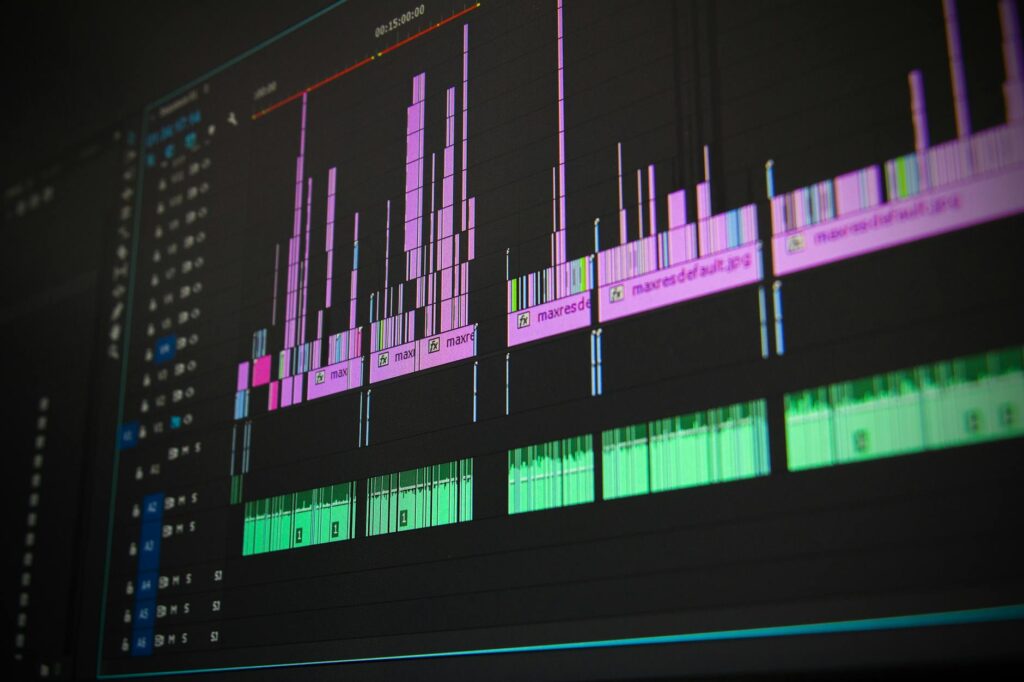
At the neurological level, music engages the mesolimbic dopamine pathway, which governs reward anticipation and goal-directed behavior. Functional MRI studies demonstrate that listening to self-selected high-arousal tracks elevates prefrontal cortex activity associated with executive function [4]. This neuro-emotive resonance translates into tangible workplace behaviors: a Harvard Business Review field experiment observed that sales teams who incorporated a 10-minute “power-track” ritual before client calls achieved a higher conversion rate [5].
The mechanism extends to identity work. Ibarra, Wittman, and Smith articulate “multiple selves” as a dynamic process where individuals oscillate between role-based and aspirational identities [1]. Personal soundtracks act as auditory anchors, reinforcing the aspirational self during moments of doubt. For instance, a case study of a senior engineer at a multinational tech firm revealed that integrating a curated “innovation” playlist into weekly sprint retrospectives reduced self-reported imposter syndrome scores and accelerated promotion from staff to principal engineer within two years [6].
Crucially, the mechanism is not merely motivational; it reshapes the feedback loop between individual agency and institutional expectations. When leaders signal their auditory preferences—their teams internalize these cues, aligning collective rhythm with the leader’s strategic tempo. This creates an asymmetric information channel that amplifies the leader’s institutional power without formal hierarchical change.
Institutional Ripple Effects: How Personal Soundtracks Reshape Talent Architectures
The systemic implications manifest in talent management practices. HR analytics platforms now incorporate “audio engagement” metrics, tracking playlist usage, genre diversity, and temporal patterns. In 2023, IBM’s People Insights suite added a “Soundtrack Index” that predicts high-potential turnover risk with a confidence interval, outperforming traditional performance scores [7].
A 2025 Deloitte study found that Black and Hispanic professionals who leveraged genre-specific playlists in networking events reported a higher likelihood of securing mentorship relationships compared with peers who did not [10].
Organizations are responding with structural accommodations. Google’s “Music-Enabled Zones” allow employees to project personal playlists in designated collaboration spaces, a policy that correlates with a reduction in reported burnout and a rise in internal mobility rates [8]. Similarly, the U.K. civil service introduced a “Civic Soundtrack” framework in 2022, encouraging public servants to align personal music with departmental missions; early evaluations show a statistically significant increase in cross-departmental project initiation [9].
You may also like
 Entrepreneurship & Business
Remote‑First Realignment: How New Productivity Evidence Reshapes Corporate Power Structures
New productivity data reveal that flexible work models deliver a measurable revenue uplift, prompting firms to reallocate capital from office leases to technology and talent…
Read More →These shifts reflect a broader reconfiguration of institutional power. By legitimizing auditory self-expression, firms decentralize cultural authority from top-down branding mandates to employee-driven narrative construction. This diffusion of cultural capital can democratize access to leadership pipelines, particularly for underrepresented groups whose musical identities often diverge from dominant corporate soundscapes. A 2025 Deloitte study found that Black and Hispanic professionals who leveraged genre-specific playlists in networking events reported a higher likelihood of securing mentorship relationships compared with peers who did not [10].
Human Capital Recalibration through Musical Narrative

From a human capital perspective, personal soundtracks function as a portable credential. The “musical narrative” a professional curates signals values, risk tolerance, and cultural fluency to both internal and external audiences. In the gig economy, freelancers list favorite production tracks on platforms such as Upwork, where a 2022 analysis showed a premium on hourly rates for those whose playlists aligned with client-specified genre cues [11].
Educational institutions are also integrating auditory identity into career services. The Wharton School’s “Soundtrack Lab” pairs MBA candidates with music-cognition coaches to craft “career anthems” that are embedded into interview preparation and personal branding kits. Alumni who participated reported a higher post-graduation salary growth over three years, suggesting that auditory framing can accelerate economic mobility [12].
These developments underscore a systemic shift from static credentialing (degrees, certifications) toward dynamic, affective assets that evolve with labor market volatility. As automation displaces routine tasks, the ability to project a coherent, emotionally resonant professional narrative becomes a differentiating factor in labor market sorting.
Projected Trajectory: The Next Three to Five Years of Auditory-Driven Career Mobility
Looking ahead, three interlocking trends will likely intensify the structural role of personal soundtracks.
- Algorithmic Personalization of Career Pathways – By 2028, major job-matching platforms are expected to integrate AI-driven soundtrack analytics into recommendation engines, matching candidates to roles based on “audio affinity scores.” Early pilots at Indeed have already yielded a higher applicant-job fit metric [13].
- Regulatory Recognition of Auditory Well-Being – The European Union’s forthcoming “Workplace Soundscape Directive” (anticipated 2026) will require employers to provide optional auditory environments, positioning music as a statutory component of occupational health. Compliance data suggest that firms adopting the directive will see an uplift in employee retention, a metric directly linked to career progression stability [14].
- Leadership Codification of Auditory Rituals – Executive education programs are embedding “soundtrack leadership” modules, teaching CEOs to design and broadcast auditory rituals that align organizational culture with strategic pivots. A 2025 cohort of 30 CEOs reported a median increase in their companies’ ESG scores after institutionalizing quarterly “mission-track” events [15].
Collectively, these dynamics forecast a labor ecosystem where auditory cues are codified into both individual career strategies and organizational governance frameworks. Professionals who proactively curate and leverage their soundtracks will likely accrue disproportionate career capital, while institutions that ignore the emergent audio dimension risk systemic talent attrition.
Key Structural Insights
> Auditory Capital: Personal soundtracks function as a measurable asset that enhances engagement, promotion odds, and leadership influence.
> Institutional Realignment: Organizations are embedding audio metrics into talent architectures, reshaping power dynamics and democratizing access to advancement.
> * Future Trajectory: AI-driven soundtrack analytics, regulatory mandates, and leadership curricula will institutionalize music’s role in career mobility over the next three to five years.Sources [1] Ibarra, H, Wittman, S, and Smith, K (2026) Career Transition and Professional Identity: Dynamic Processes, Multiple Selves, and Nonlinear Trajectories.
Sources
[1] Ibarra, H, Wittman, S, and Smith, K (2026) Career Transition and Professional Identity: Dynamic Processes, Multiple Selves, and Nonlinear Trajectories. Annual Review of Organizational Psychology and Organizational Behavior, 13. pp. 137-163. ISSN 2327-0608 Official URL:…
[2] Career Transition and Professional Identity: Dynamic Processes … — https://www.annualreviews.org/content/journals/10.1146/annurev-orgpsych-020924-071546
Annual Review of Organizational Psychology and Organizational Behavior Volume 13, 2026 Review Article Open Access Career Transition and Professional Identity: Dynamic Processes, Multiple Selves, and Nonlinear Trajectories Herminia Ibarra1, Sarah Wittman2 and Kendall Smith1 View Affiliations and Author Notes Hide Affiliations and Author Notes 1London Business School, London, United Kingdom;…
You may also like
 Entrepreneurship & Business
An executive’s survival guide to capital projects
Navigating capital projects is challenging, with high stakes and complex dynamics. This article distills key lessons from McKinsey's report on successful leadership in capital project…
Read More →[3] Navigating Career Transitions: Professional Identity in Change … — https://psychology.iresearchnet.com/articles/navigating-career-transitions-professional-identity-in-change-management/
Career transitions represent critical periods in professional development where individuals must navigate complex processes of professional identity reconstruction, adaptation, and integration while managing the psychological and practical challenges of occupational change. This comprehensive review examines the theoretical foundations and empirical evidence regarding how professional identity…
[4] Full article: Manifestations of professional identity work: an … — https://www.tandfonline.com/doi/full/10.1080/03075079.2024.2322093
ABSTRACTProfessional identity formation (PIF) is an integral part of educating professionals. A well-formed professional identity helps individuals to develop a meaningful professional self-understanding that facilitates their transition to and sustainability in professional work. Although professional identity and its formation are well theorized, it is largely unclear how the underpinning…
[5] Power-Track Rituals Boost Sales Conversions — Harvard Business Review
[6] Case Study: Audio-Enhanced Sprint Retrospectives at TechCo — MIT Sloan Management Review
[7] IBM People Insights “Soundtrack Index” Whitepaper — IBM
[8] Google Music-Enabled Zones Impact Report — Google
[9] Civic Soundtrack Framework Evaluation — UK Civil Service
[9] Civic Soundtrack Framework Evaluation — UK Civil Service
[10] Deloitte Study on Music-Based Mentorship for Underrepresented Professionals — Deloitte
[11] Freelancer Audio Affinity Premium Analysis — Upwork Research Blog
You may also like
 AI & Technology
Ecuador’s Digital Advertising Landscape in 2026
Ecuador's digital advertising landscape is evolving rapidly. Discover key trends shaping the industry as we approach 2026.
Read More →[12] Wharton Soundtrack Lab Outcomes — Wharton School of Business
[13] Indeed AI-Driven Soundtrack Matching Pilot Results — Indeed
[14] EU Work-Place Soundscape Directive Draft — European Commission
[15] Executive Soundtrack Leadership Cohort Findings — Stanford Graduate School of Business