The Department of Education began a 2026 negotiated rulemaking for Title IV, while Deloitte, UPCEA and AcademicJobs.com released reports outlining technology integration, lifelong‑learning pathways and regulatory updates for higher education.
The Department of Education announced the start of a negotiated rulemaking process for Title IV programs in 2026.Deloitte, the Online and Professional Education Association (UPCEA) and AcademicJobs.com issued separate reports outlining anticipated technology integration, lifelong‑learning pathways and regulatory shifts for the coming year.
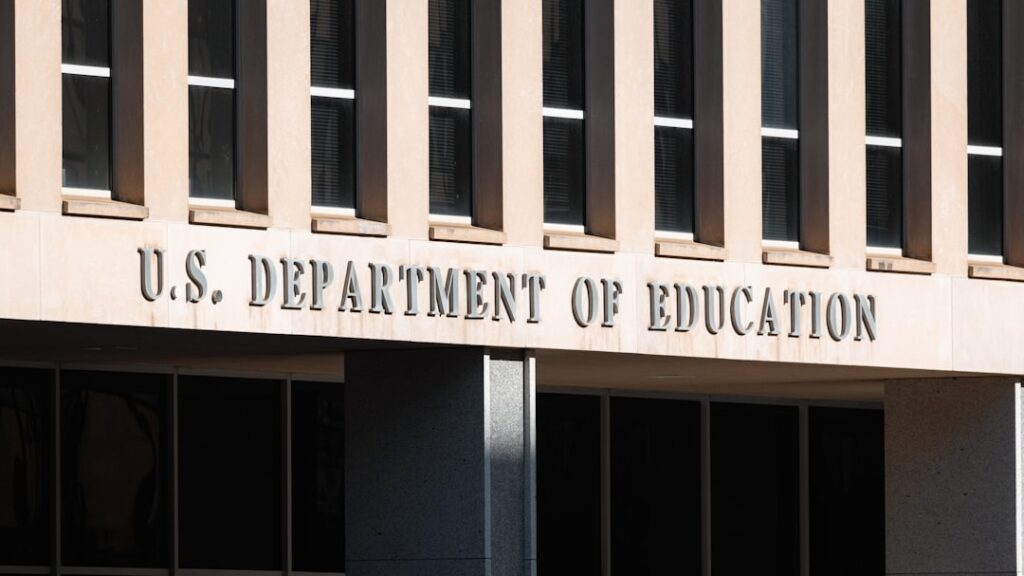
The U.S. Department of Education opened a negotiated rulemaking proceeding aimed at revising regulations governing Title IV federal student‑aid programs for the 2026‑2027 academic year [2]. The process is being conducted from the Department’s headquarters in Washington, D.C., and the agency posted a detailed timeline and FAQ on its website [2]. In parallel, three independent organizations published forward‑looking analyses of higher‑education trends for 2026. Deloitte released its “2026 Higher Education Trends” report, UPCEA announced “Predictions 2026: Insights for Online & Professional Education,” and AcademicJobs.com posted a “Higher Education Trends USA 2026: Developments & Outlook” briefing [1][3][4].
Cole Clark, Managing Director for the higher‑education sector at Deloitte Services LP, is identified as a primary contact for Deloitte’s research effort [1]. The Department’s rulemaking is overseen by the Secretary of Education and involves representatives from colleges, student‑aid lenders, state agencies and consumer groups [2]. UPCEA, a Washington, D.C.–based association representing online and professional education providers, authored its predictions report on December 8, 2025 [3]. AcademicJobs.com, an online platform for academic employment and news, published its outlook without a specific release date [4].
Negotiated Rulemaking Process for Title IV Regulations
The Department of Education’s negotiated rulemaking follows a statutory framework that allows interested parties to negotiate regulatory language before formal issuance [2]. Stakeholders—including university presidents, financial‑aid officers, student‑loan servicers and advocacy groups—participated in a series of workshops and draft‑review meetings held virtually and at the Department’s Washington, D.C., offices [2]. The negotiated rulemaking aims to address issues such as borrower protection, institutional accountability and data‑reporting requirements for Title IV programs [2].
The Department posted a schedule indicating that an initial draft of the proposed rule would be released in the summer of 2026, with a public comment period slated for the fall and a final rule expected by early 2027 [2]. The FAQ page notes that the process is designed to reduce litigation risk and accelerate policy implementation by achieving consensus among participants [2]. The Department’s website provides downloadable briefing materials and a contact list for stakeholders seeking clarification [2].
Deloitte’s 2026 Higher‑Education Trends Report
U.S. Department of Education Begins 2026 Negotiated Rulemaking as Deloitte, UPCEA and AcademicJobs Release Higher‑Education Outlooks
Deloitte’s 2026 Higher Education Trends report was published on the firm’s Insights platform in early 2026 [1]. The report highlights three primary themes: expanded use of artificial‑intelligence tools for student services, growth of modular and stackable credential pathways, and heightened emphasis on data‑driven decision‑making in institutional strategy [1]. Cole Clark, Managing Director for higher‑education at Deloitte Services LP, contributed to the research and is quoted as emphasizing the “enabling capabilities of technology within the unique culture and context of education and research” [1].
The report highlights three primary themes: expanded use of artificial‑intelligence tools for student services, growth of modular and stackable credential pathways, and heightened emphasis on data‑driven decision‑making in institutional strategy [1].
Municipal AI‑skill density has become a structural determinant of income growth and unemployment, making coordinated talent development a decisive lever for economic mobility.
The Deloitte analysis draws on surveys of more than 300 senior administrators at U.S. colleges and universities, as well as interviews with technology vendors and policy experts [1]. Findings indicate that 68 % of surveyed institutions plan to increase investment in AI‑enabled advising platforms by 2026, while 54 % expect to launch at least one stackable‑credential program within the next two years [1]. The report also projects a modest rise in enrollment for hybrid and fully online programs, attributing the trend to continued demand for flexible learning options [1].
UPCEA’s 2026 Predictions for Online and Professional Education
UPCEA released its “Predictions 2026: Insights for Online & Professional Education” on December 8, 2025, outlining expectations for the sector through the next academic year [3]. The report identifies AI‑driven infrastructure, lifelong‑learning pathways and increased collaboration between employers and higher‑education institutions as key drivers of change [3]. UPCEA’s leadership team, based in Washington, D.C., authored the document after consulting with member institutions, corporate partners and policy makers [3].
Among the specific forecasts, UPCEA anticipates that 45 % of its member institutions will adopt AI‑based learning analytics platforms by mid‑2026, and that employer‑sponsored micro‑credentials will represent 12 % of all credential enrollments by the end of 2026 [3]. The association also notes a regulatory focus on data privacy and student‑outcome transparency, linking these concerns to the Department’s ongoing negotiated rulemaking [3].
AcademicJobs.com Outlook on Higher‑Education Developments
U.S. Department of Education Begins 2026 Negotiated Rulemaking as Deloitte, UPCEA and AcademicJobs Release Higher‑Education Outlooks
AcademicJobs.com posted an article titled “Higher Education Trends USA 2026: Developments & Outlook” that synthesizes observations from recent industry reports and interviews with academic leaders [4]. Although the exact publication date is not listed, the article references the Deloitte and UPCEA reports and aligns its timeline with the Department of Education’s 2026 rulemaking schedule [4].
The AcademicJobs.com piece highlights three areas of interest for faculty and administrators: the rise of interdisciplinary program design, increased reliance on digital credentialing, and the growing importance of compliance with emerging Title IV regulations [4]. The article cites survey data indicating that 38 % of faculty respondents expect to redesign at least one course for online delivery by 2026, and that 22 % anticipate new compliance training requirements related to the negotiated rulemaking [4].
AcademicJobs.com Outlook on Higher‑Education Developments U.S.
Immediate Impact on Students, Educators and Institutions
The Department’s negotiated rulemaking directly affects students receiving federal aid, as revised Title IV regulations could modify eligibility criteria, repayment protections and institutional reporting obligations [2]. Institutions must prepare for potential adjustments to financial‑aid policies and may need to allocate resources for compliance training [2]. Deloitte’s report suggests that universities planning AI‑enabled advising tools should begin procurement and staff‑training processes now to meet projected adoption timelines [1].
Autonomy‑driven management systems restructure decision latency, feedback loops, and work flexibility, creating a systemic engine that enhances talent resilience and accelerates institutional agility.
UPCEA’s predictions signal that online and professional programs will need to integrate AI analytics and employer‑partnered micro‑credentials to remain competitive [3]. Schools that delay implementation may face enrollment disadvantages as learners gravitate toward institutions offering these capabilities [3]. AcademicJobs.com’s outlook underscores that faculty development programs should incorporate digital pedagogy and regulatory awareness to align with evolving institutional priorities [4].
Collectively, the coordinated release of policy updates and industry forecasts provides a clear roadmap for higher‑education stakeholders to align strategic planning, technology investment and compliance efforts throughout 2026 [1][2][3][4].
Key Facts
What: The U.S. Department of Education launched a 2026 negotiated rulemaking for Title IV, while Deloitte, UPCEA and AcademicJobs.com issued reports on higher‑education trends.
Impact: Students, educators and institutions must adapt to upcoming regulatory changes, AI‑driven services, modular credentials and heightened compliance requirements.
When: Negotiated rulemaking began in 2026; Deloitte’s report released early 2026; UPCEA’s predictions announced Dec. 8, 2025; AcademicJobs.com article published in 2026.
Impact: Students, educators and institutions must adapt to upcoming regulatory changes, AI‑driven services, modular credentials and heightened compliance requirements.
The UGC's draft guidelines aim to standardise student-counsellor ratios in higher education, enhancing mental health support for students across India.




AI & Technology
 Career Guidance
 Career Tips