No products in the cart.

Ukraine’s Poultry Exports Surge Amid New EU Trade Deal
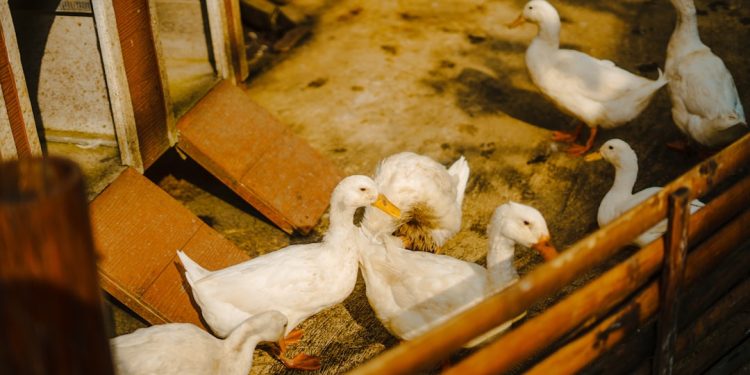
Ukraine's poultry exports are set to rise significantly following a new trade deal with the EU, impacting global markets.

Kyiv, Ukraine — Ukraine’s poultry exports are poised for significant growth following the recent implementation of a trade deal with the European Union. This agreement, finalized in October 2025, eliminates tariffs on Ukrainian poultry products, allowing the country to expand its market share in Europe, a region that has increasingly relied on imports to meet rising demand.
The deal is particularly timely as Ukraine seeks to recover economically from the ongoing impacts of the conflict that began in 2022. The EU has emerged as a crucial partner, providing not only a market for exports but also support in terms of agricultural reforms and investments in infrastructure.

Prior to the agreement, Ukrainian poultry faced tariffs as high as 20%, which significantly hampered its competitiveness against other suppliers. With the removal of these tariffs, Ukrainian producers can now offer their products at more attractive prices, which is expected to enhance their presence in the European market. This shift is crucial as the EU is one of the largest importers of poultry, with a market valued at approximately €8 billion annually.
Ukraine’s poultry industry is a vital component of its agricultural sector, contributing over $1.5 billion to the economy in 2023. The country is the fifth-largest poultry producer in Europe, with production levels reaching 1.4 million tons annually. The EU trade deal could potentially increase this figure by at least 20% in the coming years, according to industry analysts.
This shift is crucial as the EU is one of the largest importers of poultry, with a market valued at approximately €8 billion annually.
This agreement is not just a boon for Ukraine; it also reflects a broader trend in international trade where countries are increasingly looking to diversify their supply chains. The EU’s decision to strengthen ties with Ukraine underscores a strategic pivot towards Eastern Europe, particularly in light of disruptions caused by geopolitical tensions.
You may also like
 AI & Technology
China Issues Draft Rules to Govern Human-Like AI Systems
China has released draft regulations aimed at governing human-like AI systems, emphasizing ethical use and security protocols.
Read More →From the perspective of EU member states, this deal offers a reliable source of poultry amidst concerns over food security. The ongoing conflict in Ukraine has raised alarms about the stability of food supplies, making this agreement a mutually beneficial arrangement. Countries like Poland and Germany, which have significant poultry consumption, stand to gain from a more stable supply chain.
However, the agreement is not without its challenges. Ukrainian producers must meet stringent EU health and safety standards, which can be a barrier for some smaller farms. The government is actively working to help these producers comply with EU regulations, but the transition will require time and resources.
Moreover, the global poultry market is facing its own set of challenges. Rising feed costs, driven by fluctuations in grain prices, have squeezed profit margins for producers worldwide. In this context, Ukrainian exporters will need to navigate these economic pressures while scaling up production to meet new demand.
Looking ahead, the success of this trade deal will depend on several factors, including the stability of Ukraine’s political landscape and the ability of its poultry industry to adapt to EU standards. If successful, this partnership could set a precedent for future trade agreements between Ukraine and other countries, fostering greater economic integration and resilience.
If successful, this partnership could set a precedent for future trade agreements between Ukraine and other countries, fostering greater economic integration and resilience.
As the EU continues to seek diversified sources for its agricultural imports, Ukraine’s poultry sector may serve as a model for other industries aiming to penetrate European markets. The potential for growth is significant, but it will require ongoing commitment from both Ukrainian producers and EU regulators to ensure that the benefits are realized.
You may also like
 Career Guidance
How to Become a Financial Adviser: A Step-by-Step Guide
Discover the essential steps to becoming a financial adviser in Australia, from qualifications to skills needed for success.
Read More →Ultimately, this trade deal is more than just an economic agreement; it represents a strategic alliance that could reshape agricultural trade in Europe for years to come. As Ukraine rebuilds and redefines its position in the global market, the implications of this partnership will resonate beyond the poultry industry, influencing broader economic relations and trade dynamics.