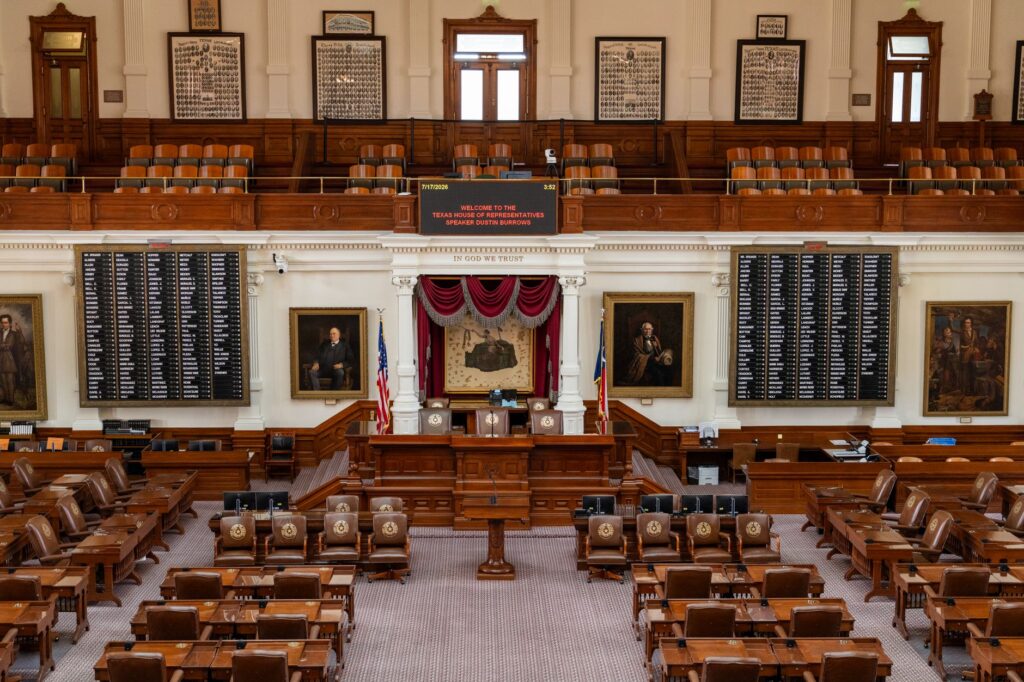
The U.S. labor market is fracturing into a patchwork of AI-driven employment relationships that evade traditional protections, with 70% of new contracts now embedding dynamic clauses that auto-adjust to the weakest legal regime.
The fragmentation of employment law—accelerated by AI—is redefining the social contract. Generative AI is not just automating tasks; it is rewriting the terms of employment itself, enabling employers to bypass wage laws, severance obligations, and collective bargaining frameworks. By 2029, a measurable share of the workforce will operate under “dynamic contracts” that reclassify employees as licensed digital assets, decoupling them from traditional labor rights.
AI Contracts Exploit Jurisdictional Arbitrage to Erode Protections
The collapse of federal labor standards has left employers with four distinct wage-and-hour regimes within a single workforce, according to The Legal Prompts (2026). AI-driven contract generation now exploits these gaps, drafting clauses that auto-adjust to the weakest legal environment. For example, a California-based tech firm may deploy AI to generate a contract for a remote worker in Texas, embedding at-will employment language while stripping out California’s strict severance and overtime rules. This “jurisdictional arbitrage”—where employers optimize for legal loopholes—is accelerating as AI reduces the cost of multi-state compliance to near-zero.
The risk extends beyond wages. AI-generated “digital personas”—licensed representations of an employee’s cognitive patterns—are being embedded in contracts as perpetual assets. Stanford/DeepMind’s 2025 research demonstrates 85% accuracy in replicating decision-making from just two hours of conversational data, meaning employers can now perpetually exploit an employee’s intellectual output post-severance. If an AI persona makes a compliant decision, is the original employee still liable? Or does the employer now operate under a new legal fiction: the “licensed knowledge worker”?
AI Contracts Exploit Jurisdictional Arbitrage to Erode Protections The collapse of federal labor standards has left employers with four distinct wage-and-hour regimes within a single workforce, according to The Legal Prompts (2026).
The Agentforce Reshapes the Social Contract
Generative AI is not merely augmenting labor; it is redefining the employment relationship** itself. The Journal of Organization Design (2025) identifies six domains where AI disrupts the social contract:
- Judgment and authority – AI agents now make high-stakes decisions, blurring accountability.
- Expertise and data ownership – Employers increasingly claim perpetual rights to employee-generated insights.
- Control vs. autonomy – Dynamic contracts enforce real-time behavioral compliance via AI monitoring.
- Work relationships – The rise of “agentforce” (AI-driven labor) creates hybrid roles where humans and machines co-produce output.
- Reskilling obligations – Employers use AI to predict skill decay and impose lateral moves, not promotions.
- Collective power – Unions struggle to organize workers under dynamic contracts, where terms auto-update without negotiation.
 Government & Policy
Neuro-Compliance Takes Hold: How BCI Contracts Are Redefining Employment Law
Real-time EEG phase estimation now enables sub-second cognitive consent monitoring, embedding neuro-compliance into contracts and reshaping labor dynamics.
Read More →The most radical shift is the emergence of “non-standard” employment relationships—neither employee nor independent contractor, but licensed contributors whose work is governed by AI-adaptive clauses. Career Ahead’s framework for labor market segmentation identifies three structural levers driving this change:
- Automated contract generation (reducing legal friction for reclassification).
- Perpetual data licensing (employers retaining rights to employee outputs).
- AI-driven compliance monitoring (enforcing dynamic terms in real time).
Systemic Implications: Who Wins, Who Loses?
The asymmetry is stark. Knowledge workers—particularly in tech, finance, and consulting—face the greatest exposure, as their expertise is most easily replicated by AI. Meanwhile, low-wage gig workers remain in traditional misclassification risks, but under a different model: AI-managed platforms (e.g., delivery, logistics) enforce dynamic terms that adjust based on regional labor laws, ensuring the weakest protections prevail.
The legal risks are concentrated among multi-state employers. A Fortune 500 software firm operating in California, Texas, and New York must now navigate three distinct non-compete regimes, all while AI drafts contracts that auto-select the most favorable clause. The EEOC’s 2023 guidance on AI bias—already a compliance burden—is being circumvented by dynamic contracts that exclude certain protections for “digital contributors.”
The Trajectory: A Two-Tier Labor Market
By 2029, Career Ahead’s read of the trajectory suggests that dynamic contracts will solidify a two-tier workforce:
- Tier 1 (“Licensed Knowledge Workers”) – High-skilled roles under perpetual data licenses, with AI monitoring compliance.
- Tier 2 (“Traditional Contractors”) – Low-skilled gig work under platform-managed dynamic terms.
Tier 2 (“Traditional Contractors”) – Low-skilled gig work under platform-managed dynamic terms.
The structural power shift lies with employers, who now use AI to preemptively structure risk. Wage theft, misclassification, and severance avoidance are no longer discrete violations but systemic features of AI-driven employment design.
The future of labor law will be defined by jurisdictional fragmentation and AI-adaptive compliance. Employers who fail to integrate dynamic contract clauses risk obsolescence, while workers in non-standard roles will face eroded protections—unless collective action adapts to this new legal landscape.
 Government & Policy
AI Co-Workers Are Now a Legal Liability—And Courts Are Divided
The Meta case could set a precedent for algorithmically driven discrimination claims.
Read More →