No products in the cart.

Beyond the Horizon: Unlocking Career Potential in Specialized Offshore Operations
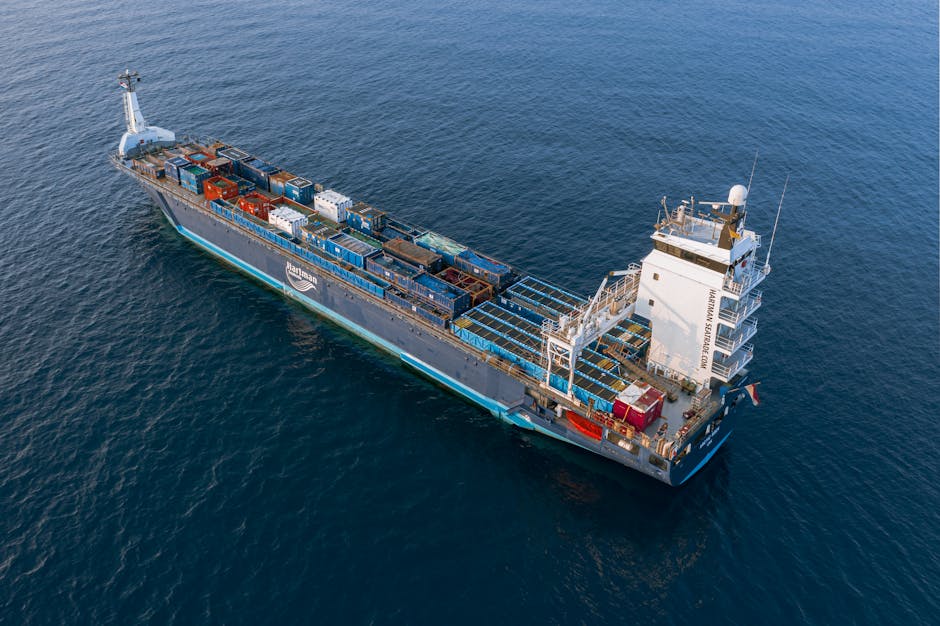
Solstad Maritime's recent contract for the CSV Normand Ocean highlights a thriving, high-tech maritime sector offering unique career opportunities in specialized offshore operations.

The ocean, vast and enigmatic, has always captivated humanity. But beneath its shimmering surface lies a world of immense engineering prowess and logistical complexity, a realm where human ingenuity pushes the boundaries of what’s possible. This is the domain of specialized maritime operations, a sector that recently saw Solstad Maritime secure a significant contract for its Construction Support Vessel (CSV) Normand Ocean. Far from being just another business transaction, this development signals a vibrant, high-stakes industry brimming with unique career opportunities for those ready to navigate its challenging waters.
Imagine a vessel that isn’t merely a ship, but a sophisticated mobile command center, a floating workshop equipped to perform intricate tasks hundreds, even thousands, of meters below the waves. This is the essence of a CSV like the Normand Ocean. These vessels are the unsung heroes of global infrastructure, playing a pivotal role in the construction, maintenance, and repair of critical subsea installations. From laying intercontinental communication cables to installing the foundations of colossal offshore wind turbines, or servicing complex oil and gas infrastructure, CSVs are indispensable. Their operations demand not only cutting-edge technology but also an extraordinary level of human skill, precision, and adaptability.
The contract awarded to Solstad Maritime for the Normand Ocean underscores a growing global demand for such specialized services. As the world increasingly turns to offshore energy sources, particularly wind, and as subsea connectivity becomes ever more vital, the need for robust, reliable, and technologically advanced support vessels intensifies. This isn’t just about moving cargo; it’s about executing highly complex engineering projects in some of the planet’s most challenging environments. For young professionals considering their career trajectory, this sector offers a compelling blend of adventure, technical challenge, and significant global impact.
The Unseen Architects of the Deep
Operating a vessel like the Normand Ocean, or contributing to the projects it facilitates, requires a diverse array of highly specialized professionals. These are the unseen architects and engineers of the deep, whose expertise ensures the seamless execution of multi-million-dollar projects. At the heart of it are the marine engineers and naval architects, who design, maintain, and troubleshoot the vessel’s intricate systems – from its powerful propulsion and dynamic positioning (DP) systems that keep it precisely in place, to its heavy-lift cranes and advanced subsea equipment. Their work is a constant dance between theoretical knowledge and practical application, often in real-time, high-pressure scenarios.
 News
NewsScale2Dubai program to feature 85 start-ups & small businesses
Career Ahead District 2020’s global entrepreneurship program, ‘Scale2Dubai’, will welcome a first cohort of 85 start-ups and small businesses before…
Read More →Beyond the vessel’s core engineering, a host of operational roles are crucial. Captains and officers navigate these colossal ships with unparalleled precision, often relying on sophisticated DP systems to hold station within mere centimeters, even in rough seas. Remotely Operated Vehicle (ROV) pilots manipulate robotic arms and cameras deep underwater, performing inspections, repairs, and installations that would be impossible for humans. Crane operators manage massive loads with delicate accuracy, while project managers orchestrate the entire symphony of operations, ensuring safety, efficiency, and adherence to strict timelines. Each role demands a unique blend of technical proficiency, problem-solving acumen, and an unwavering commitment to safety.
The continuous evolution of technology in this sector means that learning never stops; professionals are constantly upskilling, adapting to new tools, and embracing innovative methodologies to tackle ever more ambitious challenges.
The maritime industry, particularly this specialized segment, is a testament to interdisciplinary collaboration. It brings together experts in hydrodynamics, robotics, materials science, environmental protection, and logistics. For those with a passion for STEM fields, a career here offers a direct pathway to applying advanced scientific and engineering principles to tangible, impactful projects. The continuous evolution of technology in this sector means that learning never stops; professionals are constantly upskilling, adapting to new tools, and embracing innovative methodologies to tackle ever more ambitious challenges.
Navigating Your Path in High-Stakes Environments
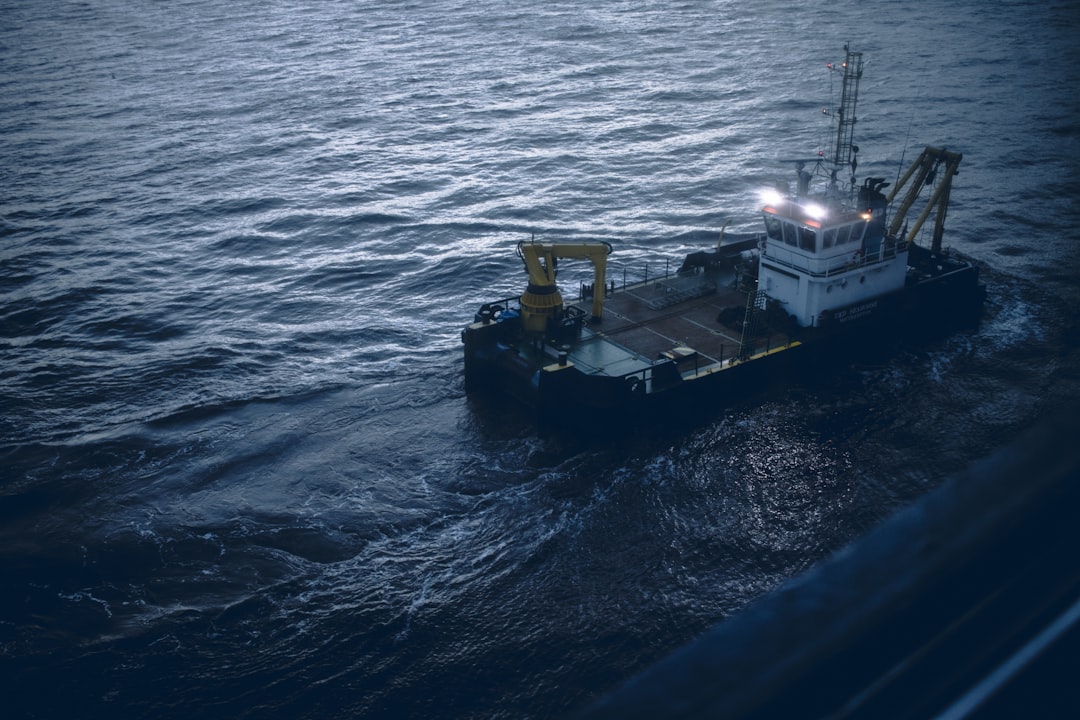
So, what does it take to chart a course in this dynamic industry? For aspiring professionals aged 15-35, the entry points are varied, but a strong foundation in technical skills is paramount. Many begin with degrees in marine engineering, naval architecture, electrical engineering, or mechanical engineering. Maritime academies offer specialized training for officers, navigators, and DP operators, providing hands-on experience with the complex systems found on modern vessels. Vocational training programs are also vital, equipping individuals with practical skills for roles such as welders, electricians, and hydraulic technicians, all of whom are essential to maintaining these sophisticated ships.
However, technical skills alone are not enough. The high-stakes nature of offshore operations demands a unique set of soft skills. Adaptability is crucial, as projects can change rapidly due to weather, technical issues, or evolving client needs. Teamwork is non-negotiable; every crew member’s role is interconnected, and effective communication is the bedrock of safe and efficient operations. Problem-solving under pressure is a daily reality, requiring quick thinking and a calm demeanor. Moreover, a profound commitment to safety and environmental stewardship is embedded in the culture of leading maritime companies.
The global nature of the maritime industry also presents unparalleled opportunities for travel and cultural immersion. Professionals often work on international projects, collaborating with diverse teams and experiencing different parts of the world. This exposure not only broadens one’s perspective but also enhances cross-cultural communication skills, making individuals more versatile and valuable in an increasingly interconnected global economy. For those seeking a career that combines technical challenge with a sense of adventure and global impact, the specialized offshore sector offers a truly unique proposition. [INSERT_IMAGE_3]
 Education
The Future of Human Learning: Adaptive, Personalized, and Lifelong Ecosystems
Adaptive and personalized learning ecosystems are transforming education and career development, enabling lifelong skills acquisition tailored to individual needs in…
Read More →Charting a Course for Tomorrow’s Innovators
The future of specialized maritime operations is one of continuous innovation and transformation. The industry is rapidly embracing automation, artificial intelligence, and advanced data analytics to enhance efficiency, safety, and environmental performance. Vessels are becoming smarter, capable of predictive maintenance and optimized route planning, while ROVs are gaining greater autonomy and sophistication. This technological evolution means that new roles are emerging, particularly in areas like data science, cybersecurity for maritime systems, and the development of green technologies for propulsion and energy management.
Professionals often work on international projects, collaborating with diverse teams and experiencing different parts of the world.
The push towards sustainability is another defining trend. As the world transitions to cleaner energy, the demand for vessels like the Normand Ocean to support offshore wind farm development will only grow. This also means a focus on reducing the carbon footprint of maritime operations themselves, driving innovation in hybrid propulsion systems, alternative fuels, and energy-efficient designs. Young professionals who are passionate about environmental solutions and possess skills in renewable energy technologies will find themselves at the forefront of this exciting evolution. [INSERT_IMAGE_4]
For the next generation of talent, the message is clear: the specialized maritime sector, exemplified by Solstad Maritime’s continued success, is not just about ships and contracts; it’s about a dynamic ecosystem of innovation, skill, and global impact. It offers challenging, rewarding careers for those who are technically proficient, adaptable, and eager to contribute to critical global infrastructure. By investing in education, embracing continuous learning, and cultivating a resilient mindset, young professionals can chart an extraordinary course in an industry that truly helps shape the world’s future, one complex subsea project at a time.
Sources: Industry reports, maritime news publications
 Advertising
Marion Technical College Technical Training Facility Inauguration
Marion Technical College (MTC) has unveiled its new Diesel and Aviation Mechanics Facility, a state-of-the-art complex designed to meet the…
Read More →Sources: news.google.com