No products in the cart.

Biodegradable Plastics: Institutional Realignment and Career Capital in a Circular Economy

Regulatory mandates and bio‑polymer breakthroughs are reconfiguring the plastics ecosystem, reallocating institutional authority and redefining career pathways for engineers, managers, and waste‑system specialists.

Dek: The convergence of EU directives, corporate R&D, and new polymer technologies is reshaping the plastics value chain. The resulting structural shift creates asymmetric career pathways for engineers, chemists, and waste‑system managers while redefining institutional power across supply‑chain tiers.
Macro Context – A Regulatory‑Driven Market Pivot
The global plastics market, valued at $530 billion in 2023, is entering a structural transition driven by climate imperatives and waste‑management crises. The European Union’s Single‑Use Plastics Directive, now in its third year of enforcement, mandates that 30 % of single‑use packaging be compostable or reusable by 2027, while the United States’ EPA “Plastic Waste Reduction Initiative” targets a 20 % reduction in landfill‑bound plastics by 2028. These policy vectors have catalyzed a surge in biodegradable‑plastic demand, reflected in a projected compound annual growth rate (CAGR) of 15 % between 2023 and 2028 [2].
Beyond regulatory pressure, the circular‑economy narrative—where virgin polymers are derived from renewable feedstocks and end‑of‑life streams are biologically reintegrated—has become a strategic lever for multinational firms seeking to hedge reputational risk and secure market access in jurisdictions tightening environmental standards [1]. The confluence of policy, consumer sentiment, and capital allocation marks a structural shift from linear to regenerative plastics systems.
Core Mechanism – Bio‑Based Polymers and Production Scale
The engine of this transition is the rapid commercialization of bio‑based polymers, principally polylactic acid (PLA) and polyhydroxyalkanoates (PHA). PLA, derived from corn‑starch fermentation, now commands 22 % of the global biodegradable‑plastic market, while PHA, produced via microbial pathways, is gaining traction for its superior compostability in marine environments [1].
From an investment standpoint, the sector attracted $7.4 billion in R&D capital between 2021 and 2025, with leading chemical conglomerates—BASF, Dow, and NatureWorks—allocating up to 12 % of their annual capex to bio‑polymer lines. Production capacity for PLA alone expanded from 1.1 million metric tons in 2020 to an estimated 2.3 million metric tons in 2025, driven by the adoption of continuous‑flow fermentation and enzymatic catalysis that cut energy intensity by 18 % relative to conventional petrochemical routes [1].
Corporate adoption is no longer experimental. Coca‑Cola’s “PlantBottle” redesign now incorporates up to 30 % PLA in its 2024 packaging rollout across Europe, while PepsiCo’s “Eco‑Serve” line utilizes PHA for single‑serve snack trays in North America. These deployments illustrate a structural realignment where product development pipelines embed biodegradable polymers as baseline inputs rather than niche add‑ons.
Systemic Implications – Value‑Chain Reconfiguration
The diffusion of biodegradable plastics reverberates through the entire plastics value chain, altering raw‑material sourcing, logistics, and end‑of‑life infrastructure.
These deployments illustrate a structural realignment where product development pipelines embed biodegradable polymers as baseline inputs rather than niche add‑ons.
You may also like
 Business Strategy
Pepsi Layoffs: What to Expect as Job Cuts Approach
PepsiCo is preparing for layoffs that could reshape its workforce. Here's what you need to know about the implications for employees and job seekers.
Read More →Raw‑Material Sourcing: Agricultural commodity markets are experiencing an asymmetric demand shock. Corn and sugarcane acreage allocated to polymer feedstock rose 9 % in the EU’s “Green Feedstock” program, prompting a reallocation of fertilizer subsidies toward bio‑polymer farms. This reorientation elevates the institutional power of agribusiness lobbies, which now negotiate directly with polymer manufacturers on price floors and sustainability certifications.
Manufacturing Footprint: New bio‑polymer plants are co‑located with existing petrochemical complexes to leverage shared utilities, but they also demand distinct waste‑water treatment capabilities due to higher organic load. This has spurred a wave of joint‑venture agreements between legacy chemical firms and biotech startups, creating hybrid governance structures that blend traditional hierarchical decision‑making with agile, project‑based leadership models.
Waste‑Management Networks: Composting capacity in the EU increased by 35 % between 2022 and 2025, a direct response to the Directive’s landfill‑diversion targets. Companies such as TerraCycle and Loop Industries have launched closed‑loop schemes that collect post‑consumer PLA and PHA, feed them into industrial composters, and return the resulting biomass to agricultural feedstock streams. This creates a feedback loop where waste‑management firms gain institutional leverage as gatekeepers of the circular flow, reshaping the power dynamics traditionally held by municipal solid‑waste agencies.
Consumer Behavior: Survey data from NielsenIQ indicates a 27 % rise in purchase intent for products labeled “compostable” among millennials, a demographic that now commands 38 % of discretionary spending in the packaged‑goods sector. This consumer shift forces retailers to recalibrate shelf‑space allocation algorithms, embedding sustainability metrics into inventory management systems and amplifying the role of data‑analytics leadership in supply‑chain decisions.
Collectively, these ripples constitute a systemic re‑engineering of the plastics ecosystem, where regulatory mandates, corporate strategy, and market incentives converge to reallocate institutional authority across previously siloed sectors.
Human Capital Impact – Winners, Losers, and Emerging Career Capital
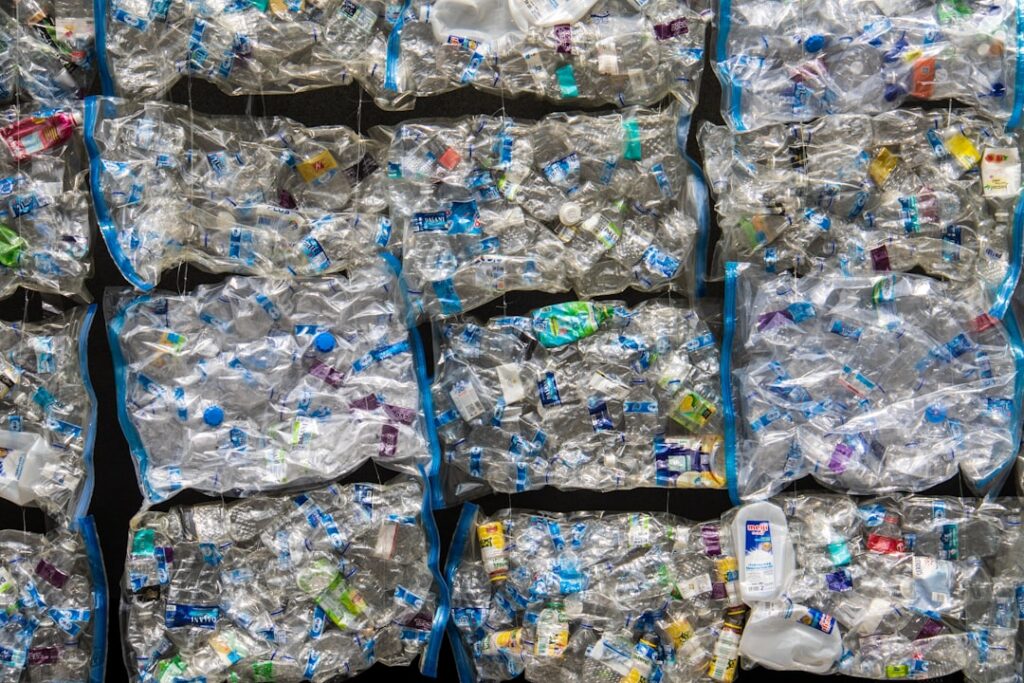
The structural overhaul of the plastics industry is redefining career capital— the portfolio of skills, networks, and reputational assets that determine upward mobility.
Emerging Winners:
The career trajectory now includes cross‑functional rotations through agronomy, chemical engineering, and sustainability reporting, creating a hybrid skill set prized by both startups and incumbents.
Bioprocess Engineers and Synthetic Biologists – Demand for expertise in microbial fermentation and enzymatic polymerization has surged, with median salaries rising 22 % year‑over‑year in the U.S. biotech corridor. The career trajectory now includes cross‑functional rotations through agronomy, chemical engineering, and sustainability reporting, creating a hybrid skill set prized by both startups and incumbents.
You may also like
 Education
SC Penalises 10 Dental Colleges In Rajasthan With Rs 10 Crore Each For NEET Violations
The Supreme Court has imposed hefty fines on 10 dental colleges in Rajasthan for violating NEET admission standards, raising questions about educational integrity.
Read More →Circular‑Economy Project Managers – Companies are institutionalizing “circular‑design” offices that report directly to C‑suite sustainability officers. Professionals who can orchestrate supply‑chain traceability, lifecycle‑assessment (LCA) modeling, and stakeholder alignment are accruing asymmetric leadership capital, often fast‑tracked into VP‑level roles within five years.
Waste‑Infrastructure Technologists – Engineers specializing in industrial composting technology and anaerobic digestion are gaining leverage as municipalities outsource compost‑facility operation to private consortia, positioning them as critical nodes in the new waste‑management hierarchy.
Emerent Losers:
Traditional Petrochemical Plant Operators – Automation and a declining share of fossil‑based polymer output are compressing labor demand, eroding career stability for workers in legacy refineries. Reskilling pathways are limited, creating a mobility bottleneck for mid‑career technicians.
- Low‑Wage Packaging Labor – The shift toward high‑tech bio‑polymer production reduces the volume of low‑skill assembly line jobs, while the rise of automated molding systems further marginalizes this cohort. Without targeted upskilling programs, economic mobility for this group is at risk.
Institutional Responses:
Corporate leadership programs, such as BASF’s “Future Materials Academy,” embed sustainability metrics into promotion criteria, effectively re‑calibrating institutional power to reward circular‑economy competencies.
Governments in Germany and Canada have launched “Circular Skills Grants” that subsidize certifications in bio‑polymer processing, directly linking public funding to private‑sector hiring pipelines. Corporate leadership programs, such as BASF’s “Future Materials Academy,” embed sustainability metrics into promotion criteria, effectively re‑calibrating institutional power to reward circular‑economy competencies.
These dynamics illustrate a correlation between regulatory stringency and the reallocation of career capital, where asymmetric opportunities accrue to professionals who can navigate the intersection of chemistry, data analytics, and policy compliance.
You may also like
 Business
Union Beats: How Rising Music‑Industry Unions Align With Revenue Growth
Rising unionization among musicians is not a peripheral labor trend but a structural catalyst that aligns with a 7 % annual revenue growth, indicating that collective…
Read More →Outlook – Structural Trajectory Through 2029
Looking ahead, three interlocking forces will shape the biodegradable‑plastics landscape:
- Policy Consolidation: The EU is poised to extend the Single‑Use Plastics Directive into a “Circular Plastics Framework” by 2027, mandating minimum recycled‑content thresholds for all packaging. This will institutionalize a floor for biodegradable‑plastic adoption, driving further capacity expansion.
- Cost Parity Threshold: Industry analysts project that by 2028, the levelized cost of PLA production will undercut conventional PET by 5 % in regions with renewable‑energy subsidies, eliminating the primary economic barrier to mass adoption.
- Talent Realignment: The cumulative effect of government‑funded upskilling initiatives and corporate leadership pipelines is expected to generate a 30 % increase in qualified circular‑economy professionals by 2029, accelerating the diffusion of biodegradable‑plastic technologies across consumer‑goods, automotive, and medical device sectors.
If these trajectories hold, the biodegradable‑plastic sector will transition from a growth niche to a structural backbone of the global plastics system, redefining institutional power from petrochemical conglomerates to a distributed network of agribusinesses, biotech firms, and waste‑management consortia. The career implications will be profound: individuals who acquire cross‑disciplinary expertise in bio‑materials, sustainability analytics, and regulatory navigation will command the most robust career capital in the emerging circular economy.
Key Structural Insights
- The EU’s evolving regulatory framework creates an institutional floor that forces legacy petrochemical firms to cede market share to bio‑polymer producers, reshaping power dynamics across the value chain.
- Investment in fermentation and enzymatic catalysis has driven cost reductions that position biodegradable plastics to achieve price parity with conventional polymers by the end of the decade.
- Career capital is increasingly tied to circular‑economy competencies, rewarding professionals who can integrate sustainability metrics with traditional engineering and supply‑chain leadership.