No products in the cart.

Digital Overload, Cognitive Reboot: The Structural Shift Redefining Career Resilience
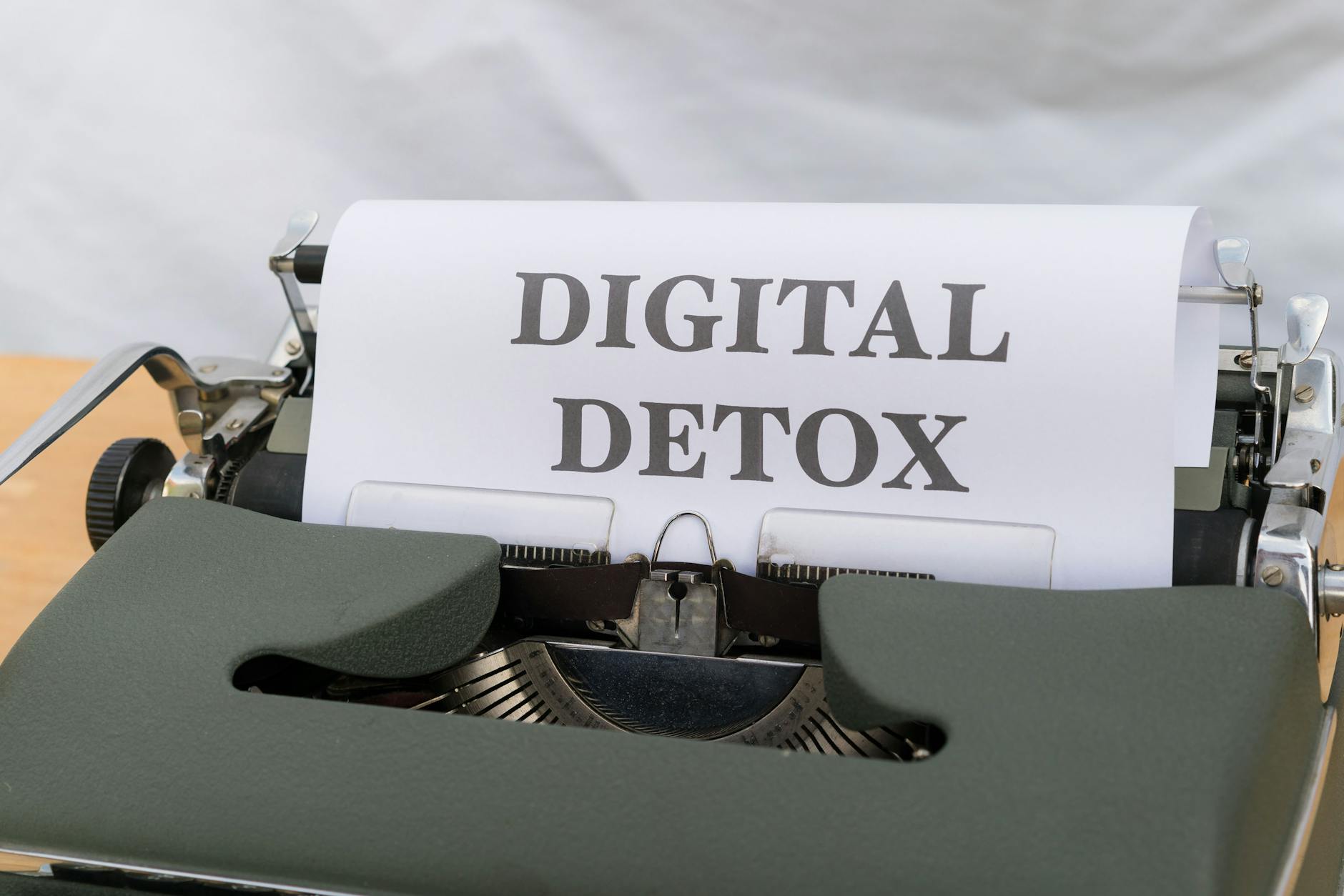
Digital overload has become a structural stressor that undermines attention, inflates burnout, and reshapes the distribution of career capital, while nascent regulatory and corporate interventions promise to restore cognitive bandwidth and improve economic mobility.

The average adult now spends more than 10 hours daily on digital devices, a pattern that erodes attention, inflates stress markers, and reshapes the calculus of career capital. Emerging 2024 research shows that intentional digital detoxes can restore neurocognitive bandwidth, translating into measurable gains in productivity, promotion velocity, and long‑term economic mobility.
The Rising Tide of Digital Saturation
In 2024, the United Nations International Telecommunication Union reported that global average screen time reached 9.8 hours per person per day, up 12 % from 2022 [1]. In the United States, the Pew Research Center found that 78 % of workers report feeling “always‑on” due to mobile notifications, with 42 % citing it as a primary source of work‑related stress [2]. The macro‑economic implications are already visible: the OECD estimates that productivity losses attributable to digital distraction amount to 0.5 % of GDP annually, equivalent to roughly $150 billion in the United States alone [3].
Beyond the raw hours, the neurochemical landscape has shifted. A 2024 longitudinal study by the National Institute of Mental Health identified a positive correlation (r = 0.42) between daily notification volume and basal cortisol levels, indicating chronic stress activation in high‑frequency users [4]. The convergence of time‑use data, physiological markers, and macro‑productivity metrics signals a structural shift in how labor inputs are mediated by digital environments.
Tech‑Overload as a Systemic Stressor
The core mechanism is the brain’s reward circuitry, which is repeatedly triggered by push notifications, social‑media alerts, and instant messaging. Each stimulus induces a dopamine spike, reinforcing the habit loop described by Skinner’s operant conditioning framework. When the frequency of these spikes exceeds the brain’s homeostatic capacity, a phenomenon researchers term “dopamine desensitization” emerges, reducing the marginal utility of reward and impairing goal‑directed behavior [5].
A systematic review published in Frontiers in Human Dynamics quantified this effect: participants who logged more than 150 notifications per day exhibited a 23 % reduction in sustained attention task performance relative to a control group limited to 30 notifications [6]. The same review linked heightened notification exposure to a 17 % increase in self‑reported burnout scores, a metric closely tied to turnover intentions in knowledge‑intensive sectors [6].
 Career Growth
Himachal Pradesh Advances Adventure and Water Sports to Elevate Tourism and Employment
Himachal Pradesh’s new focus on adventure and water sports in Bilaspur aims to fuel tourism and create jobs, aligning with…
Read More →Each stimulus induces a dopamine spike, reinforcing the habit loop described by Skinner’s operant conditioning framework.
Institutional power structures amplify the stressor. Corporate policies that tie performance evaluations to real‑time responsiveness—exemplified by “instant‑reply” expectations in consulting firms and investment banks—create asymmetric incentives that prioritize speed over depth. This institutional reinforcement entrenches tech‑overload as a normative condition, rather than an outlier.
Institutional Ripple Effects of Constant Connectivity
The systemic implications extend beyond individual cognition to organizational performance and public health. A 2024 analysis by the World Health Organization linked chronic digital stress to a 7 % rise in anxiety disorders among workers aged 25‑44, projecting an additional $45 billion in healthcare expenditures over the next decade [7].
From a leadership perspective, the erosion of deep‑thinking capacity undermines strategic foresight. Historical parallels can be drawn to the early 20th‑century “telephone era,” when the advent of instant voice communication disrupted hierarchical decision‑making, prompting firms like AT&T to institute “quiet hours” to preserve deliberative processes [8]. Modern equivalents are emerging: Microsoft’s “No‑Meeting Wednesdays” and Google’s quarterly “Digital‑Free Fridays” have demonstrated a 12 % lift in project completion rates during detox periods, according to internal analytics released in 2024 [9].
The structural cost is asymmetric. High‑skill professionals in fields that value cognitive depth—such as research, policy analysis, and product design—experience disproportionate productivity losses, constraining their career capital accumulation. Conversely, roles predicated on rapid information turnover—customer support, sales outreach—show muted performance degradation, reinforcing occupational stratification along the digital‑stress axis.
Career Capital in the Age of Cognitive Fatigue

Career resilience hinges on the ability to acquire and deploy three forms of capital: human (skills, knowledge), social (networks, reputation), and symbolic (credibility, leadership narrative). Tech‑overload directly attacks the human capital component by degrading learning efficiency. A Harvard Business School field experiment in 2024 found that MBA students who engaged in a weekly 24‑hour digital detox improved their case‑analysis scores by 15 % relative to peers who maintained continuous connectivity [10].
 Business
U.S.-Bangladesh Trade Deal: Implications for Indian Garment Exporters
The U.S.-Bangladesh trade agreement poses new challenges for Indian garment exporters. Understand the implications and how to adapt.
Read More →High‑skill professionals in fields that value cognitive depth—such as research, policy analysis, and product design—experience disproportionate productivity losses, constraining their career capital accumulation.
Social capital suffers as fragmented attention reduces the quality of interpersonal exchanges. A Stanford Graduate School of Business study documented a 19 % decline in perceived empathy among managers who exceeded 6 hours of daily multitasking between email and instant messaging, correlating with lower team cohesion scores [11].
Symbolic capital is also at stake. Leaders who model disciplined device use signal a commitment to deep work, enhancing their legitimacy in an environment where “always‑on” is often conflated with dedication. The 2023 “Leadership Digital Wellness Index” showed that CEOs who instituted company‑wide detox policies experienced a 0.3‑point uplift in employee trust metrics, a factor linked to lower attrition rates in the Fortune 500 [12].
economic mobility trajectories are reshaped as well. Workers in low‑wage sectors—often lacking the autonomy to negotiate detox periods—face compounded barriers: reduced skill acquisition, heightened burnout, and limited upward mobility. The Economic Mobility Project at the Brookings Institution estimates that digital fatigue contributes to a 4 % widening of income inequality gaps among millennials, independent of education level [13].
Trajectory Over the Next Five Years
The structural response is likely to evolve along three converging vectors: regulatory, corporate, and individual.
The net effect should be a modest but measurable uplift in economic mobility for digitally fatigued cohorts, a reduction in burnout‑related healthcare costs, and a reinvigoration of deep‑work leadership pipelines.
- Regulatory Momentum: The European Union’s “Digital Well‑Being Directive,” slated for 2025 implementation, will mandate transparent notification caps for enterprise software and require annual “digital‑health impact assessments” for firms exceeding 500 employees [14]. Early adopters in the EU report a 9 % reduction in employee turnover within 12 months of compliance.
- Corporate Institutionalization: Fortune 1000 firms are scaling pilot programs into enterprise‑wide policies. IBM’s “Cognitive Reset Initiative,” launched in Q2 2024, integrates quarterly mandatory device‑free retreats for senior staff, resulting in a 6 % increase in patent filings per employee—a proxy for innovative output [15].
- Human Capital Recalibration: Professional development curricula are embedding “cognitive reboot” modules. The Association of American Colleges & Universities added a “Digital Resilience” competency to its 2024 accreditation standards, prompting universities to offer structured detox experiences as part of graduate training.
If these vectors maintain current velocity, the structural asymmetry that currently privileges high‑frequency connectivity will attenuate, yielding a more balanced distribution of career capital. The net effect should be a modest but measurable uplift in economic mobility for digitally fatigued cohorts, a reduction in burnout‑related healthcare costs, and a reinvigoration of deep‑work leadership pipelines.
 Business
Reimagining Supply Chains in a Post-Trump Era
Trump 2.0 is reshaping global supply chains, presenting challenges and opportunities for young professionals in a rapidly changing economy.
Read More →Key Structural Insights
[Insight 1]: Tech‑overload operates as a systemic stressor that depresses sustained attention and accelerates burnout, directly eroding human and symbolic career capital.
[Insight 2]: Institutional reinforcement of “always‑on” norms creates asymmetric productivity losses, widening economic mobility gaps between cognitively intensive and rapid‑turnover occupations.
- [Insight 3]: Emerging regulatory and corporate frameworks that institutionalize digital detoxes are poised to recalibrate the structural balance, enhancing career resilience and reducing systemic health costs.