No products in the cart.

How the New Global Classroom Is Rewriting the College Degree

Hybrid international degrees, shared curricula, and always-on virtual exchanges are turning higher education into a global networked system. From dual degrees between Europe and Asia to low-cost virtual exchanges in the Global South, the new global classroom is reshaping who learns, where, and at what price—and quietly rewriting the value of a college degree.

Boston, United States — A student at Northeastern University joins a project team with peers in London, Shanghai, and Toronto, all enrolled in the same degree, all graded on the same rubric, but sitting on three continents. Their course is part of a global curriculum that treats geography like a setting, not a boundary. This is the new global classroom: hybrid international degrees, shared curricula, and virtual exchange programs that stitch universities into cross-border networks. It matters because higher education is no longer just a local gateway to jobs; it is becoming an international infrastructure for talent, with direct consequences for tuition, visas, and who gets access to global careers.
How Hybrid International Degrees Actually Work
Hybrid international degrees combine physical mobility, online delivery, and shared curricula across partner universities. A common model is the dual or joint degree, where students split time between institutions and graduate with two credentials, such as Sciences Po and Columbia University’s long-running dual BA program launched in 2010.[1] Another approach is the “multi-campus” degree, like NYU’s Global Network University, which lets undergraduates rotate among sites in New York, Abu Dhabi, and Shanghai. These programs are expanding faster than most applicants realize. The European Commission’s Erasmus Mundus Joint Masters, which fund multi-country degrees, have supported more than 36,000 students since 2004 and now involve over 500 European universities.[2] In Asia, the National University of Singapore and Peking University run joint programs in public policy and business, while India’s 2020 National Education Policy explicitly encourages international collaborations and dual degrees.

 careers
Why Multidisciplinary Careers Are Set to Surge in 2025
Global hiring data from LinkedIn, the World Economic Forum, and Indian and US job boards point to one clear trend…
Read More →Why Global Degrees Are Surging Now
Several forces are converging. First, demand: the number of students enrolled outside their home country rose from about 2 million in 2000 to nearly 6.4 million in 2020, according to UNESCO.[3] Second, technology: universities that moved courses online during the COVID-19 pandemic discovered they could share classes and faculty across borders with relative ease. Third, policy and politics are reshaping mobility. Tighter visa regimes in countries like the United States and the United Kingdom have pushed universities to bring programs to students rather than wait for students to come to them. Branch campuses in the Gulf, joint institutes in China, and cross-border online degrees are all ways to keep international enrollment flowing without depending solely on physical migration.
Virtual Exchange: Global Learning Without the Plane Ticket Not every student can afford a semester abroad, but more can afford a stable internet connection.
Virtual Exchange: Global Learning Without the Plane Ticket
Not every student can afford a semester abroad, but more can afford a stable internet connection. Virtual exchange programs use structured online collaboration to connect classrooms in different countries, often at a fraction of the cost of physical mobility. The Stevens Initiative, funded by the U.S. Department of State and partners, has supported virtual exchanges for more than 73,000 young people in 19 MENA countries and the United States since 2015.[4]
Universities are folding these formats into regular courses. Collaborative Online International Learning (COIL), first developed at SUNY, pairs faculty in different countries to design joint projects and discussions. A business class in Mexico might partner with one in Japan to compare consumer behavior, while engineering students in Germany and South Africa co-design low-cost devices. For students who may never hold a foreign visa, this is often their only direct experience of working across cultures and time zones.

The Upside: Careers, Skills, and Access
For employers, the appeal is obvious. Surveys by the World Economic Forum and LinkedIn consistently put collaboration, communication, and cross-cultural skills near the top of global hiring priorities.[5] Hybrid and virtual international degrees produce graduates who have already navigated different academic systems, time zones, and cultural expectations, often while juggling online tools that mirror modern workplaces. There is also a cost angle. A full year of study abroad can be financially out of reach, especially for students in the Global South. By contrast, virtual exchanges and hybrid models can be layered onto existing degrees with modest incremental cost. Programs like Erasmus+ now explicitly fund “blended mobility,” where a short physical visit is preceded or followed by online collaboration, lowering travel time and expense while keeping some face-to-face contact. For universities in emerging economies, partnerships can be a way to retain talent rather than lose it. Instead of students leaving permanently for Europe or North America, some spend a semester abroad but complete their degree at home, or enroll in a foreign program delivered locally with partner faculty. That keeps more graduates in domestic labor markets while still exposing them to global standards and networks.
 Career Trends
Educational Rankings and Their Career Impact in 2025
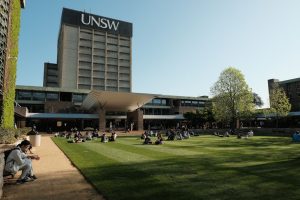
In 2025, university rankings are more than just numbers; they shape career trajectories and opportunities for young professionals globally.
Read More →The Risks: Inequality, Quality Control, and Cultural Tension
The model is far from frictionless. One concern is a new layer of inequality: students with the means to travel still get the richest experiences, while those limited to online interactions receive a thinner version of “internationalization.” Reliable broadband, devices, and quiet study spaces are not universal, especially in low-income regions, and technical glitches can quickly undermine cross-border collaboration. Quality assurance is another fault line. Accreditation frameworks were built for national systems, not multi-country degrees. Agencies like the European Association for Quality Assurance in Higher Education (ENQA) have issued guidelines for cross-border provision, but implementation is uneven. Regulators worry about diploma mills and weak oversight when teaching is spread across several institutions and jurisdictions. There are also cultural and political sensitivities. Joint programs operating in countries with strict content controls must navigate topics like history, politics, and human rights carefully. Faculty sometimes self-censor to keep partnerships viable. And when curricula are exported wholesale from North America or Europe, critics argue that local knowledge and languages get sidelined in favor of a narrow, Western canon.

What This Means for Students, Educators, and Employers
For students, the new global classroom changes the checklist. Instead of asking only “Which country should I study in?” the sharper questions are “Which networks will this degree plug me into?” and “How much of my learning will be global, and in what format?” Prospective applicants should scrutinize how many courses are truly shared across campuses, what proportion of teaching is delivered by partner institutions, and how employers in their target industry view joint or online-heavy degrees. Educators face a different set of decisions. Designing shared curricula requires aligning learning outcomes, assessment standards, and academic calendars across borders, which is administratively heavy. Faculty development is crucial: teaching a COIL course or a joint seminar with a partner abroad is a different craft from lecturing in a single classroom. Universities that invest in instructional design support and cross-border teaching fellowships are more likely to build sustainable programs rather than one-off experiments. Employers, meanwhile, need to update how they read transcripts. A degree that lists three campuses and a mix of online and in-person modules can be confusing without context. HR teams can respond by asking candidates to map their learning journey: where they studied, how they collaborated internationally, and what concrete projects they completed with peers abroad. That turns a complex academic path into a clear narrative about skills and adaptability.
 Business And Entrepreneurship
Steering Your Entrepreneurial Ambition
Career Ahead “Entrepreneurship is a lifestyle. It transforms you as an individual, completely” So, you want to be an Entrepreneur?…
Read More →Where the Global Classroom Goes Next
The next phase will likely move beyond elite partnerships into broader, more open networks. Some universities are already sharing courses on platforms like edX and Coursera for credit, not just certificates. Others are experimenting with micro-credentials and stackable modules that can be combined across institutions and borders, potentially allowing students to assemble a degree from multiple countries over time. Policy will be a major driver. If governments and accreditation bodies create clearer rules for recognizing cross-border credits and online-heavy programs, universities will have more room to innovate. If they tighten restrictions, growth may concentrate in a few regions with aligned regulations, such as within the European Higher Education Area. For today’s learners and professionals, the most practical move is to assume that education will be more global, more modular, and more hybrid than the systems their parents knew. Careers will increasingly reward people who can navigate not just one institution or country, but a web of them. The students logging into joint seminars from Boston, Bangalore, or Nairobi are not just adapting to a new classroom; they are rehearsing for the way work itself is being reorganized across borders.