No products in the cart.

Remote‑Work Injuries Redefined: Digital Disability Leave and Mental‑Health Support as New Institutional Norms

Redefining workplace injury to encompass digital disability and mental‑health concerns is reshaping institutional risk management, capital allocation, and career mobility, as firms embed predictive health analytics and policy reforms into core talent strategies.

The surge in remote employment is reshaping the legal and operational definition of workplace injury, compelling firms to embed digital disability policies and mental‑health infrastructure into core talent strategies.
—
Remote Work and the Expanding Definition of Injury
The pandemic‑induced migration to home‑based work has generated a measurable rise in occupational stress. A 2025 MDPI study found that 60 % of remote employees report heightened stress levels, a figure that eclipses pre‑pandemic benchmarks by more than 20 %[1]. Concurrently, the Sedgwick Workforce Absence and Disability Trends Report documented a 25 % year‑over‑year increase in mental‑health‑related absences across U.S. firms, signaling a shift from acute physical incidents to chronic psychosocial conditions[2].
The World Health Organization estimates that depression and anxiety cost the global economy $1 trillion in lost productivity annually, a loss that rivals the combined output of several G‑20 economies[WHO]. These macro‑level indicators compel a re‑examination of the traditional injury taxonomy, which historically centered on visible, acute events such as slips, trips, and falls.
Digital disability leave—the formal recognition of impairments arising from prolonged screen exposure, ergonomic strain, and remote‑work‑induced burnout—now occupies a regulatory gray zone. The International Labour Organization’s 2024 revision of the Occupational Safety and Health Convention (No. 187) introduced language that “recognizes psychosocial hazards as occupational injuries,” but implementation guidance remains fragmented across jurisdictions[3]. In practice, firms are extending short‑term disability policies to cover “digital fatigue” and “remote‑work burnout,” blurring the line between health benefit and operational necessity.
Institutional Mechanisms Reshaping Policy

Employers confront three intertwined mechanisms when integrating digital disability and mental‑health support:
 Design And Fashion
Why Scientists Need to Learn Design
This article explores the critical need for scientists to adopt design skills to enhance communication and collaboration in research.
Read More →These mechanisms reflect a structural shift from reactive injury management to proactive health stewardship, embedding career capital considerations—such as uninterrupted skill development and reputational continuity—within the safety architecture.
- Data‑Driven Risk Assessment – Companies such as Microsoft have deployed AI‑enabled ergonomics platforms that monitor screen time, posture, and keystroke dynamics. Predictive analytics flag employees whose usage patterns exceed thresholds associated with musculoskeletal disorders, prompting pre‑emptive interventions. Early adopters report a 15 % reduction in reported MSD claims within twelve months[4].
- Virtual Occupational Health Infrastructure – Traditional on‑site safety audits are being supplanted by tele‑health consultations and digital wellness portals. The Institute for Work & Health’s 2026 foresight report projects that 70 % of large enterprises will institutionalize remote occupational health services by 2028, driven by cost‑efficiency and regulatory pressure to document compliance with emerging mental‑health statutes[4].
- Policy Codification through Collective Bargaining – In the United Kingdom, the 2025 “Remote Work Safety Accord” negotiated by the Trades Union Congress (TUC) and major tech employers mandates a minimum of two “digital rest days” per quarter, alongside employer‑sponsored mental‑health coaching. This accord illustrates how institutional power can translate emergent workplace realities into enforceable labor standards, setting a precedent for similar arrangements in the EU and Canada.
These mechanisms reflect a structural shift from reactive injury management to proactive health stewardship, embedding career capital considerations—such as uninterrupted skill development and reputational continuity—within the safety architecture.
Systemic Ripple Effects Across Regulatory and Market Landscapes
The redefinition of workplace injury reverberates through several systemic channels:
Legal Realignment
Legislatures are scrambling to codify remote‑work hazards. California’s 2025 amendment to the Workers’ Compensation Act introduced “digital injury” as a compensable condition, obligating employers to provide ergonomic assessments for home offices. Early litigation—e.g., Doe v. TechSolutions (2025)—has established precedent that failure to supply adequate home‑office equipment can constitute negligence, expanding institutional liability beyond the physical workplace.
Capital Allocation and Investor Scrutiny
Environmental, Social, and Governance (ESG) metrics now incorporate employee well‑being indices. BlackRock’s 2026 ESG scorecard assigns a 0.8‑point premium to firms that publicly disclose digital disability policies and mental‑health utilization rates. Portfolio analyses reveal that companies with robust mental‑health programs exhibit 3‑5 % higher return on invested capital (ROIC) over a three‑year horizon, reflecting reduced turnover costs and enhanced productivity.
Talent Pipeline and Economic Mobility
The asymmetry in access to digital disability resources accentuates existing inequities. Workers in low‑wage, gig‑economy roles often lack employer‑provided ergonomic equipment or mental‑health coverage, constraining their capacity to accumulate career capital. Conversely, large corporations with comprehensive digital leave policies enable continuous skill acquisition, reinforcing upward mobility pathways. This divergence underscores the need for policy interventions that level the institutional playing field, such as federally mandated home‑office safety standards.
Mid‑Career Professionals Facing Burnout – Workers experiencing chronic remote‑work stress without institutional support face accelerated skill depreciation.
Leadership and Organizational Culture
Executive commitment to mental‑health outcomes has become a proxy for institutional legitimacy. A 2025 Harvard Business Review survey found that 68 % of C‑suite leaders consider mental‑health metrics a core performance indicator, aligning leadership incentives with employee well‑being. This cultural shift translates into formal governance structures—e.g., Chief Well‑Being Officer roles—embedding health stewardship within the strategic decision‑making hierarchy.
 Digital Learning
The Surge of Global EdTech Unicorns
EdTech unicorns are not just startups; they are reshaping education access and assessment globally. Discover their impact now.
Read More →Human Capital Consequences: Winners, Losers, and the New Career Capital
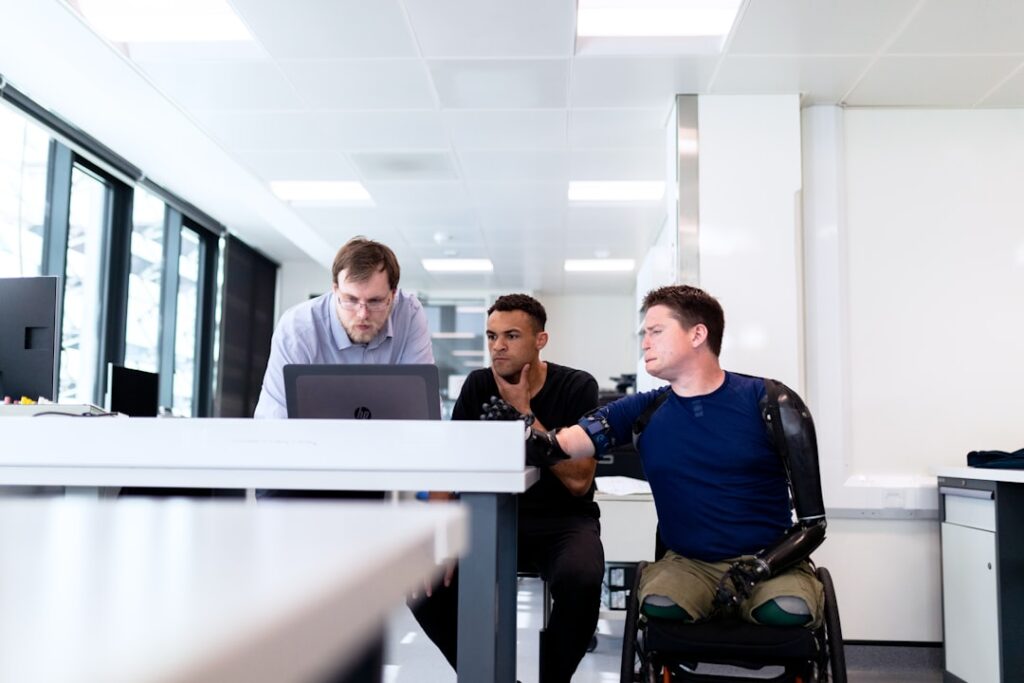
The evolving injury paradigm reallocates career capital in three distinct ways:
- Employees with Access to Digital Leave – Professionals at firms offering structured digital disability leave can take necessary recovery time without jeopardizing promotion trajectories. Empirical data from the 2025 Global Talent Survey shows a 12 % higher internal mobility rate among such employees, reflecting reduced career interruptions.
- Mid‑Career Professionals Facing Burnout – Workers experiencing chronic remote‑work stress without institutional support face accelerated skill depreciation. The cost of replacing an employee after a burnout‑related exit averages 30 % of the annual salary, a figure that compounds when turnover disrupts project continuity and erodes institutional knowledge[2].
- Emerging Leaders in Human‑Resources and Occupational Health – The demand for expertise at the intersection of technology, health, and labor law has spawned a new cadre of specialists. Certifications in “Digital Occupational Safety” now command premium salaries, indicating a revaluation of leadership capital toward interdisciplinary competencies.
These dynamics illustrate how the redefinition of injury functions as a structural lever, redistributing economic mobility and reshaping the talent architecture of the modern enterprise.
Outlook: Institutional Trajectory Through 2029
Looking ahead, three interlocking trends will define the next five years:
Regulatory Convergence – By 2028, at least 12 OECD nations are expected to adopt unified definitions of digital injury, harmonizing compensation frameworks and reducing jurisdictional arbitrage.
Embedded Predictive Health Platforms – Advances in wearable technology and AI will enable real‑time health risk dashboards, integrating directly with HR information systems. Firms that operationalize these platforms will likely achieve a 10 % reduction in disability claim frequency and a measurable uplift in employee engagement scores.
Embedded Predictive Health Platforms – Advances in wearable technology and AI will enable real‑time health risk dashboards, integrating directly with HR information systems.
Strategic Investment in Mental‑Health Capital – institutional investors will increasingly allocate capital to “well‑being‑focused” enterprises, with dedicated ESG funds targeting firms that meet a minimum threshold of mental‑health leave utilization. This capital flow will incentivize broader adoption of comprehensive digital disability policies across industry sectors, including traditionally low‑wage segments.
 Digital Learning
Navigating the Emotional Terrain of Virtual Connections
Explore the rise of virtual intimacy in digital learning, examining its emotional and ethical implications. How does this shape our…
Read More →The structural shift toward a holistic definition of workplace injury will cement mental‑health and digital disability considerations as core components of institutional power, shaping career trajectories, economic mobility, and leadership accountability for the foreseeable future.
Key Structural Insights
[Insight 1]: The expansion of workplace injury definitions to include digital disability reflects a systemic reorientation of occupational health from reactive compliance to proactive talent stewardship.
[Insight 2]: Institutional adoption of AI‑driven risk analytics creates an asymmetric advantage for firms that can pre‑emptively address ergonomic and mental‑health hazards, translating into measurable capital efficiency.
[Insight 3]: Divergent access to digital disability leave amplifies existing economic mobility gaps, prompting a regulatory imperative to standardize home‑office safety standards across employment tiers.