No products in the cart.

VR‑Enabled Watercoolers: Re‑engineering Informal Networks in the Hybrid Era
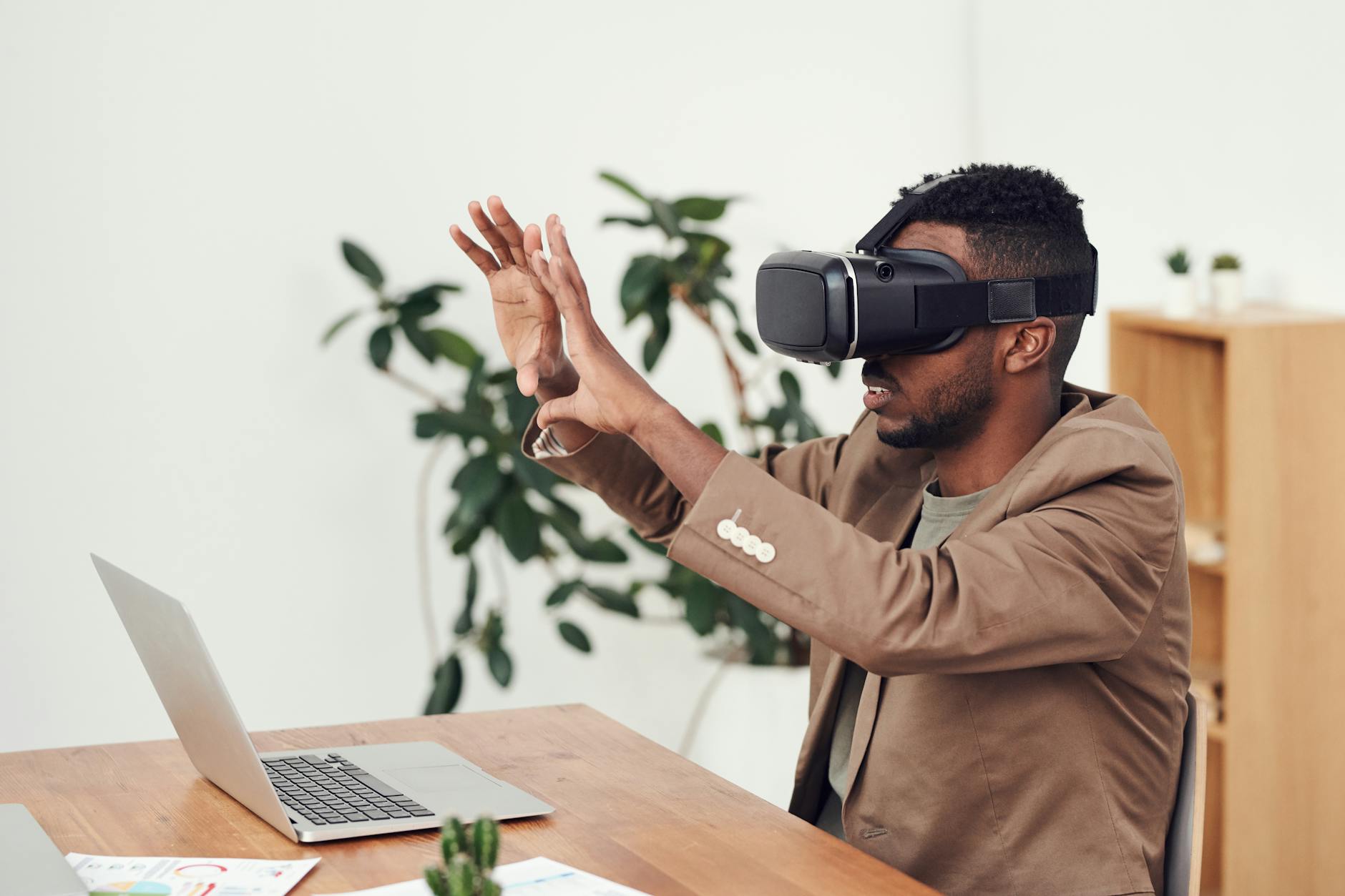
Embedding VR‑driven watercooler spaces into hybrid office designs reconstructs the informal networks that underpin career capital, creating a systemic lever that reshapes promotion pathways and institutional power.

Dek: Hybrid work has fragmented the spontaneous exchanges that once powered organizational learning. By embedding VR‑driven “digital watercoolers” into re‑imagined office footprints, firms are reconstructing the informal circuitry that underpins career capital and institutional resilience.
Macro Context: The Vanishing Watercooler
The pandemic‑induced shift to hybrid schedules has erased the physical proximity that sustained informal knowledge flows. A 2025 survey of 3,200 U.S. employees found that 68 % perceived a decline in “spontaneous peer interaction,” correlating with a 12 % dip in perceived career advancement opportunities [2]. The erosion of these micro‑conversations weakens the tacit transmission of norms, market intelligence, and mentorship—core components of career capital that historically accelerated upward mobility [1].
Concurrently, enterprise adoption of immersive technologies is accelerating. Gartner’s 2024 forecast reports that 71 % of large firms have either deployed or plan to deploy VR/AR for training, collaboration, or employee engagement [1]. This convergence of a social deficit and a technological surplus creates a structural opening for “digital watercoolers” to re‑anchor informal networks within the hybrid work model.
The redesign of office real estate further amplifies this dynamic. Companies are shrinking dedicated desk footprints by an average of 30 % while allocating 45 % of remaining space to “collaboration pods” equipped with mixed‑reality headsets [3]. These pods are not merely aesthetic; they constitute a physical‑digital interface that scaffolds the emergent VR watercooler ecosystem.
Mechanism: Replicating the Watercooler Effect in Virtual Spaces
Digital Confluence Platforms
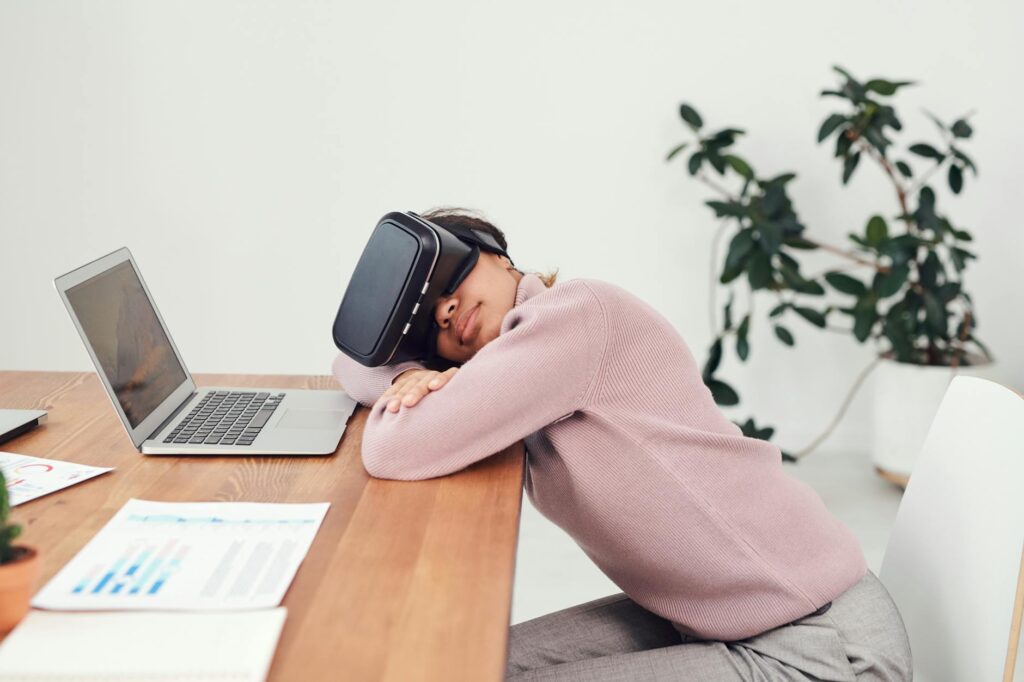
Virtual reality chat rooms and avatar‑based lounges now host the equivalent of hallway banter. Platforms such as Meta’s Horizon Workrooms and Microsoft Mesh report a 38 % increase in “social presence” metrics when users engage in unstructured VR sessions versus traditional video calls [4]. The underlying mechanism is the restoration of proxemic cues—eye contact, gestural feedback, and spatial awareness—that video conferencing strips away.
 Career Development
A New Dawn in Medical Education: Johnstown High School’s C-TEC Partnership
Johnstown High School's new C-TEC partnership adds classrooms and opportunities in healthcare technology, shaping future careers.
Read More →Platforms such as Meta’s Horizon Workrooms and Microsoft Mesh report a 38 % increase in “social presence” metrics when users engage in unstructured VR sessions versus traditional video calls [4].
Structured Hybrid Communication
Hybrid schedules have forced firms to formalize communication channels. A 2023 Deloitte study notes that 60 % of organizations have instituted “virtual office hours” to compensate for reduced physical overlap [4]. Embedding VR watercooler sessions within these hours provides a low‑stakes venue for cross‑functional dialogue, preserving the serendipitous discovery that fuels innovation.
Collaborative Artefacts in Immersive Environments
VR whiteboarding, 3‑D prototyping, and spatial data visualizations extend the watercooler beyond conversation to joint creation. Siemens’ “Digital Twin Lounge,” launched in 2024, enables engineers worldwide to convene in a shared virtual factory floor, reducing design iteration cycles by 22 % [5]. The artefact‑centric interaction redefines the watercooler from a gossip hub to a co‑creation node, amplifying its impact on skill acquisition and knowledge diffusion.
Systemic Ripple Effects
Cultural Recalibration
The re‑introduction of informal networks via VR triggers a broader cultural shift. Organizations that embed digital watercoolers report a 75 % rise in employee‑reported sense of belonging, a metric closely linked to retention in high‑skill cohorts [2]. This suggests that the technology is not merely a communication tool but a structural lever that rebalances power asymmetries between remote and on‑site staff.
Policy Realignment
Hybrid work policies are evolving to codify “digital presence” expectations. Companies such as JPMorgan Chase have instituted a “VR participation quota,” mandating two 30‑minute immersive sessions per week for all staff [6]. This policy embeds the watercooler into performance metrics, aligning informal networking with formal evaluation frameworks and thereby institutionalizing the new mode of career capital accumulation.
Architectural Innovation
Office redesigns now treat VR pods as infrastructural nodes akin to elevators or conference rooms. The “Flexi‑Hub” model pioneered by WeWork in 2025 integrates modular pod clusters with adaptive lighting and acoustic zoning, reducing average noise levels by 18 % while increasing pod utilization to 62 % during peak collaboration windows [3]. The physical reallocation underscores a systemic reorientation toward hybrid‑centric interaction spaces.
 Artificial Intelligence
AI to Power One-Third of Code by 2024, Says Analysis
AI is set to write one-third of all new software code in the U.S. by 2024, changing the landscape of…
Read More →This policy embeds the watercooler into performance metrics, aligning informal networking with formal evaluation frameworks and thereby institutionalizing the new mode of career capital accumulation.
Human Capital Trajectory: Winners, Losers, and the Redistribution of Career Capital
Accelerated Skill Signals for Early‑Career Professionals
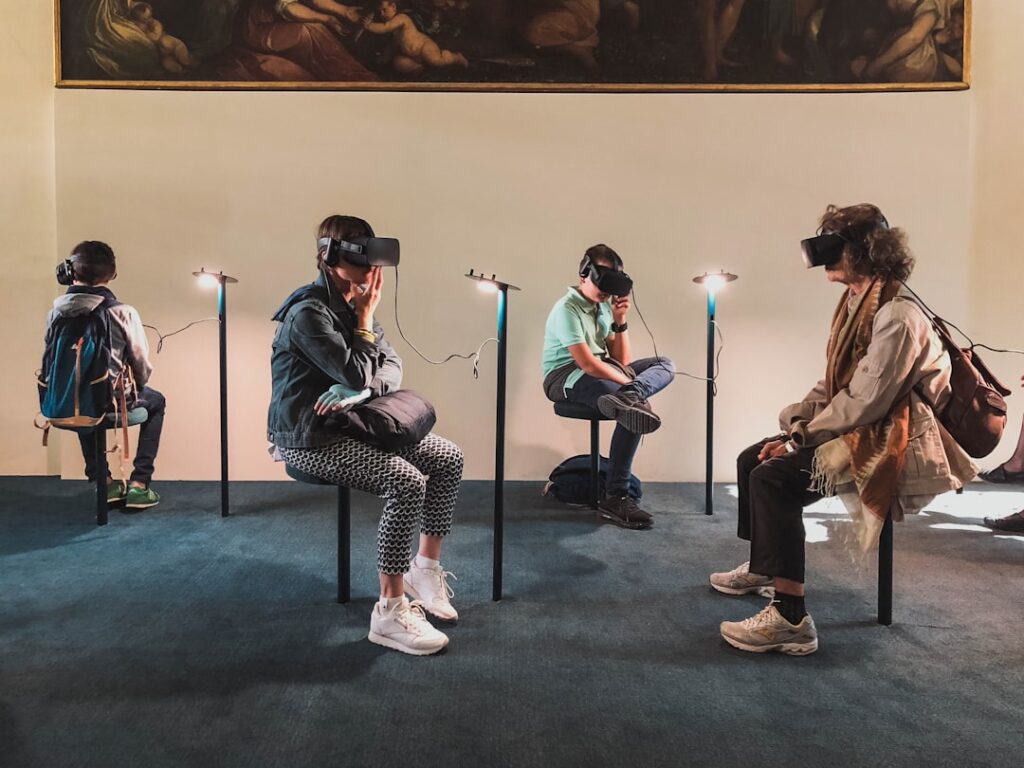
Junior employees who master VR collaboration tools acquire visible digital fluency, a signal increasingly weighted in promotion algorithms. A 2024 internal study at Accenture revealed that staff with ≥10 hours of VR interaction per month were 1.4 times more likely to receive accelerated leadership tracks [7]. The digital watercooler thus becomes a conduit for rapid skill signaling, compressing traditional tenure‑based ladders.
Mid‑Level Managers Facing Visibility Gaps
Conversely, managers anchored in legacy communication styles risk marginalization. Those who eschew immersive participation experience a 9 % decline in peer‑referenced project assignments, indicating a diffusion of informal sponsorship away from conventional hierarchies [8]. The structural shift reconfigures the patronage network, rewarding adaptability over positional authority.
Equity Implications
Access to high‑quality VR hardware remains uneven across geographies and income brackets. Firms that subsidize headsets for remote staff mitigate this disparity, as evidenced by IBM’s 2025 “Inclusive Immersion” program, which correlated with a 12 % reduction in promotion latency for underrepresented groups [9]. The policy illustrates how institutional power can be leveraged to transform the digital watercooler from a potential source of inequality into a democratizing platform for career mobility.
Five‑Year Outlook: Institutional Consolidation and Emerging Asymmetries
By 2029, we anticipate three converging trends that will solidify the digital watercooler’s role in the corporate ecosystem.
This will embed informal network metrics into formal talent pipelines, further institutionalizing the watercooler’s influence on career trajectories.
- Standardization of Immersive Protocols – Industry consortia (e.g., the Immersive Workplace Alliance) will publish interoperable standards for avatar identity, data security, and interaction logging, reducing friction and fostering cross‑company collaboration.
- Integration with Talent Analytics – HR information systems will ingest VR interaction metadata, enabling predictive models of employee engagement and succession readiness. This will embed informal network metrics into formal talent pipelines, further institutionalizing the watercooler’s influence on career trajectories.
- Emergence of “Hybrid Hubs” as Strategic Assets – Corporations will treat VR‑enabled collaboration zones as real‑estate assets, allocating budgetary line items for pod upgrades and spatial design akin to traditional office leasing. Firms that underinvest risk a systemic erosion of informal knowledge flows, potentially widening the performance gap with early‑adopter competitors.
The structural shift toward immersive informal networks will thus rewire the mechanisms of career capital formation, reshape institutional power dynamics, and embed new systemic dependencies within hybrid work architectures.
 Business Insights
AI’s Transformative Role in Knowledge Management
AI is changing how organizations manage knowledge. This article explores employee perceptions and the broader implications for management.
Read More →Key Structural Insights
> [Insight 1]: The digital watercooler restores tacit knowledge flows by re‑creating proxemic cues in VR, directly addressing the informational void created by hybrid work.
> [Insight 2]: Institutional policies that codify immersive participation translate informal networking into measurable career capital, reshaping promotion pathways.
> [Insight 3]: Equitable access to immersive tools is a decisive factor in whether the digital watercooler amplifies or mitigates existing mobility inequities.