No products in the cart.

Why Physical Education Is Quietly Becoming the Smartest Hour in School
Physical education has long been treated as a break from ‘real’ learning. A growing body of global evidence says that is backwards. Quality PE can sharpen memory, lift grades, and build the social skills employers now prize. The smartest schools are already acting.

bengaluru, India — In a country obsessed with board scores and coaching classes, one of the most powerful learning tools in school still happens in sneakers on a dusty ground. Across India and around the world, new evidence is forcing educators to rethink physical education (PE) not as a break from academics but as a direct driver of better grades, sharper focus, and healthier brains.[1] As exam pressure, screen time, and youth mental health concerns climb, that one hour of structured movement may be doing more cognitive work than many classrooms.
What used to be dismissed as “just games” is now backed by neuroscience and longitudinal data. Regular, high-quality PE is linked to improved attention, memory, and executive function, along with lower anxiety and better classroom behavior.[2] For policymakers trying to balance academic outcomes with student wellbeing, the message is blunt: cutting PE to make room for more test prep is likely a false economy.
The Science Behind Moving Minds
Over the past decade, research from the U.S., Europe, and Asia has converged on a simple finding: physically active students tend to perform better academically. A 2019 meta-analysis in the Journal of Science and Medicine in Sport covering more than 40 studies found that school-based physical activity programs were positively associated with academic performance and cognitive outcomes.[1]
The mechanisms are increasingly clear. Aerobic activity boosts blood flow to the brain, stimulates growth factors such as BDNF (brain-derived neurotrophic factor), and supports the prefrontal cortex, which handles planning, impulse control, and working memory. The U.S. Centers for Disease Control and Prevention has reported that students who are physically active tend to have better grades, school attendance, and classroom behaviors than their less active peers.[2]
India’s PE Gap in an Exam-Heavy Culture
India illustrates the tension clearly. The National Education Policy 2020 calls for integrating sports and physical education into the curriculum and promoting holistic development. Yet surveys by the Sports Authority of India and independent NGOs show many schools, especially in urban areas, still treat PE as optional or sacrifice it during exam seasons. The World Health Organization estimates that more than 80% of adolescents globally do not meet recommended physical activity levels, with South Asia among the least active regions.[3] In India, this sits alongside rising childhood obesity in cities and stubborn undernutrition in poorer communities, creating a double burden. For both groups, structured, inclusive PE is one of the few scalable tools schools control every day. In a hyper-competitive education system, it is easy to see PE as expendable. The data suggest the opposite: movement is not a distraction from learning but a precondition for sustained attention, emotional regulation, and the kind of resilience that high-stakes exams quietly demand.
 AI
AIAI Chatbots Revolutionize India’s IT Landscape, Impacting Jobs
AI chatbots are significantly altering the customer service landscape in India's IT sector, raising concerns about job security.
Read More →The World Economic Forum lists teamwork, emotional regulation, adaptability, and leadership among the most critical skills for the future of work.[4] Done well, PE is a live lab for all of these.
From Playing Fields to Future Skills
Beyond test scores, PE is increasingly framed as a training ground for the skills employers say they struggle to find. The World Economic Forum lists teamwork, emotional regulation, adaptability, and leadership among the most critical skills for the future of work.[4] Done well, PE is a live lab for all of these. Team games force quick decision-making under pressure. Individual sports teach goal-setting and self-discipline. For many students, especially those who struggle in traditional academic subjects, the sports field is the first place they experience competence and recognition. That confidence often spills back into classrooms and later into workplaces.
Designing Smarter PE, Not Just More PE
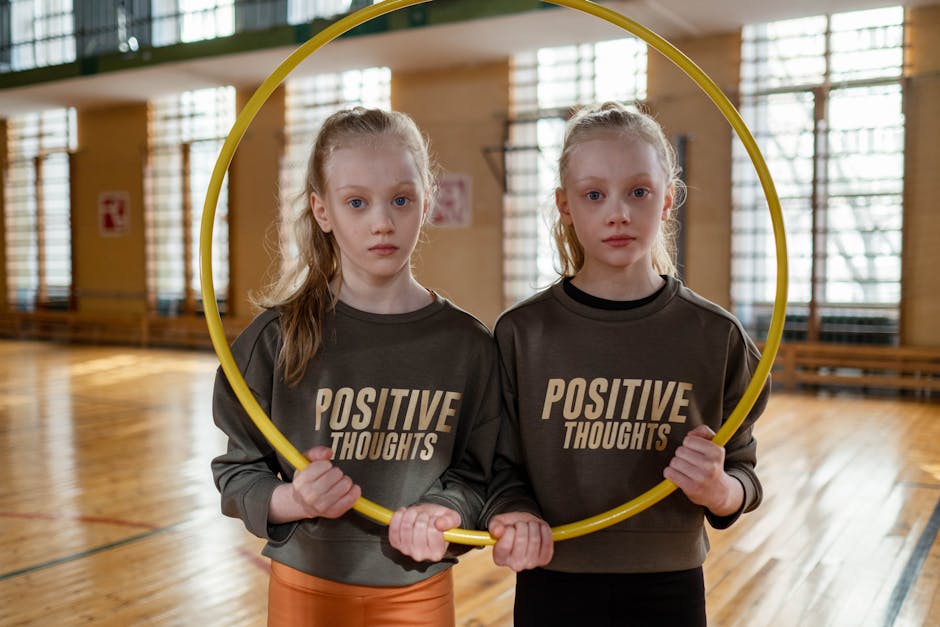
Not all PE is equal. A class where half the students stand in lines waiting their turn or where only the most athletic children touch the ball will not deliver the academic or wellbeing gains the research describes. The OECD’s 2019 report on physical activity in schools highlights that quality matters as much as quantity: varied, inclusive, and moderate-to-vigorous activity is what moves the needle.[4]
Some systems are responding. In Finland, daily physical activity is woven into the school day through short movement breaks and outdoor learning, not just traditional PE classes. In Singapore, the Ministry of Education has expanded structured physical activity and fitness assessments as part of a broader student wellbeing agenda. In India, CBSE has introduced Health and Physical Education as a compulsory part of the curriculum, but implementation quality still varies widely between elite private schools and resource-strapped government schools.
Counterpoint
 Career Advice
Crafting Your Narrative: The Key to Career Success
Your personal story is more than just a narrative; it's a powerful asset that can shape your career trajectory. Learn…
Read More →Critics of expanding physical education in already stretched school timetables argue that the evidence, while promising, is not a magic bullet. Meta-analyses often show small to moderate academic benefits, which can disappear if PE is poorly implemented or displaces effective teaching in literacy and numeracy. In low-income systems facing teacher shortages, large class sizes, and basic infrastructure gaps, diverting scarce resources to build sports facilities or hire specialist PE teachers can look like a luxury. Some educators also worry that competitive sports can reinforce exclusion, bullying, or gender stereotypes if not carefully managed. The more cautious view is that PE should be protected and improved, but not romanticized as a substitute for deep reforms in pedagogy, assessment, and teacher training.
PE builds teamwork, resilience, and leadership skills that employers and universities increasingly value.
High-quality physical education is linked to better grades, attention, and classroom behavior, not just fitness. India’s exam-centric culture still sidelines PE, despite policy support in NEP 2020 and CBSE guidelines. PE builds teamwork, resilience, and leadership skills that employers and universities increasingly value. The biggest gains come from inclusive, well-designed PE, not simply adding more unstructured playtime. Educators and policymakers can treat PE as a low-cost lever for both learning outcomes and mental health.
Looking Ahead
The next few years will test whether systems truly believe their own rhetoric about “holistic education.” For school leaders, the practical move is not just to protect PE from timetable cuts but to integrate it with learning goals: using movement breaks in math classes, linking sports statistics to data literacy, and treating coaches as co-educators rather than afterthoughts. For parents and students, the mindset shift is equally important. Choosing a school with a serious PE program is not choosing less academics; it is often choosing better academics and healthier adolescence. As governments revisit curricula after the pandemic, PE sits in a rare sweet spot: relatively low-cost, evidence-backed, and popular with students. If policymakers align training, infrastructure, and assessment around that reality, the smartest hour in school may increasingly happen in shorts and running shoes, not just behind a desk.
Singh, A. et al., "Effects of Physical Activity Interventions on Cognitive and Academic Performance in Children and Adolescents: A Meta-Analysis," Journal of Science and Medicine in Sport, 2019. https://doi.org/10.1016/j.jsams.2018.09.006
U.S. Centers for Disease Control and Prevention, "The Association Between School-Based Physical Activity, Including Physical Education, and Academic Performance," 2010 (updated guidance referenced 2023). https://www.cdc.gov/healthyschools/physicalactivity/pdf/pa-pe_academic_2010.pdf
World Health Organization, "Global action plan on physical activity 2018–2030," 2018; adolescent activity data updated 2022. https://www.who.int/publications-detail-redirect/9789241514187
OECD, "OECD Obesity Update" and related physical activity briefs, 2019; World Economic Forum, "The Future of Jobs Report 2023," 2023. https://www.weforum.org/reports/the-future-of-jobs-report-2023/
 Career Advice
Unlocking Potential: Career Counselling for Key Demographics
Discover how career counselling can help students, parents, and career changers maximize their potential and navigate the workforce effectively.
Read More →