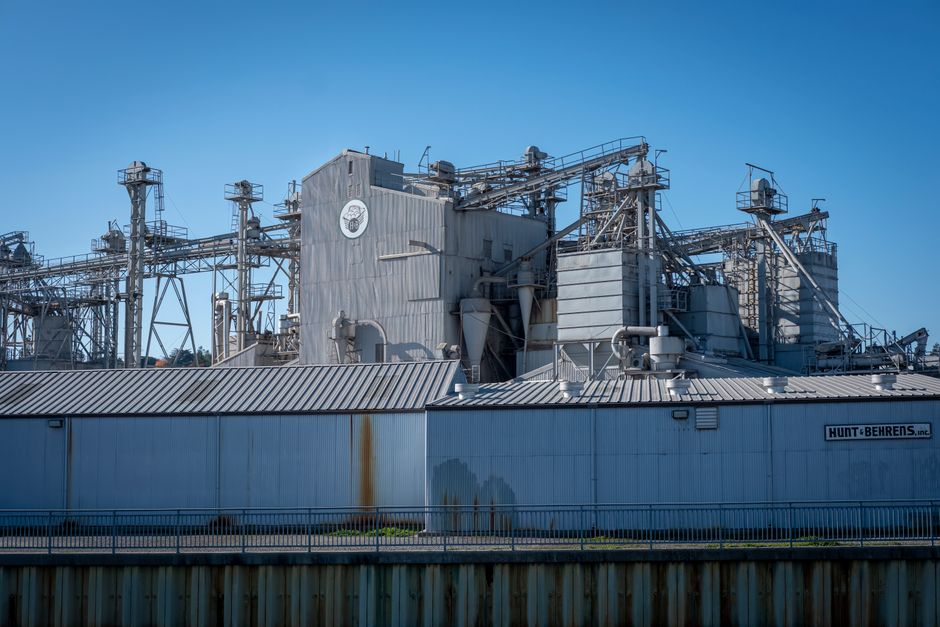
6K announced Thursday that it had conditional approval for a $250 million Department of Defense loan to build a factory in Tennessee.
6K's Tennessee project changed after its grant was canceled
6K is based in North Andover, Massachusetts, and is 12 years old. The startup had previously received a $50 million Department of Energy grant under the Bipartisan Infrastructure Law. The Trump administration canceled that 2023 award in a sweep of Biden-era awards, forcing 6K to reapply. The Tennessee factory was originally slated to open in 2024, but the grant cancellation and uncertainty in the electric-vehicle market forced the company to revise its plans.¹²
At the Tennessee site, 6K's manufacturing method uses microwaves to heat metals into a plasma, then deposits the material onto a surface. That process reduces the number of steps needed to make cathode material, a key battery component. The company says the method can work with different battery types, including lithium iron phosphate, or LFP. The factory's production process is designed to make battery materials without relying on Chinese suppliers.¹²
That process reduces the number of steps needed to make cathode material, a key battery component.
A separate Indiana loan would support two battery plants
The US Energy Department also announced a proposed loan of up to $7.54 billion to StarPlus Energy, a joint venture between Stellantis and Samsung SDI. The financing aims to support construction of two electric-vehicle lithium-ion battery plants in Kokomo, Indiana. The conditional commitment consists of $6.85 billion in principal and $688 million in capitalised interest.¹²
The joint venture plans to make batteries for Stellantis electric vehicles, with annual production targeted at around 67GWh. That output is projected to supply batteries for approximately 670,000 vehicles a year. Stellantis scheduled the first Indiana plant to open in early 2025 and the second in 2027. Finalisation of the loan before the change in US presidency on 20 January remained uncertain. President-elect Donald Trump had criticised the current administration's efforts to promote electric-vehicle production.¹²
Other federal awards cover factories and vehicle components
 News
Audi Plans $4bn First US Factory for Q7, Q8 and Q9 SUVs
The Macon plant is planned for the Q7, Q8 and Q9, shifting some production from Bratislava in Slovakia.
Read More →Stellantis' Canadian gigafactory plan involved a partnership with LG Energy Solution. Separately, the Department of Energy disclosed plans to allocate $334.8 million to transform the shuttered Belvidere Assembly Plant for electric-vehicle production, and $250 million to convert the Indiana Transmission Plant in Kokomo to manufacture electric-vehicle components. The awards for those two plants were announced in July and had not been finalised.¹²
The department also proposed a loan of up to $6.6 billion to Rivian for a new plant in Georgia. Its production target was more affordable electric vehicles by 2028. The proposal was another part of the federal financing activity around vehicle and battery manufacturing, alongside the Tennessee factory loan and the Indiana battery-plant commitment.¹²
A Ford and SK On loan remained pending
In June 2023, the Department of Energy announced plans to lend up to $9.2 billion to a joint venture of Ford Motor and SK On for three battery plants. The award was the largest ever from the government loan programme. It remained pending finalisation, as did the proposed financing for the Indiana plants.¹²
Federal EV Money Is Conditional, Not Certain
The largest federal EV loans, like the $7.54 billion StarPlus Energy commitment and the $9.2 billion Ford-SK On award, remain unfinalised. A hiring manager or supplier in battery manufacturing should treat these announcements as preliminary. Plan for delays or cancellations, and avoid committing to projects that depend on funds that have not closed.²
Other federal awards cover factories and vehicle components Stellantis' Canadian gigafactory plan involved a partnership with LG Energy Solution.
For engineers and operators, the shift toward domestic battery material production, such as 6K's microwave process that avoids Chinese suppliers, signals demand for skills in plasma-based manufacturing and cathode chemistry. Workers at plants like Belvidere or Kokomo should expect conversion timelines to slip, as seen with 6K's factory moving from a 2024 opening to a revised plan.¹²
Sources
 News
Workers Move from Office Jobs to Freelancing and Policing
A barber in Bengaluru records his work for pay, while data collectors work across Latin America and Southeast Asia.
Read More →Written by Career Ahead AI. AI can make mistakes, so verify key facts. Report errors to support@careeraheadonline.com