No products in the cart.

7 Ways to Achieve a Healthier Work-Life Balance

Across numerous career conversations, we have seen a common pattern. High performers prioritize their time effectively.

We have watched many professionals struggle with burnout and work-life balance. Across numerous career conversations, we have seen a common pattern. High performers prioritize their time effectively.
Pattern 1: Ineffective Time Management
What we keep seeing is professionals spending too much time on work-related tasks. They often neglect their personal life and self-care. This leads to burnout.
High performers do things differently. They prioritize tasks based on urgency and importance. They focus on the most critical tasks first.
For example, they use the Eisenhower Matrix to categorize tasks into four quadrants: urgent and important, important but not urgent, urgent but not important, and not urgent or important.
Pattern 2: Lack of Boundaries
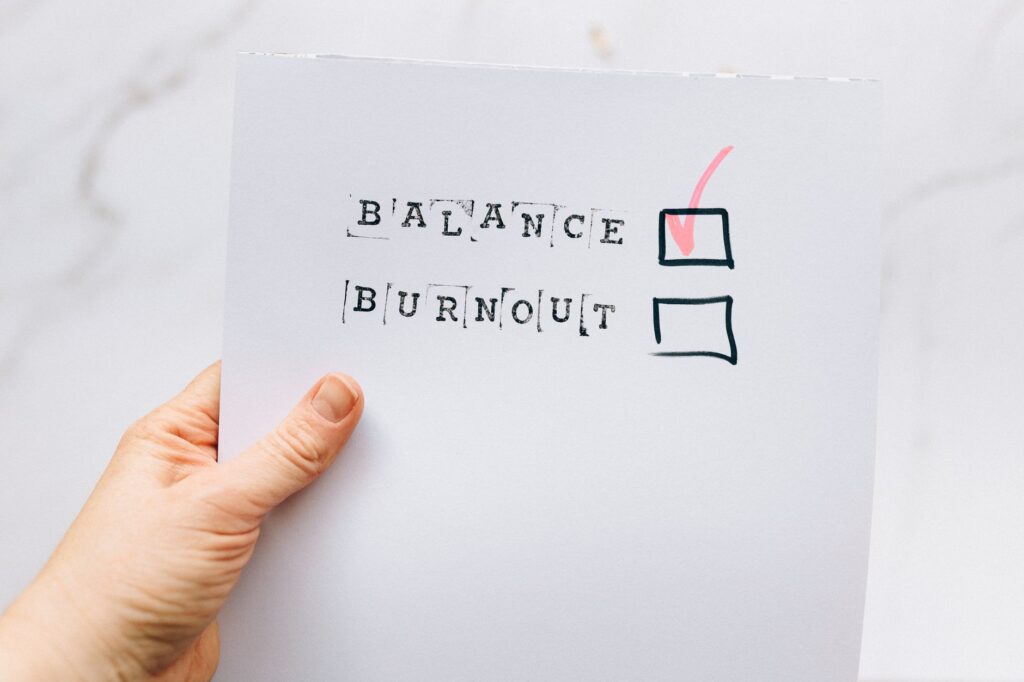
We observe that many professionals fail to establish clear boundaries between work and personal life. They often check work emails and take work calls during personal time.
High performers set boundaries. They designate specific work hours and avoid work-related activities during personal time.
They also communicate their boundaries to their colleagues and manager. This helps to prevent work from encroaching on personal time.
Pattern 3: Neglecting Self-Care
What we see is professionals neglecting self-care and relaxation. They often allocate little time for activities that promote physical, emotional, and mental well-being.
High performers prioritize self-care. They allocate time for activities that promote physical, emotional, and mental well-being.
This includes activities such as exercise, meditation, and spending time with loved ones.
As Jerome Lamarque, a Mind Management Expert, says, “Stop Firefighting.” This means prioritizing self-care and relaxation to prevent burnout.
Pattern 2: Lack of Boundaries 7 Ways to Achieve a Healthier Work-Life Balance We observe that many professionals fail to establish clear boundaries between work and personal life.
Pattern 4: Inadequate Work-Life Balance Initiatives

We have seen that many organizations fail to provide adequate work-life balance initiatives. They often neglect to support employees’ ability to manage professional responsibilities alongside personal and family commitments.
High-performing organizations provide employee-focused approaches to reducing burnout risk. They offer time management training and work-life balance initiatives.
These initiatives help employees to manage their workload more effectively and achieve a better work-life balance.
Pattern 5: Focusing on Holistic Health
What we observe is professionals focusing on physical health only. They often neglect emotional and mental well-being.
High performers focus on holistic health. They prioritize activities that promote physical, emotional, and mental well-being.
This includes exercise, meditation, and spending time with loved ones. A holistic approach to health is essential for achieving a sustainable work-life balance.
Pattern 6: Ignoring Chronic Work-Life Conflict
We see that many professionals ignore chronic work-life conflict. They often fail to address the central risk factor for burnout.
High performers address chronic work-life conflict. They use effective time management and work-life balance initiatives to reduce burnout risk.
They also prioritize self-care and relaxation to prevent burnout.
Pattern 7: Not Supporting Professional and Personal Commitments
What we keep seeing is professionals struggling to manage professional responsibilities alongside personal and family commitments.
High performers support employees’ ability to manage professional responsibilities alongside personal and family commitments.
They provide employee-focused approaches to reducing burnout risk. They offer time management training and work-life balance initiatives.
This helps employees to manage their workload more effectively and achieve a better work-life balance.
You may also like
 Career Guidance
4,000 Students Connect with 85 Recruiters at AVASAR 2026
The University of Delhi's AVASAR 2026 placement drive will connect over 4,000 students with more than 85 recruiters, underscoring the increasing demand for skilled graduates…
Read More →They use effective time management and work-life balance initiatives to reduce burnout risk.
The gap between professionals who achieve a healthier work-life balance and those who do not is the ability to prioritize time effectively. We call this gap the “Time Management Gap.” Professionals who bridge this gap are more likely to achieve a sustainable work-life balance and reduce burnout risk. They prioritize their time effectively, set boundaries, and focus on holistic health. By prioritizing self-care and relaxation, professionals can increase productivity and overall job performance.