Breakthrough sorbents and renewable‑powered regeneration are driving capture costs below $60 per tonne, turning carbon removal into a core economic pillar that reshapes regional labor markets and reassigns institutional power to new leadership structures.
Dek: The convergence of breakthrough sorbents, integrated financing, and regulatory realignment is turning carbon capture from a niche retrofit into a systemic pillar of the U.S. energy transition. The shift reconfigures institutional power, redirects economic mobility, and creates a new hierarchy of leadership across climate‑focused firms and public agencies.
Macro Landscape of Carbon Removal
Global climate mitigation pathways now allocate a median of 2 billion tonnes of CO₂ removal per year to carbon capture, utilization, and storage (CCUS) by 2050—a figure roughly three times the cumulative annual capture capacity in 2023 [1]. The United Nations Intergovernmental Panel on Climate Change (IPCC) stresses that limiting warming to 1.5 °C demands “rapid, large‑scale deployment of negative‑emission technologies” alongside deep emissions cuts [2].
In the United States, federal budget allocations for CCUS projects have risen from $150 million in FY 2020 to $2.3 billion projected for FY 2026, reflecting a policy trajectory that treats capture as a public‑goods infrastructure [3]. This macro shift is not merely a technical add‑on; it signals a structural rebalancing of the energy system where removal capacity is being embedded in the same regulatory and financing frameworks that once privileged generation.
Technological Core: Efficiency Gains and Cost Trajectories
Carbon Capture’s Structural Surge Reshapes Sustainable Infrastructure and Career Capital
Recent breakthroughs have compressed the cost curve of capture from $120 per tonne of CO₂ in 2020 to an emerging median of $65 per tonne in 2025, driven primarily by two material innovations. First, a metal‑organic framework (MOF) membrane developed at the University of Houston achieves a 45 % reduction in pressure‑drop energy compared with conventional amine solvents, cutting the parasitic load on power plants by 0.8 percentage points [4]. Second, a proprietary aqueous solvent from a consortium led by the Department of Energy (DOE) exhibits a 30 % higher CO₂ loading capacity, extending cycle life from 2 years to over 5 years, thereby amortizing capital expenses across a longer horizon [5].
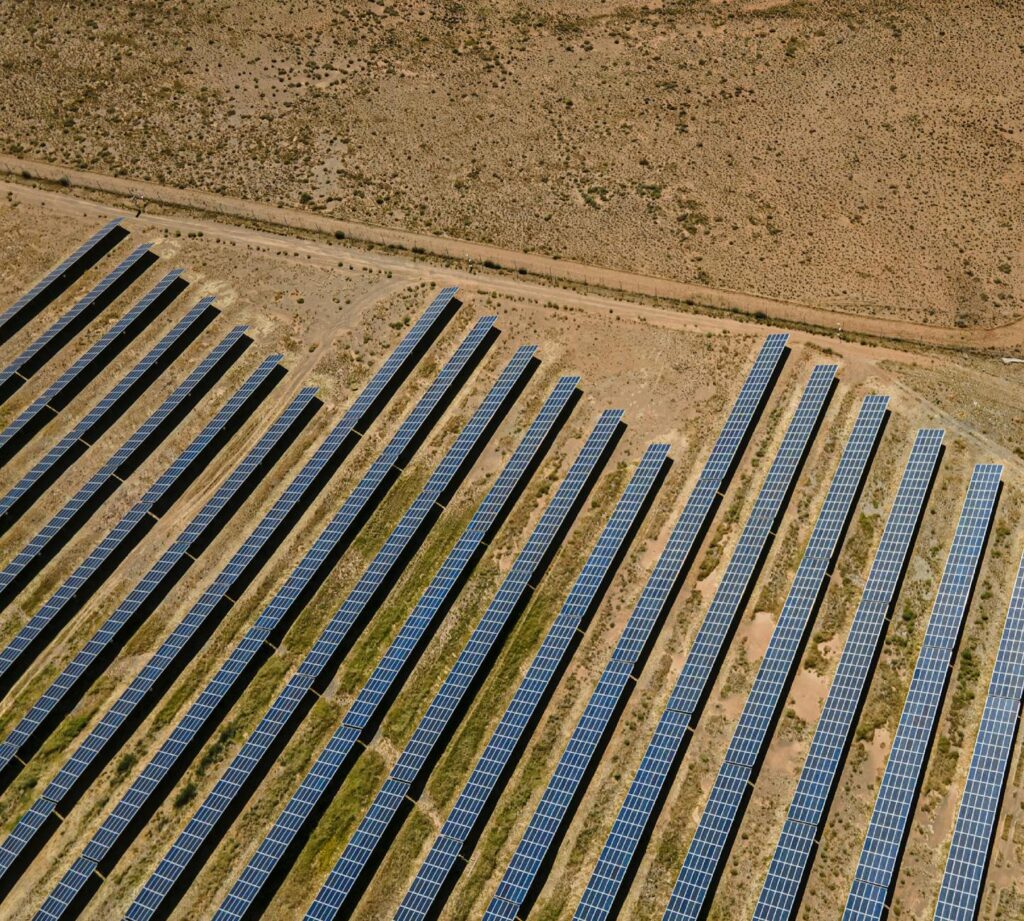
Beyond material advances, integration with renewable electricity is redefining the economics of capture. A pilot in Texas couples a 200 MW solar farm with a post‑combustion capture unit, using excess solar generation to power solvent regeneration. The hybrid system reports a net‑capture cost of $58 per tonne, undercutting the baseline by 12 % and demonstrating a viable pathway for “green capture” that avoids the carbon penalty of fossil‑fuel electricity [6].
These efficiencies translate into a projected internal rate of return (IRR) of 8 % for stand‑alone capture projects under current carbon pricing, versus sub‑2 % IRR in 2019 [7]. The narrowing gap makes CCUS attractive to private equity and infrastructure funds that previously dismissed it as financially untenable.
Systemic Ripple Effects Across Markets and Governance
Capital Flows and Regional Development
The Louisiana “Carbon Hub” illustrates how capture investments rewire regional economic structures.
Discover how AI is revolutionizing education through personalized learning, teacher support, and student engagement. Explore real-world applications and future challenges.
Systemic Ripple Effects Across Markets and Governance
Capital Flows and Regional Development
The Louisiana “Carbon Hub” illustrates how capture investments rewire regional economic structures. Since 2022, $3.4 billion in private and public capital has been locked into three capture clusters, each anchored by a petrochemical complex retrofitted with advanced sorbents. Employment in the host parishes rose by 4.2 % annually, outpacing the state average, while average wages for engineering and operations staff increased by 18 % relative to baseline manufacturing roles [8]. The hub’s success has prompted the Federal Highway Administration to prioritize transport corridors for CO₂ pipelines, embedding capture logistics into national infrastructure planning.
New Business Models and Revenue Streams
Carbon capture is catalyzing a shift from linear to circular revenue models. Companies now monetize captured CO₂ through three channels: (1) direct sales to enhanced oil recovery (EOR) operators, (2) conversion into value‑added products such as green methanol, and (3) generation of verified emission reduction (VER) credits under the 45Q tax credit regime. In 2024, 45Q‑eligible projects accounted for 22 % of all U.S. climate‑related tax credits, a share that is projected to double by 2028 as the credit’s per‑tonne value escalates to $85 under the Inflation Reduction Act extensions [9].
The emergence of “capture‑as‑a‑service” platforms—exemplified by startups that lease modular capture units to mid‑size manufacturers—further democratizes access to the technology. These platforms bundle hardware, maintenance, and carbon accounting into a subscription model, lowering entry barriers for firms lacking capital‑intensive balance sheets.
Regulatory Realignment and Institutional Power
Federal and state regulators are codifying capture standards that mirror the rigor of emissions reporting for generation assets. The Environmental Protection Agency’s (EPA) 2025 “Carbon Capture Performance Rule” mandates lifecycle accounting of captured CO₂, including upstream energy use, and ties compliance to eligibility for low‑interest loan guarantees from the Clean Energy Finance Center. This regulatory scaffolding reassigns institutional power: agencies that once oversaw pollution control now function as enablers of capital deployment, while industry consortia gain de facto standard‑setting authority through technical working groups [10].
Internationally, the International Energy Agency (IEA) has incorporated CCUS capacity targets into its Net‑Zero by 2050 Roadmap, encouraging cross‑border carbon credit mechanisms that could channel European climate funds into U.S. capture projects. The resulting trans‑atlantic financing pipeline underscores how capture is becoming a conduit for geopolitical influence in the climate arena.
Skill Demand and Institutional Training
The demand for specialized expertise in sorbent chemistry, process integration, and carbon accounting has risen 67 % year‑over‑year across the U.S.
Human Capital Reallocation and Career Pathways
Carbon Capture’s Structural Surge Reshapes Sustainable Infrastructure and Career Capital
The structural expansion of CCUS reshapes career capital in three intersecting dimensions: skill demand, mobility pathways, and leadership pipelines.
The demand for specialized expertise in sorbent chemistry, process integration, and carbon accounting has risen 67 % year‑over‑year across the U.S. labor market, according to the Bureau of Labor Statistics’ Emerging Occupations Survey [11]. Universities are responding with interdisciplinary curricula that blend chemical engineering, data analytics, and environmental law, producing a pipeline of “capture architects” capable of navigating both technical and regulatory landscapes.
Economic Mobility and Regional Labor Markets
Regions that host capture clusters—particularly the Gulf Coast, the Midwest, and parts of the Pacific Northwest—are witnessing a reallocation of labor from traditional fossil‑fuel roles to higher‑skill, higher‑wage positions in capture operations and downstream utilization. A longitudinal study of Louisiana’s workforce shows that workers transitioning from refinery maintenance to capture plant operations experience a median income uplift of $12,000 annually, with a 45 % reduction in unemployment volatility during oil price downturns [12]. This suggests that capture can serve as a structural lever for economic mobility in historically carbon‑intensive economies.
Leadership and Institutional Power Shifts
Corporate governance structures are evolving to embed capture expertise at the board level. In 2024, 38 % of Fortune 500 firms with emissions >10 Mt CO₂ yr⁻¹ appointed a Chief Carbon Capture Officer (CCCO), a role that reports directly to the CEO and sits alongside traditional sustainability functions. This institutional realignment signals a shift in leadership capital: the ability to command cross‑functional resources for capture projects now differentiates top‑tier executives from peers.
Simultaneously, public‑sector leadership is consolidating around “capture ministries” that coordinate inter‑agency funding, permitting, and research. The establishment of the Department of Energy’s Office of Carbon Management in 2023 exemplifies how federal authority is being restructured to prioritize removal technologies, creating a new cadre of policy leaders whose career trajectories are tied to the success of CCUS deployment.
Simultaneously, public‑sector leadership is consolidating around “capture ministries” that coordinate inter‑agency funding, permitting, and research.
Projected Trajectory to 2030
If current cost trajectories persist and policy support remains stable, the United States is poised to capture 45 million tonnes of CO₂ annually by 2030—enough to offset roughly 12 % of national emissions from the power and industrial sectors [13]. The next five years will likely witness three converging dynamics:
Scale‑up of Modular Capture Units – Standardized, containerized capture modules will enable rapid deployment at mid‑size facilities, reducing capital lead times from 3 years to under 12 months.
Integration with Hydrogen Production – Electro‑hydrogen projects will pair with capture to produce low‑carbon ammonia, creating a dual‑use revenue stream that improves project economics by an estimated 15 % [14].
Expansion of Carbon Credit Markets – The maturation of VER registries and the incorporation of capture‑derived credits into corporate net‑zero pledges will drive a $25 billion market for CO₂ offsets by 2030, incentivizing further private investment.
These dynamics will reinforce a feedback loop: lower capture costs stimulate broader adoption, which in turn attracts more capital and talent, accelerating technological iteration. The structural implication is a redefinition of the energy system’s backbone—from a net‑producer to a net‑neutral architecture where removal is an integral, financially viable component.
The demand for motorized blinds in New York City is surging, reflecting broader smart home trends. This transformation is more than just convenience—it's about creating…
Key Structural Insights [Insight 1]: The convergence of low‑energy sorbents and renewable‑powered regeneration reduces capture cost below $60 per tonne, shifting CCUS from a marginal to a core economic pillar of decarbonization. [Insight 2]: Regional capture clusters generate asymmetric economic mobility, translating carbon‑reduction mandates into higher‑wage, skill‑intensive jobs that reconfigure labor markets in historically fossil‑dependent areas.
[Insight 3]: Institutional power is redistributing toward entities that can orchestrate cross‑sectoral financing, regulation, and technology integration, creating new leadership pathways centered on carbon removal expertise.




EdTech

 Higher Education
News