No products in the cart.

Dark Horizons: How Economic Downturns Rewire Travel, Talent and Institutional Power
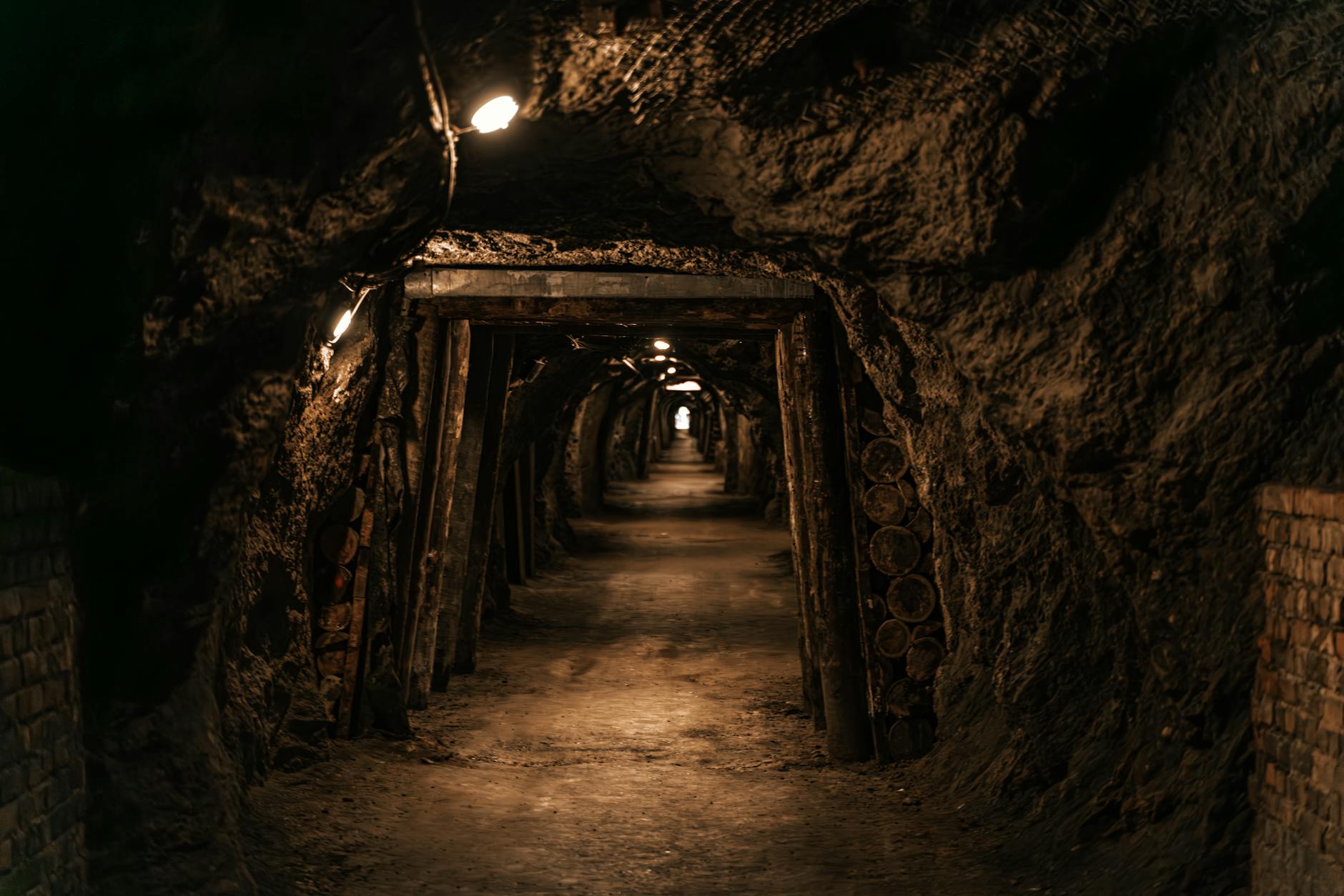
Economic downturns have redirected discretionary travel spending toward low‑cost, high‑impact dark tourism sites, prompting a structural realignment of institutional power and the emergence of new career pathways in ethical interpretation and heritage compliance.

The surge in “dark tourism” reflects a structural shift in consumer risk‑budgeting and a reallocation of career capital toward sites of tragedy. As governments, venture firms and heritage institutions vie for control, the sector is reshaping pathways to economic mobility and leadership in the post‑pandemic travel economy.
Contextualizing the Turn to the Macabre
The global tourism market contracted by 7.5 % in 2023, the deepest dip since the 2009 financial crisis, according to the UN World Tourism Organization (UNWTO) [1]. Simultaneously, discretionary spending on “experience‑based” travel fell 12 % while budget‑constrained travelers gravitated toward low‑cost, high‑impact destinations [2]. Within this compression, dark tourism—visits to sites of death, disaster, or collective trauma—registered a compound annual growth rate (CAGR) of 9.3 % from 2018 to 2023, outpacing conventional leisure travel by 4.1 % points [3].
The phenomenon is not merely a niche fad. Historical parallels emerge from the Great Depression, when “sobriquet tours” of Dust Bowl sites attracted cost‑sensitive Americans seeking both education and escapism [4]. Today, the convergence of macro‑economic strain, digital amplification, and a cultural tilt toward authenticity creates a structural platform for dark tourism to embed itself within the broader travel ecosystem.
The Core Mechanism: Economic Compression Meets Digital Amplification
1. Budget Reallocation Toward “Value‑Rich” Destinations
When GDP per capita contracts, travelers prioritize destinations offering high perceived value per dollar. Dark sites—often public lands, memorials, or abandoned industrial zones—have low entry fees (average $5–$12) yet deliver intense narrative depth [5]. A 2022 analysis of inbound tourism to the Auschwitz‑Birkenau Memorial indicated that 68 % of visitors cited “affordability” as a primary driver, compared with 42 % for traditional European heritage sites [6].
2. Social Media as a Demand Engine
Instagram, TikTok and YouTube have transformed dark sites into algorithmic commodities. The hashtag #darktourism amassed 4.2 million posts in 2023, generating an estimated 1.3 billion impressions [7]. Platform‑driven “viral pilgrimages” have shortened the discovery-to‑visit cycle from months to weeks, compressing demand curves and prompting local authorities to formalize visitor management protocols.
3. Psychological Economics of the Taboo
Behavioral economics research links the “thrill of the forbidden” to heightened dopamine responses, which translate into willingness to pay premiums for access [8]. Dark tourism exploits this asymmetry: visitors are willing to spend up to 22 % more on guided experiences that frame tragedy within curated storytelling, a premium that offsets lower baseline tourism revenues during downturns [9].
Psychological Economics of the Taboo Behavioral economics research links the “thrill of the forbidden” to heightened dopamine responses, which translate into willingness to pay premiums for access [8].
You may also like
 Business Insights
Top small business trends in 2026: Emerging market trends
In 2026, small businesses face a pivotal moment as they adapt to emerging trends that redefine their operations. Key factors include the integration of artificial…
Read More →Collectively, these forces rewire the travel market’s supply‑demand equilibrium, shifting institutional attention and capital toward sites previously relegated to marginal status.
Systemic Implications: From Local Economies to Institutional Power
Economic Mobility and Community Resilience
Municipalities surrounding dark sites have recorded measurable uplift in per‑capita income. The town of Pripyat, adjacent to the Chernobyl Exclusion Zone, saw a 15 % rise in average household earnings between 2021 and 2024 after the establishment of a state‑sponsored “dark tourism corridor” [10]. The influx of 300,000 visitors annually generated €42 million in ancillary spending on lodging, food services and local crafts, directly expanding the region’s tax base.
However, the redistribution of economic capital is uneven. Communities lacking heritage management capacity experience “tourist fatigue” and price inflation that erodes long‑term affordability for residents [11]. Institutional mechanisms—such as UNESCO’s “Sustainable Tourism” guidelines—are increasingly invoked to balance revenue extraction with community welfare, but enforcement remains fragmented across jurisdictions.
Institutional Realignment and Governance
National tourism boards are recalibrating strategic plans to incorporate dark tourism metrics. In 2023, the Japanese Tourism Agency introduced a “Memorial Site Development Framework” that integrates risk assessment, visitor capacity modeling, and heritage preservation funding [12]. This framework reflects a shift in institutional power: heritage agencies, traditionally custodians of preservation, now co‑lead economic development initiatives, blurring the line between cultural stewardship and fiscal policy.
Venture capital activity mirrors this institutional pivot. Dark tourism‑focused startups—ranging from augmented‑reality (AR) guide platforms to ethical souvenir marketplaces—raised a combined $210 million in 2023, a 38 % increase over the previous year [13]. The capital influx signals a recognition that the sector can generate scalable, data‑driven revenue streams, prompting traditional travel conglomerates to acquire niche players to secure market share.
Leadership Opportunities in a Reconfigured Landscape
The rise of dark tourism has spawned new leadership pathways within both public and private sectors. Municipal “Dark Tourism Officers” now sit on city councils, tasked with aligning tourism growth with memorial integrity. In the United Kingdom, the appointment of a “Heritage Resilience Director” at the National Trust in 2022 exemplifies a structural response to the need for cross‑functional governance, integrating risk management, community liaison and commercial strategy under a single executive umbrella [14].
Displacement and Skill Gaps Conversely, workers in conventional leisure tourism (e.g., beach‑resort hospitality) face declining demand.
Human Capital Impact: Who Gains, Who Loses
Emerging Career Tracks
- Specialist Guides and Interpreters – Certification programs in trauma‑informed storytelling have proliferated. In 2024, the International Dark Tourism Association (IDTA) reported a 27 % increase in accredited guide enrollments, with average earnings rising from $28 k to $38 k annually [15].
- Content Creation and Digital Curation – Platforms that monetize “ethical dark travel” narratives—such as the subscription‑based “Memorial Lens” app—have created freelance ecosystems where creators command $0.10 per view, translating into six‑figure incomes for top performers [16].
- Risk & Ethics Compliance – New roles in “Heritage Ethics Compliance” have emerged within tourism ministries, tasked with enforcing visitor caps, safeguarding human remains, and ensuring community consent. Salaries in these positions average $85 k, reflecting the heightened regulatory complexity [17].
Displacement and Skill Gaps
Conversely, workers in conventional leisure tourism (e.g., beach‑resort hospitality) face declining demand. The International Labour Organization (ILO) estimates a net loss of 1.2 million full‑time equivalents in the Mediterranean leisure segment between 2022 and 2025 [18]. Reskilling pathways are nascent; only 12 % of displaced workers have accessed dark‑tourism‑related training programs, indicating a structural barrier to economic mobility.
Gender and Racial Dimensions
You may also like
 Management
Google’s AI Growth in 2025: Navigating New Opportunities
Google's AI growth in 2025 signals significant shifts in the productivity landscape, offering new business opportunities across various sectors.
Read More →Data from the IDTA indicates that women comprise 62 % of dark‑tourism guides, yet only 18 % hold senior managerial titles, highlighting a leadership gap that mirrors broader gender inequities in the tourism sector [19]. Racialized communities near sites such as the Apartheid Museum in South Africa report limited participation in revenue‑sharing agreements, underscoring the need for institutional reforms that embed equity into the sector’s growth model.
Outlook: Structural Trajectories Through 2029
The confluence of economic pressure, digital diffusion and ethical scrutiny suggests that dark tourism will cement itself as a structural pillar of the post‑COVID travel economy. Forecasts from the World Travel & Tourism Council (WTTC) project that dark‑tourism‑related revenues will reach $112 billion by 2029, representing 6.8 % of total global tourism spend [20].
Key drivers of this trajectory include:
Technology Integration – AR overlays that contextualize sites without physical intrusion will become standard, reducing site degradation while enhancing visitor willingness to pay.
Policy Standardization – Multilateral agreements, akin to the UNESCO “Memory of the World” program, are likely to formalize visitor caps and profit‑sharing formulas, embedding sustainability into the sector’s core.
Human Capital Realignment – Universities are introducing “Dark Heritage Management” curricula, signaling a long‑term institutional commitment to professionalizing the field.
Human Capital Realignment – Universities are introducing “Dark Heritage Management” curricula, signaling a long‑term institutional commitment to professionalizing the field.
Nevertheless, the sector’s expansion will hinge on the ability of institutional actors to balance profit motives with ethical stewardship. Failure to institutionalize responsible practices could trigger backlash, as seen in the 2025 “Chernobyl Gate” protests where local activists demanded stricter access controls [21].
You may also like
 Business Insights
Disaster‑Resilient Careers: Occupational Standards Redefine Professional Trajectories in a Warming World
As climate hazards intensify, occupational standards are being rewired to embed disaster‑risk expertise, turning resilience into a decisive factor for career advancement, capital allocation, and…
Read More →Key Structural Insights
Economic Compression as a Catalyst: Downturn‑driven budget reallocation fuels demand for low‑cost, high‑impact dark tourism sites, reshaping the value hierarchy of travel destinations.
Institutional Power Realignment: Heritage agencies and tourism ministries are converging, creating hybrid governance structures that embed economic development within memorial stewardship.
Career Capital Redistribution: New professional tracks in ethical interpretation, digital curation and compliance emerge, while traditional leisure tourism roles contract, redefining pathways to economic mobility.