No products in the cart.

Disaster‑Resilient Careers: Occupational Standards Redefine Professional Trajectories in a Warming World

As climate hazards intensify, occupational standards are being rewired to embed disaster‑risk expertise, turning resilience into a decisive factor for career advancement, capital allocation, and institutional influence.

The integration of climate‑risk competencies into formal certification is reshaping talent pipelines, directing capital toward resilient infrastructure, and altering the power dynamics of regulated professions.
Global Shockwaves and Institutional Response
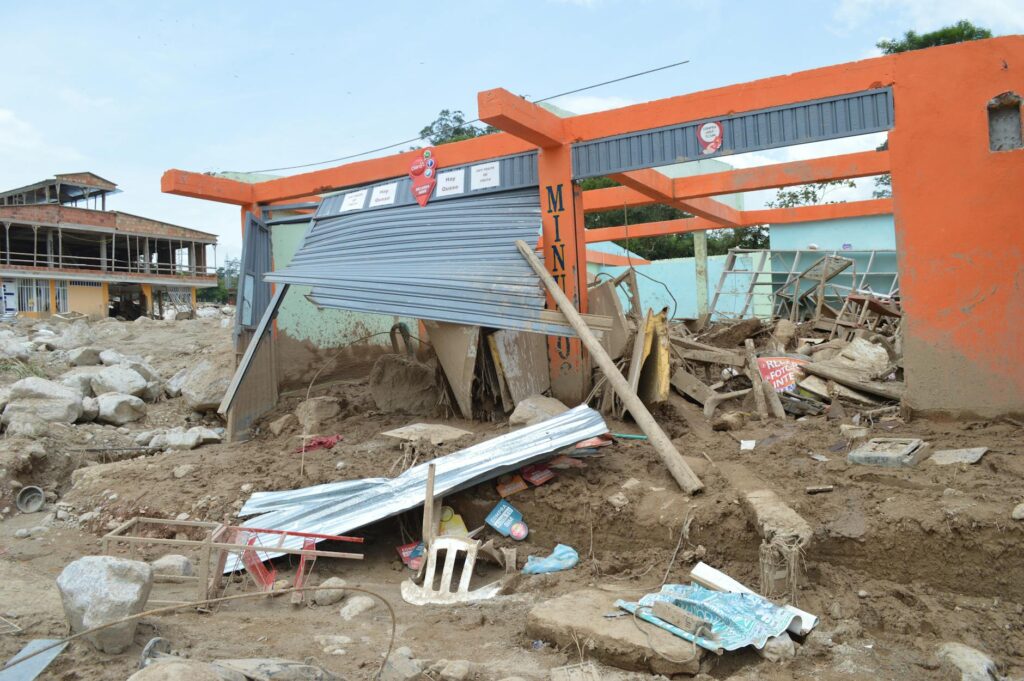
The past decade has witnessed an acceleration in the frequency and intensity of climate‑driven disasters. The United Nations Office for Disaster Risk Reduction (UNDRR) recorded 7,300 events worldwide between 2016 and 2025, generating an aggregate economic loss exceeding $1 trillion—a 40 % rise over the previous ten‑year span [1]. The fiscal shock has prompted governments to embed disaster risk reduction (DRR) into national development agendas, a shift mirrored in the private sector’s allocation of risk‑adjusted capital.
In India, the National Institute of Disaster Management (NIDM) launched its 14th Comprehensive Course on Disaster Risk Management, a two‑week residential program designed to certify engineers, planners, and public‑service officers in risk assessment, emergency planning, and post‑event recovery [2]. Parallel initiatives include the Council of Architecture’s partnership with the Bureau of Energy Efficiency (BEE) to deliver mandatory training on the Energy Conservation Building Code (ECBC), which now incorporates climate‑resilience criteria for building envelopes and HVAC systems [3].
These programs signal a structural reorientation: professional advancement increasingly hinges on demonstrable resilience expertise, a prerequisite for accessing high‑value projects funded by sovereign wealth funds, multilateral development banks, and climate‑focused venture capital.
Core Mechanisms: Data‑Driven Standards and Regulatory Realignment
Technological Enablement
Advances in remote sensing, AI‑driven hazard modeling, and real‑time geospatial analytics have transformed risk quantification from a qualitative exercise to a data‑intensive discipline. The World Bank’s Global Facility for Disaster Reduction and Recovery (GFDRR) reports that the adoption of high‑resolution flood mapping reduced projected losses by 12 % in pilot municipalities across Southeast Asia, directly informing the curriculum of emerging certification tracks in hydro‑infrastructure design [4].
These analytical tools underpin new occupational standards. For instance, the International Organization for Standardization (ISO) 31000‑2023 revision embeds quantitative risk matrices into the competency frameworks of project managers, mandating proficiency in scenario analysis and Monte Carlo simulations. Certification bodies now require candidates to demonstrate mastery of platforms such as Hazus (U.S. FEMA) and OpenQuake, linking credentialing to measurable risk mitigation outcomes.
For instance, the International Organization for Standardization (ISO) 31000‑2023 revision embeds quantitative risk matrices into the competency frameworks of project managers, mandating proficiency in scenario analysis and Monte Carlo simulations.
Regulatory Catalysts
Legislative bodies are codifying resilience into professional licensing. The European Union’s Directive on the Resilience of Critical Infrastructure (2024/567) obliges architects and civil engineers to obtain a “Resilient Design” endorsement, verified through a third‑party audit of climate‑impact assessments. In the United States, the Infrastructure Investment and Jobs Act (IIJA) of 2021 earmarked $55 billion for “climate‑smart” construction, contingent on workforce certifications aligned with the National Disaster Resilience Training (NDRT) standards.
You may also like
 Entrepreneurship & Business
Anant Ambani Is Putting His Name on India’s New Energy Moment
Reliance is moving from building India's New Energy infrastructure to commercial execution. From solar manufacturing, batteries and green hydrogen to compressed biogas and technology-led agriculture,…
Read More →These regulatory vectors create an asymmetric incentive structure: firms that invest in certified talent gain preferential access to public contracts, while unqualified competitors face exclusion or penalty clauses. The resulting market pressure accelerates the diffusion of DRR competencies across traditionally low‑resilience sectors such as logistics, finance, and information technology.
Systemic Ripples: Innovation, Education, and Capital Flows
Architectural and Engineering Innovation
The infusion of DRR standards into professional practice has spurred a wave of systemic innovation. Dutch firms, leveraging the Room for the River paradigm, have integrated adaptive floodplain designs into urban master plans, a methodology now taught in the European Institute of Sustainable Architecture’s postgraduate module on “Dynamic Urban Resilience.” Similarly, Japan’s post‑Kobe reconstruction mandated “Seismic‑Resilient Design” certifications for structural engineers, catalyzing the development of base‑isolated skyscrapers now exported to emerging markets.
These case studies illustrate a feedback loop: regulatory mandates generate demand for resilient design, which in turn fuels R&D investment in novel materials—such as ultra‑high‑performance concrete with self‑healing properties—and digital twins that simulate climate stressors over a building’s lifecycle.
Academic Realignment
Higher‑education institutions are restructuring curricula to align with the emerging occupational standards. The Massachusetts Institute of Technology (MIT) Sloan School of Management introduced a “Climate‑Risk Finance” concentration in 2023, integrating actuarial science with DRR policy analysis. In India, the Indian Institutes of Technology (IITs) have incorporated the NIDM’s disaster‑risk modules into their civil engineering syllabi, resulting in a 28 % increase in graduate enrollment in DRR‑focused electives over two years [5].
These academic shifts amplify the talent pipeline, ensuring that the next generation of professionals internalizes resilience as a core competency rather than an ancillary skill.
Capital Reallocation
Institutional investors are reweighting portfolio risk models to account for climate‑related exposure. The Principles for Responsible Investment (PRI) now requires signatories to disclose the proportion of their workforce holding recognized DRR certifications. Early‑stage venture funds targeting “climate‑adaptation tech” report that 70 % of portfolio companies list certified disaster‑risk analysts among their senior leadership, a metric correlated with higher follow‑on funding rounds.
Bureau of Labor Statistics (BLS) projects a 9 % CAGR for “Emergency Management Specialists” through 2031, outpacing the median growth of 4 % for all occupations.
The correlation between certified human capital and capital inflow reflects a structural shift: resilience expertise has become a de‑facto credit rating for project finance, influencing loan terms, insurance premiums, and sovereign borrowing costs.
You may also like
 Entrepreneurship & Business
Cube Highways Trust secures Rs.1,150 crore through AAA-rated NCDs
Cube Highways Trust has raised ₹1,150 crore through the issuance of AAA-rated non-convertible debentures (NCDs), reflecting growing investor confidence in India's infrastructure sector.
Read More →Human Capital Impact: Winners, Losers, and the Mobility Gradient

Ascendant Career Paths
Professionals who acquire DRR certifications are experiencing accelerated wage growth and expanded mobility. The U.S. Bureau of Labor Statistics (BLS) projects a 9 % CAGR for “Emergency Management Specialists” through 2031, outpacing the median growth of 4 % for all occupations. In India, the National Skill Development Corporation (NSDC) reports that NIDM‑certified candidates command an average salary premium of 22 % over peers lacking formal disaster‑risk credentials.
Emerging roles—such as “Climate‑Resilient Infrastructure Analyst,” “Urban Adaptive Systems Engineer,” and “Disaster‑Risk Finance Officer”—are now listed on major job boards, reflecting a diversification of the occupational landscape beyond traditional emergency services.
Displaced Segments
Conversely, sectors that have historically operated without resilience mandates face talent shortages and competitive disadvantage. Legacy construction firms lacking certified staff report a 15 % reduction in bid success rates for publicly funded projects that now require ECBC compliance. Similarly, insurance underwriting units that have not integrated climate‑risk analytics into their underwriting criteria are experiencing higher loss ratios, prompting a wave of layoffs and retraining initiatives.
Mobility Across Institutional Hierarchies
The diffusion of DRR standards is reconfiguring power dynamics within professional hierarchies. Certification bodies—often anchored in governmental agencies or international NGOs—gain gatekeeping authority, shaping career trajectories through credentialing. This asymmetry grants individuals with access to accredited training a lever to negotiate higher remuneration and influence policy design, effectively translating human capital into institutional power.
Outlook: Trajectory for the Next Five Years
By 2031, the convergence of regulatory pressure, data‑driven risk modeling, and capital realignment is expected to institutionalize disaster‑resilience as a baseline occupational requirement across five core sectors: built environment, finance, energy, logistics, and public health.
Universal Certification: At least 60 % of civil engineers in OECD countries will hold a recognized DRR endorsement, driven by the EU Directive’s enforcement mechanisms.
Projected milestones include:
You may also like
 Government & Policy
California Laws Address AI Job Security Concerns
California's new laws prohibit employers from relying solely on AI for layoffs and mandate transparency in AI hiring processes, aiming to protect workers' rights.
Read More → Universal Certification: At least 60 % of civil engineers in OECD countries will hold a recognized DRR endorsement, driven by the EU Directive’s enforcement mechanisms.
Capital Integration: Green bonds and climate‑linked loans will embed a “human‑capital resilience clause,” mandating a minimum proportion of certified staff for project eligibility.
- Educational Saturation: University programs integrating DRR modules will account for 35 % of total engineering enrollments, creating a self‑sustaining pipeline of resilient talent.
The systemic trajectory suggests that career capital will increasingly be measured by an individual’s capacity to translate climate‑risk data into actionable design and policy outcomes. Professionals who fail to acquire these competencies risk marginalization in a labor market where institutional power is increasingly contingent on demonstrable resilience expertise.
Key Structural Insights
- The codification of disaster‑risk competencies into licensing frameworks creates an asymmetric advantage for certified workers, reshaping wage dynamics and contract eligibility across climate‑sensitive industries.
- Data‑intensive risk modeling is the engine behind new occupational standards, linking technological capability directly to professional credentialing and thereby channeling investment toward resilient infrastructure.
- Over the next five years, the convergence of regulatory mandates, capital market requirements, and academic curricula will institutionalize resilience as a core component of career capital, redefining professional mobility in a warming economy.