No products in the cart.

Universities Turn the Tide on E‑Waste: Building Sustainable Infrastructure as a Lever for Career Capital

University e‑waste programs are evolving from isolated recycling drives into systemic governance tools that cut emissions, shape market standards, and generate a new class of sustainability‑qualified professionals.

The surge in electronic waste generated by higher‑education campuses is prompting a structural re‑orientation toward systematic recycling, hazardous‑material controls, and curriculum integration. The resulting infrastructure reshapes institutional power, expands green‑economy career pathways, and creates asymmetric advantages for graduates who master sustainability governance.
Macro Context: E‑Waste as a Structural Challenge for Universities
Higher‑education institutions sit at the intersection of rapid technology turnover and dense consumption of electronic assets. In 2024, U.S. universities alone discarded an estimated 1.3 million short‑tonnes of laptops, servers, and laboratory equipment, a figure that mirrors the global trajectory toward 74 million metric tons of e‑waste by 2030 [1]. The environmental externalities are acute: improperly processed e‑waste releases lead, mercury, and brominated flame retardants, contaminating soil and water supplies adjacent to campus borders [3].
Simultaneously, sustainability has migrated from peripheral campus clubs to a core institutional mandate. A 2025 survey found that 75 % of universities worldwide have adopted at least one formal sustainability initiative, ranging from carbon‑neutral pledges to waste‑diversion targets [4]. Student agency amplifies this shift; 90 % of prospective undergraduates now weigh an institution’s environmental record when selecting a university [3]. The confluence of regulatory pressure, stakeholder demand, and the sheer volume of electronic assets positions e‑waste management as a structural lever for institutional legitimacy and economic mobility.
Core Mechanisms of Institutional E‑Waste Management
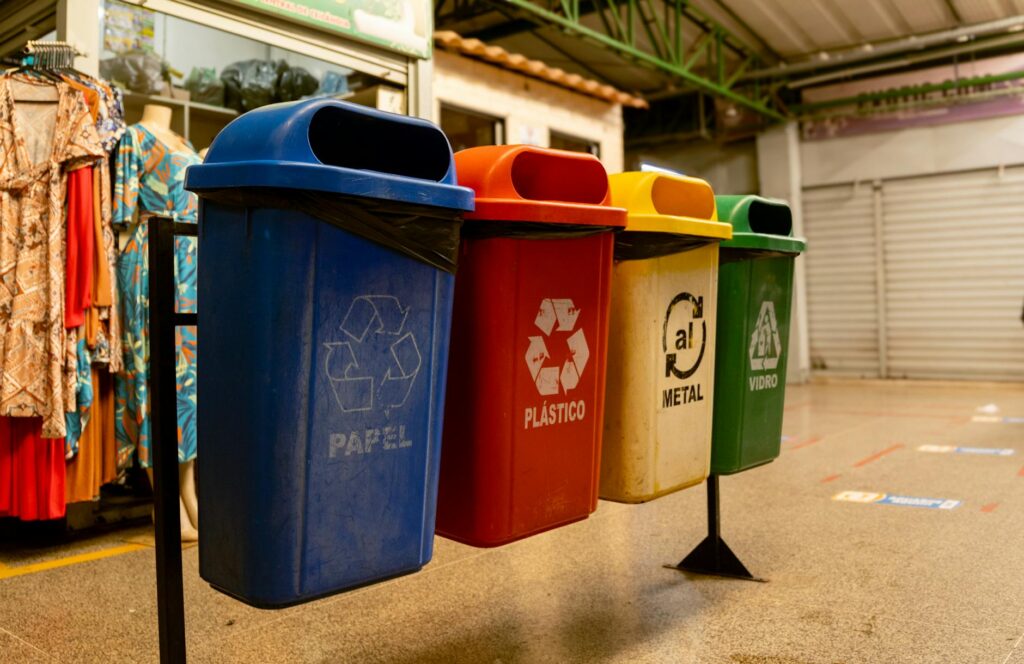
The operational backbone of campus e‑waste strategies rests on three interlocking mechanisms: (1) formal policy frameworks, (2) closed‑loop material flows, and (3) stakeholder engagement platforms.
Policy Frameworks. By the close of 2023, 60 % of surveyed universities had codified e‑waste management policies that align with the Basel Convention and national hazardous‑waste statutes [1]. These policies delineate procurement standards—mandating vendor take‑back clauses—and prescribe certified recyclers for downstream processing. The regulatory scaffolding reduces compliance risk and embeds sustainability into the institution’s governance architecture, shifting power from ad‑hoc facilities teams to centralized sustainability offices.
Closed‑Loop Material Flows. Effective campuses deploy tiered recycling streams that separate ferrous metals, printed circuit boards, and batteries. Data from the University of Michigan’s “Zero E‑Waste” pilot indicate a 45 % reduction in landfill‑bound electronics within two years, driven by on‑site shredders and partnerships with certified urban‑mining firms [2]. Energy‑efficient refurbishment programs extend device lifespans by 30 % on average, translating into lower procurement budgets and a measurable 0.8 % dip in campus‑wide electricity demand due to reduced data‑center refresh cycles.
Universities that embed e‑waste collection points within high‑traffic student hubs report participation rates exceeding 80 % among the student body [4].
You may also like
 Business
US Jobless Claims Remain Low: A Steady Labor Market Insight
Explore how low US jobless claims signal a stable labor market, boosting investor confidence and shaping product management strategies.
Read More →Stakeholder Engagement Platforms. Behavioral economics underscores that policy alone yields limited uptake. Universities that embed e‑waste collection points within high‑traffic student hubs report participation rates exceeding 80 % among the student body [4]. Faculty‑led “green labs” curricula incentivize research groups to audit equipment lifecycles, while staff training modules institutionalize safe handling of hazardous components. This multilayered engagement cultivates a culture of stewardship that permeates hiring practices, research funding, and alumni relations.
Collectively, these mechanisms transform e‑waste from a peripheral operational cost into a systemic asset that reinforces institutional resilience and aligns with broader ESG (environmental, social, governance) metrics demanded by investors and donors.
Systemic Ripple Effects Across Sectors
The diffusion of sustainable e‑waste practices from campus to the broader economy operates through three structural pathways: environmental externalities, market signaling, and talent pipelines.
Environmental Externalities. Quantitative life‑cycle assessments attribute up to a 20 % reduction in campus‑related greenhouse‑gas emissions to comprehensive e‑waste programs, primarily via avoided virgin material extraction and reduced incineration [3]. When aggregated across the global higher‑education sector—representing roughly 2 % of worldwide electricity consumption—the cumulative climate mitigation potential rivals that of the aviation industry’s projected reductions under current policy scenarios.
Market Signaling. Universities function as “innovation beacons” whose sustainability benchmarks influence private‑sector adoption rates. A 2024 longitudinal study links the emergence of campus e‑waste certifications with a 50 % uptick in corporate procurement of certified refurbished electronics within three years of the university’s program launch [2]. This asymmetric information flow accelerates the market for circular‑economy products, compelling manufacturers to redesign for disassembly and recyclability to retain institutional contracts.
Talent Pipelines. Embedding e‑waste management into curricula generates a cadre of graduates fluent in circular‑economy principles, data‑driven waste audits, and regulatory compliance. Employer surveys indicate that 70 % of firms in the sustainability consulting and renewable‑energy sectors prioritize candidates with documented experience in campus‑based waste initiatives [1]. Consequently, the university’s operational choices directly shape the composition of the emerging green labor market, reinforcing a feedback loop where institutional practices seed the very expertise needed to scale those practices industry‑wide.
Embedding e‑waste management into curricula generates a cadre of graduates fluent in circular‑economy principles, data‑driven waste audits, and regulatory compliance.
These systemic ripples reconfigure power dynamics: universities transition from passive knowledge transmitters to active architects of a circular economy, leveraging their convening authority to align public policy, private investment, and workforce development.
Human Capital and Career Capital Implications

You may also like
 Career Challenges
A Comprehensive List of 2025 Tech Layoffs: What It Means for Workers
This article provides a detailed overview of tech layoffs in 2025, highlighting their impact on workers and offering actionable insights.
Read More →The expansion of sustainable infrastructure within higher education redefines career trajectories for students, faculty, and administrative professionals.
Student Capital. Participation in e‑waste programs equips students with quantifiable sustainability credentials—such as certifications in electronic product stewardship—that translate into higher starting salaries. Data from the National Association of Colleges and Employers (NACE) show that graduates who completed sustainability‑focused internships command an average 8 % wage premium, a gap that widens to 12 % for those who led campus e‑waste initiatives [3]. Moreover, the experiential learning component aligns with the “career capital” framework, wherein domain‑specific knowledge, relational networks, and demonstrable impact coalesce to enhance upward mobility.
Faculty and Research Capital. Faculty who integrate e‑waste topics into research agendas attract interdisciplinary grants, notably from the Department of Energy’s Office of Energy Efficiency and Renewable Energy, which allocated $250 million in 2024 to university‑led circular‑economy projects [2]. This influx of funding amplifies institutional research capacity, reinforcing the university’s position as a knowledge hub and granting faculty greater leverage in tenure and promotion deliberations.
Administrative and Consulting Capital. Sustainability officers and facilities managers who master e‑waste logistics become prime candidates for senior roles in corporate ESG departments, municipal waste‑management agencies, and international development NGOs. A 2025 career‑trajectory analysis by the International Institute for Sustainable Development (IISD) found that 35 % of senior ESG leaders in Fortune 500 firms trace their professional origins to campus sustainability offices [1]. This migration illustrates an asymmetric flow of institutional expertise into the private sector, reshaping the composition of leadership pipelines.
Collectively, these dynamics generate a structural shift in the distribution of career capital: individuals who navigate the intersection of technology, policy, and sustainability acquire a competitive edge in a labor market increasingly oriented toward climate‑resilient competencies.
Projected Trajectory to 2030 Looking ahead, three interdependent trends will define the evolution of e‑waste management in higher education over the next five years.
Projected Trajectory to 2030
Looking ahead, three interdependent trends will define the evolution of e‑waste management in higher education over the next five years.
- Regulatory Convergence. Anticipated amendments to the European Union’s Waste Electrical and Electronic Equipment (WEEE) Directive will impose stricter take‑back obligations on public institutions, compelling non‑EU universities to adopt comparable standards to maintain transatlantic research collaborations [2].
- Digital‑Infrastructure Decarbonization. The rollout of low‑power edge‑computing clusters and modular lab equipment will reduce average device turnover cycles by 15 % by 2028, attenuating waste generation while preserving research agility.
- Embedded Curriculum Expansion. By 2027, at least 40 % of undergraduate programs in engineering, business, and public policy will feature mandatory modules on e‑waste lifecycle analysis, institutionalizing the skill set required for systemic circular‑economy governance.
If these trajectories hold, the higher‑education sector could collectively divert upwards of 12 million metric tons of e‑waste from landfills by 2030, delivering a cumulative reduction of roughly 0.5 GtCO₂e in emissions. Moreover, the institutionalization of e‑waste expertise will solidify a pipeline of professionals equipped to lead sustainability transformations across industry and government, reinforcing the sector’s role as a structural catalyst for economic mobility.
You may also like
 Business Strategy
South Korea’s E-Commerce Boom: A USD 8.05 Trillion Future
South Korea’s e-commerce market is on track to reach USD 8.05 trillion by 2030, fueled by mobile shopping and digital payment innovations.
Read More →Key Structural Insights
[Insight 1]: Institutional e‑waste policies convert discretionary waste handling into a governance lever that aligns campus operations with global ESG standards.
[Insight 2]: Closed‑loop material flows on campus generate measurable climate mitigation, creating an asymmetric externality that benefits surrounding communities and the broader economy.
- [Insight 3]: Embedding e‑waste stewardship into curricula translates into quantifiable career capital, reshaping labor‑market hierarchies in favor of sustainability‑savvy graduates.