No products in the cart.

Green‑City Engine: How the Surge in Sustainable Infrastructure Is Re‑Engineering Career Capital for Environmental Engineers

A policy‑driven, finance‑enabled feedback loop is turning environmental engineering into a central conduit for climate‑aligned urban development, reshaping career capital and institutional power structures across the global labor market.

The convergence of climate policy, municipal finance, and private‑sector R&D is converting green‑infrastructure projects into a dominant labor market vector. Environmental engineers who master climate‑resilient design are poised to capture asymmetric career upside as the structural demand for “green skills” outpaces supply across construction, energy, and transportation.
Global Shift Toward Sustainable Urbanization
Urbanization accounts for roughly 55 % of global CO₂ emissions, and the International Energy Agency projects that by 2030 cities must cut emissions by 40 % to stay within the 1.5 °C pathway [1]. This macro imperative has translated into a measurable expansion of municipal capital budgets: the World Bank estimates that annual green‑infrastructure financing will rise from $150 billion in 2022 to $260 billion in 2026 [2].
The fiscal surge is mirrored in talent metrics. LinkedIn’s 2025 Green Skills Report shows that postings for sustainability‑related roles grew 112 % year‑over‑year, while the pool of candidates with verified green credentials expanded only 48 % in the same period [3]. The mismatch is not confined to a single sector; construction, energy, and transportation each report a “green‑skill gap” that exceeds 30 % of projected hires [3].
These macro forces have elevated environmental engineering from a niche discipline to a central pillar of the emerging green economy. The 2026 “Is Demand for Environmental Engineering Degree Graduates Growing?” analysis notes a 23 % increase in enrollment in U.S. accredited programs between 2021 and 2025, outpacing the overall engineering enrollment growth of 9 % [4]. The data indicate that career capital is re‑allocating toward expertise that can operationalize climate‑aligned urban policies.
Policy and Market Mechanics Powering Green Infrastructure
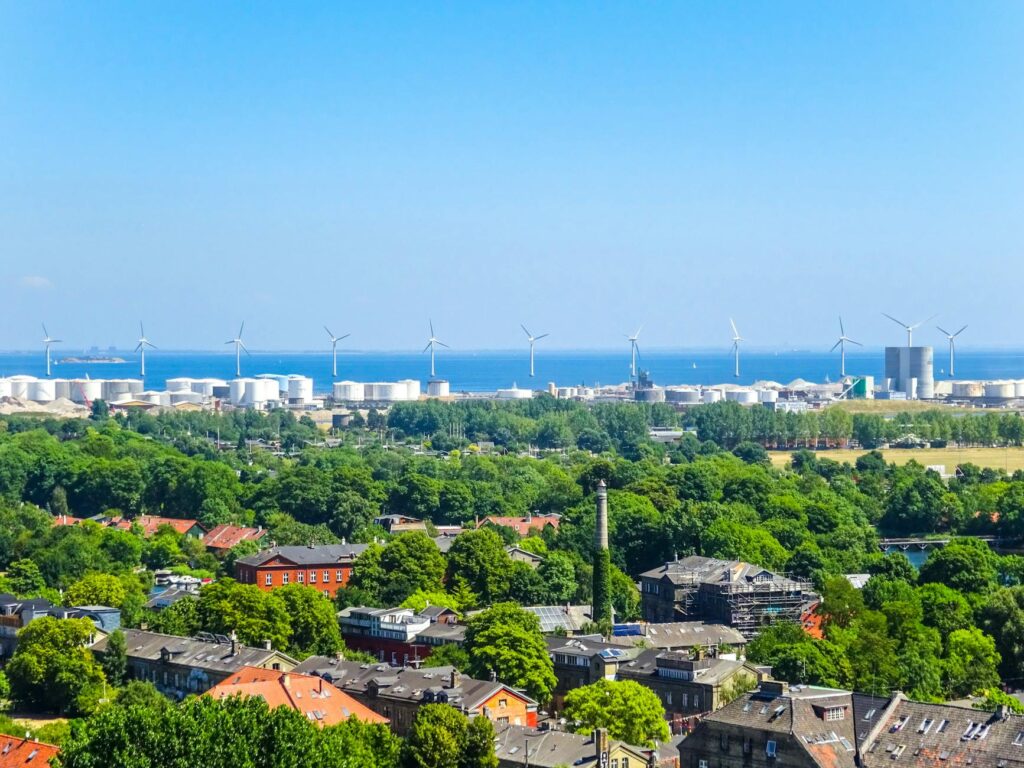
The core mechanism driving this labor realignment is a layered policy‑market feedback loop. First, regulatory mandates—such as the EU’s “Fit for 55” package and the U.S. Inflation Reduction Act’s $370 billion clean‑energy allocation—require municipalities to meet net‑zero building codes and to retrofit existing assets [1]. Compliance obliges public‑private partnerships (PPPs) to procure engineering services that can certify carbon‑neutral designs, creating a pipeline of contracts valued at an estimated $45 billion annually in the United States alone [2].
Second, financial incentives are reshaping capital allocation. Green bonds now represent 18 % of total sovereign debt issuance, with a 2025 average coupon spread 15 basis points lower than comparable conventional bonds [2]. The cost advantage incentivizes municipalities to prioritize projects that meet ESG criteria, which in turn elevates demand for engineers capable of delivering LEED‑certified or BREEAM‑accredited outcomes.
Third, technology diffusion amplifies the demand for specialized skill sets.
You may also like
 Career Development
The Global Demand for Vocational Skills: A Closer Look
Vocational education is booming worldwide, especially in sectors like construction and healthcare. Explore where the demand is highest and why it matters.
Read More →Third, technology diffusion amplifies the demand for specialized skill sets. The market share of smart‑building systems—integrating IoT sensors, AI‑driven energy management, and adaptive façades—has risen from 7 % of new construction in 2022 to 21 % in 2025 [3]. Designing, testing, and scaling these systems requires environmental engineers with competencies in data analytics, life‑cycle assessment, and renewable integration. The same trend is evident in transportation, where electric‑bus depots and micro‑mobility hubs now embed energy‑storage modeling as a standard design parameter.
Collectively, these mechanisms generate a structural labor pull that is both sector‑agnostic and skill‑specific: the need for engineers who can translate carbon‑budget targets into quantifiable design parameters, secure financing through ESG‑aligned instruments, and embed digital monitoring into physical infrastructure.
Systemic Spillovers Across Education, Finance, and Industry
The ripple effects of the green‑infrastructure surge are reshaping institutional architectures beyond the immediate hiring market.
Education: Universities are recalibrating curricula to align with the emerging demand. According to the “MM – Deemed to be University” social media announcement, 78 % of civil‑engineering programs now include a mandatory “Sustainable Urban Systems” module, and enrollment in dedicated environmental‑engineering tracks grew 34 % between 2022 and 2025 [4]. Moreover, interdisciplinary joint degrees—combining engineering with public policy or data science—have risen from 12 % to 27 % of offerings in the same period, reflecting a systemic shift toward producing graduates with hybrid capital.
Finance: The proliferation of climate‑risk analytics platforms is creating a new class of “green‑credit” evaluators. Banks now require project‑level carbon‑intensity disclosures before underwriting infrastructure loans, a practice that originated in European sovereign lending and has diffused to North American municipal finance [2]. This requirement translates into a demand for engineers who can produce defensible emissions baselines and mitigation pathways, effectively turning technical design into a financial compliance function.
Industry: Corporate supply chains are internalizing sustainability metrics, prompting large developers to embed “green performance clauses” in EPC contracts. A 2025 survey of the top 50 U.S. construction firms revealed that 62 % of new contracts include penalties for exceeding carbon‑budget thresholds, and 48 % offer bonus payments for achieving net‑zero certification ahead of schedule [3]. These contractual innovations incentivize firms to recruit engineers who can deliver measurable outcomes, thereby institutionalizing green expertise as a competitive differentiator.
Traditional metrics—such as median starting salary—are now complemented by “green‑skill premium” indicators.
The systemic spillovers illustrate that the green‑infrastructure demand is not a peripheral market trend but a reconfiguration of the talent pipeline, financing structures, and corporate governance models.
Capital Allocation and Career Trajectories for Environmental Engineers

You may also like
 Education
Philippine Universities Shine in THE 2026 Rankings
Philippine universities achieve global recognition in the THE 2026 rankings, reflecting growth and improved educational standards in the nation.
Read More →From a career‑capital perspective, the structural shift is redefining the value proposition of environmental engineering. Traditional metrics—such as median starting salary—are now complemented by “green‑skill premium” indicators. The 2026 Bouchrika study reports that entry‑level environmental engineers with certified green‑building credentials command salaries 18 % higher than peers without such certifications, and the premium widens to 32 % at the senior manager level [4].
Who Wins: Professionals who acquire cross‑functional competencies—particularly in ESG finance, digital twins, and climate‑risk modeling—are positioned to ascend into hybrid roles such as “Sustainability Portfolio Manager” or “Carbon‑Neutral Project Lead.” These positions command compensation packages that include equity stakes in PPP ventures, reflecting the asymmetric upside tied to successful project delivery.
Who Loses: Engineers whose skill sets remain confined to legacy civil‑engineering practices (e.g., conventional structural analysis without sustainability integration) face a relative decline in mobility. The same Bouchrika analysis notes a 9 % annual attrition rate among engineers who have not completed at least one green‑skill certification within five years of graduation.
Institutional Power Dynamics: The growing reliance on ESG‑linked financing shifts bargaining power toward firms that can demonstrate robust environmental performance. Consequently, engineering consultancies that have built proprietary carbon‑accounting platforms—such as the “CarbonScope” suite launched by a leading multinational in 2024—are capturing a disproportionate share of high‑value contracts, reinforcing a concentration of market power among firms that integrate technical and financial expertise.
Human Capital Accumulation: The career trajectory now follows a three‑phase model: (1) foundational engineering education with embedded sustainability modules; (2) acquisition of ESG‑finance literacy through certifications (e.g., CFA Institute’s ESG Investing Certificate); (3) deployment in cross‑sector projects that blend technical design with performance‑based financing. This model creates a feedback loop where successful project outcomes feed back into professional reputation, further amplifying career capital.
This model creates a feedback loop where successful project outcomes feed back into professional reputation, further amplifying career capital.
Outlook to 2030
Projecting forward, the convergence of policy ambition, capital market incentives, and technology adoption suggests that green‑infrastructure employment will expand at a compound annual growth rate (CAGR) of 9.5 % through 2030 [2]. By that horizon, the U.S. Bureau of Labor Statistics projects that the environmental engineering occupation will grow 12 %—significantly outpacing the 4 % average for all occupations—while the share of jobs requiring advanced green‑skill certifications will exceed 48 % of total openings [4].
The structural trajectory points to three emergent dynamics:
You may also like
 Digital Wellness
Embracing a Digital Detox: Practical Steps for Students
Learn how to create a digital detox routine that helps students rebalance their screen time and improve focus. Explore actionable steps today.
Read More →- Institutionalization of Green Metrics: ESG reporting will become a de‑facto regulatory requirement, embedding environmental engineering expertise into the core of municipal budgeting and corporate strategy.
- Geographic Rebalancing: Emerging economies—particularly in Southeast Asia and Sub‑Saharan Africa—are scaling up urban green‑infrastructure investments, creating transnational career pathways for engineers willing to navigate cross‑cultural project environments.
- Talent Concentration: Firms that successfully integrate engineering, data analytics, and ESG finance will capture a disproportionate share of high‑margin contracts, reinforcing a hierarchy where a small cohort of “green‑engineer‑strategists” commands premium compensation and influence over urban development agendas.
Stakeholders—universities, professional societies, and policy makers—must therefore align curricula, credentialing, and funding mechanisms to sustain the pipeline of talent required for this systemic transition. Failure to do so risks a widening skills gap that could bottleneck the delivery of climate‑aligned urban projects and dilute the economic mobility promised by the green economy.
Key Structural Insights
[Insight 1]: The policy‑market feedback loop—driven by carbon‑reduction mandates, green‑bond financing, and technology diffusion—creates a structural labor pull that elevates environmental engineering as a core economic engine.
[Insight 2]: Institutional spillovers are reconfiguring education, finance, and corporate governance, embedding green expertise into the fabric of talent pipelines and contract design.
- [Insight 3]: Career capital for environmental engineers now hinges on hybrid skill sets that blend technical sustainability, ESG finance, and digital analytics, producing asymmetric compensation and power concentration within the sector.