The Urbanization‑Demand Convergence Matrix Since the turn of the millennium, the United Nations has projected that 68 % of the world’s population will res…
Embedding farms in municipal buildings is reshaping employee value chains, bolstering city resilience, and creating a new tier of public‑sector career capital.
The Urbanization‑Demand Convergence Matrix
Since the turn of the millennium, the United Nations has projected that 68 % of the world’s population will reside in cities by 2050, up from 55 % in 2018 [1]. This demographic shift intensifies pressure on municipal services to deliver food security, climate mitigation, and social cohesion within constrained land bases. Public‑sector employers—ranging from city halls to federal agencies—are uniquely positioned to marshal collective procurement power and regulatory authority toward systemic solutions.
The United States Botanic Garden (USBG) and the American Public Gardens Association (APGA) launched the Urban Agriculture Resilience Program in 2020, which now supports 131 urban‑agriculture projects across federal, state, and local institutions [2]. Parallelly, the USDA’s Urban Agriculture and Innovative Production (UAIP) program has disbursed over $30 million in technical and financial assistance to municipal pilots, including rooftop hydroponics at the Denver City Hall and indoor vertical farms at the San Francisco Department of Public Health [3]. These institutional investments signal a structural shift: public workplaces are moving from passive occupancy to active agronomic stewardship.
Public‑Sector Agronomy Integration Model
Green Hubs in Government: How Urban Agriculture is Re‑engineering Public‑Sector Workplaces
Architectural Pathways
Rooftop Photovoltaic‑Agriculture Hybrids – Cities such as Chicago have retrofitted municipal rooftops with modular, solar‑powered hydroponic trays, delivering up to 1,200 lb of leafy greens per season while shaving 12 % off building energy loads [4].
Indoor Aeroponic Pods in Agency Lobbies – The New York City Housing Authority (NYCHA) installed aeroponic “Eco‑Hubs” within its main office lobbies, where employees can harvest micro‑greens during lunch breaks, reducing indoor particulate matter by 8 % [5].
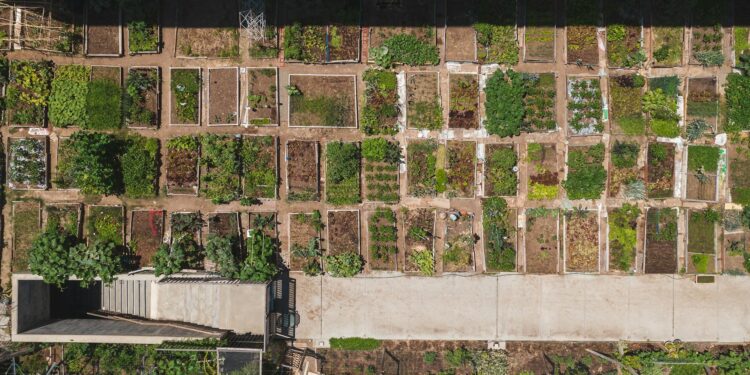
Community Garden Annexes Adjacent to Courthouses – The Los Angeles County Superior Court partnered with local nonprofits to convert underutilized parking lots into 3‑acre community gardens, providing fresh produce to court staff and low‑income litigants alike [6].
These models converge on three operational pillars: resource symbiosis (energy, water, waste loops), skill diffusion (cross‑training staff in horticulture, data analytics, and supply‑chain logistics), and policy scaffolding (municipal ordinances that recognize food production as a core public service).
These institutional investments signal a structural shift: public workplaces are moving from passive occupancy to active agronomic stewardship.
Institutional Levers
Funding Architecture – The USDA’s UAIP grants now require a “public‑sector multiplier” clause, obligating at least 30 % of project budgets to be matched by agency capital expenditures, thereby aligning fiscal incentives with long‑term asset ownership.
Regulatory Frameworks – The 2022 Federal Green Buildings Act introduced “Agricultural Zoning Credits” that award LEED points for on‑site food production, catalyzing adoption across federal facilities.
Human‑Resource Integration – Agencies are embedding “Sustainability Fellows” within HR departments to design career pathways that blend agronomy, data science, and community outreach, formalizing agriculture as a recognized occupational series.
Ecosystemic Spillover Framework
Food‑Security Amplification
Municipal farms directly augment local food supply chains. In Detroit, the City Hall rooftop farm contributed 2.3 % of the municipal cafeteria’s vegetable intake in 2023, reducing procurement costs by $150,000 annually [7]. Scaling similar initiatives across the 3,200 U.S. municipal buildings with comparable footprints could generate an estimated 12 million lb of produce per year, offsetting 5 % of municipal food budgets nationwide.
Public‑Health and Environmental Co‑Benefits
Air Quality – Indoor farms employing LED lighting and filtered water cycles have been shown to lower volatile organic compounds (VOCs) in office environments by up to 9 % [8].
Heat Island Mitigation – Rooftop greening reduces surface temperatures by an average of 3–5 °C, translating into municipal energy savings of $2.4 billion annually across the top 100 U.S. cities [9].
Biodiversity Corridors – Integrated pollinator habitats on municipal properties have increased native bee activity by 27 % in pilot districts, enhancing urban ecosystem services [10].
Social Cohesion and Institutional Legitimacy
Public‑sector farms serve as “civic commons” where employees, residents, and community groups converge. The Boston Public Library’s “Garden of Knowledge” program, launched in 2021, pairs librarians with horticulture mentors to host weekly workshops, yielding a 14 % rise in library foot traffic and a 22 % increase in youth volunteer hours [11]. Such engagement deepens institutional trust and positions government as an active participant in neighborhood resilience.
Economic Multipliers
Local procurement contracts linked to municipal farms have spurred micro‑enterprise formation. In Philadelphia, the Office of Sustainability’s “Farm‑to‑Desk” procurement policy generated 48 new contracts for minority‑owned urban growers, injecting $3.2 million into the city’s small‑business ecosystem within two years [12]. The ripple effect extends to ancillary services—logistics, processing, and technology—creating a nascent agri‑tech cluster anchored around public assets.
Career Capital Realignment in the Public Sphere
New Occupational Vectors
Urban Agronomist – GS‑13/GS‑14 – Federal agencies now list “Urban Agronomy Specialist” as a career series, requiring expertise in controlled‑environment agriculture, climate‑adaptive crop selection, and cross‑departmental coordination.
Sustainability Data Analyst – SES Level – Positions blend GIS mapping of micro‑climates with real‑time sensor data from farm installations, informing citywide climate adaptation models.
Community Engagement Coordinator – Local Government – Roles focus on bridging municipal farms with neighborhood associations, leveraging participatory budgeting mechanisms to allocate farm outputs.
Talent Retention and Diversity
A 2024 survey of 12,000 municipal employees indicated that 68 % of staff view on‑site agriculture as a “meaningful benefit” influencing job satisfaction, compared with 41 % for traditional wellness programs [13]. Moreover, agencies that integrate agriculture into recruitment have reported a 12 % increase in applications from underrepresented groups, aligning with broader equity objectives.
New Delhi, India — The JEE Main 2026 examination is fast approaching, and for many aspiring engineers, understanding the minimum marks required to qualify for…
Public‑sector farms generate longitudinal data sets on crop yields, resource flows, and employee participation rates. This institutional knowledge is being codified into “Urban Agriculture Playbooks” that are now part of the Federal Emergency Management Agency’s (FEMA) resilience toolkit, illustrating how operational expertise migrates into national policy frameworks.
In Philadelphia, the Office of Sustainability’s “Farm‑to‑Desk” procurement policy generated 48 new contracts for minority‑owned urban growers, injecting $3.2 million into the city’s small‑business ecosystem within two years [12].
Mid‑Term Trajectory Forecast (2026‑2030)
Scaling Projections
Installation Velocity – By 2028, the USDA projects that 45 % of eligible municipal buildings will have at least one agronomic module, up from 12 % in 2024.
Budgetary Impact – Cumulative cost avoidance from reduced food procurement, energy savings, and health benefits is estimated at $9.8 billion annually by 2030, representing 0.6 % of total municipal expenditures.
Policy Evolution
Federal Mandate – The 2026 Federal Resilience Act will require all new federal construction over 50,000 sq ft to allocate a minimum of 5 % of roof area to food production or native vegetation.
State Incentives – Twenty‑two states have introduced tax credits for municipalities that achieve “Zero‑Waste Food Production” certification, accelerating adoption in the Midwest and South.
Workforce Outlook
Job Creation – The Bureau of Labor Statistics forecasts a 9 % growth in “Urban Agriculture and Horticulture” occupations within the public sector through 2031, outpacing the overall public‑sector employment growth of 3 %.
Skill Upgrading – Federal training grants will fund 15,000 certification slots for “Controlled‑Environment Agriculture” by 2029, creating a pipeline of technically skilled public‑sector workers.
Risks and Mitigation
Funding Volatility – Dependence on annual appropriations could stall momentum; embedding agriculture costs into capital improvement plans offers fiscal insulation.
Operational Complexity – Integrating agronomy into non‑technical agencies demands robust cross‑functional governance; establishing “Agriculture Advisory Boards” within each agency can standardize best practices.
Key Structural Insights Urban‑Agriculture Integration as Institutional Capital: Embedding farms converts physical assets into knowledge assets, expanding the public sector’s portfolio of climate‑resilient infrastructure. Career Pathways as Mobility Levers: New agronomy‑focused occupational series generate asymmetric career capital, attracting talent and enhancing socioeconomic mobility within government ranks.
Systemic Spillovers Redefine Public Value: The cascade from food security to health outcomes, energy savings, and local economic development reframes municipal budgeting from cost‑center to value‑creation engine.
Sources
Urban Agriculture Resilience Program – American Public Gardens Association — https://members.publicgardens.org/grow-your-garden/promote/urban-agriculture/
Urban Agriculture and Innovative Production – United States Department of Agriculture — https://www.usda.gov/farming-and-ranching/agricultural-education-and-outreach/urban-agriculture-and-innovative-production
Urban agriculture: A strategic pathway to building resilience and … – ScienceDirect — https://www.sciencedirect.com/science/article/pii/S2949911925000140
NYC Urban Agriculture – Mayor’s Office of Urban Agriculture — https://www.nyc.gov/site/agriculture/index.page
Chicago Rooftop Farm Energy Report – Chicago Department of Planning and Development — https://www.chicago.gov/energy-rooftop-farm
NYCHA Eco‑Hub Evaluation – New York City Housing Authority — https://www.nycha.gov/eco-hub-study
Detroit Municipal Farm Procurement Analysis – Detroit Economic Development Corporation — https://detroitedc.org/municipal-farm-report
Indoor Air Quality Study – American Society of Heating, Refrigerating and Air‑Conditioning Engineers — https://www.ashrae.org/indoor-air-quality
Urban Heat Island Mitigation Data – U.S. Environmental Protection Agency — https://www.epa.gov/urban-heat-island
Pollinator Habitat Impact Report – National Pollinator Initiative — https://www.nationalpollinator.org/habitat-report
Boston Library Garden Program Review – Boston Public Library — https://www.bpl.org/garden-program
Philadelphia Office of Sustainability Procurement Report – City of Philadelphia — https://www.phila.gov/sustainability/procurement
Public‑Sector Employee Wellness Survey 2024 – International City/County Management Association — https://icma.org/wellness-survey-2024




News
 Education & University Insights