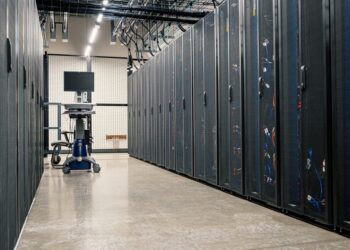
Luma AI has launched its Physical AI Lab, a groundbreaking initiative that enables robotics engineers and AI researchers to develop and test technologies in an open research environment, fostering collaboration and innovation.
Luma AI has launched its Physical AI Lab, a groundbreaking initiative that allows robotics engineers and AI researchers to develop and test their technologies in an open research environment. This facility, announced on June 1, 2026, aims to enhance the capabilities of robots by providing a space where software can be seamlessly integrated with hardware.
The lab represents a significant step in the evolution of AI technology, particularly in the physical realm. With the increasing demand for more sophisticated robots, Luma AI’s initiative is poised to attract talents from various backgrounds, enabling them to collaborate on innovative solutions. As highlighted by Bloomberg, the lab is part of a broader trend in the industry where companies are recognizing the importance of physical AI, which combines both hardware and software to create more effective robotic systems.
Access to Open Research Lab for Training Robots
The Physical AI Lab is designed to be an inclusive space for engineers and researchers. It offers access to advanced tools and resources necessary for training robots. According to Luma Labs, the lab will feature state-of-the-art equipment that supports various AI models and robotic systems. This includes high-performance computing resources and specialized robotics platforms that will allow for extensive experimentation and development.
This initiative aligns with the growing trend of open research environments in technology. By providing unrestricted access, Luma AI encourages collaboration among professionals who might not have had the opportunity to work together previously. This collaborative spirit is essential for tackling complex challenges in robotics and AI. The lab is expected to host a variety of workshops and training sessions, which will not only enhance the skill sets of participating engineers and researchers but also foster a community of innovation. As noted in a report by TechCrunch, such environments can lead to unexpected breakthroughs as diverse teams come together to solve problems.
Furthermore, the lab will facilitate the development of Luma’s Unified Intelligence models, which are crucial for creating adaptive AI agents capable of performing various tasks in real-world scenarios. The ability to train these agents in a controlled environment will significantly enhance their learning and operational efficiency. This focus on adaptive learning is particularly relevant as industries increasingly seek robots that can operate in unpredictable environments, such as healthcare and logistics.
By providing unrestricted access, Luma AI encourages collaboration among professionals who might not have had the opportunity to work together previously.
Sequoia Capital's $10 billion investment plan aims to reshape the AI economy by supporting startups and creating jobs across various sectors, reflecting a growing confidence…
Career Ahead’s analysis identifies that this move not only benefits individual researchers but also fosters a community of innovation. By bringing together diverse expertise, the lab is expected to accelerate advancements in robotics, which could lead to breakthroughs in automation and AI applications. The lab’s commitment to education within the framework of its operations highlights its role as a hub for knowledge exchange, making it an attractive destination for both seasoned professionals and emerging talent.
Opportunities for Collaboration with Luma AI
Collaboration is at the heart of Luma AI’s vision for the Physical AI Lab. The company invites robotics engineers and AI researchers to engage in joint projects that push the boundaries of what is possible in physical AI. By working closely with Luma AI, participants can gain access to proprietary technologies and insights that can enhance their own projects. This collaborative approach is designed to break down traditional silos in research and development, allowing for more rapid iteration and feedback.
Moreover, the lab’s collaborative environment allows for real-time feedback and iteration, which are critical for refining AI models and robotic systems. This dynamic setting encourages experimentation and creativity, enabling teams to tackle challenges more effectively than in traditional, siloed research environments. According to Luma AI, the lab will also serve as a testing ground for new ideas and concepts, with the potential for commercialization. This aspect is particularly appealing for startups and entrepreneurs looking to validate their innovations in a supportive ecosystem.
Additionally, partnerships with academic institutions and industry leaders are expected to flourish within the lab. By aligning with educational entities, Luma AI can help bridge the gap between theoretical knowledge and practical application, ensuring that emerging talent is well-prepared for the challenges of the future. The lab’s emphasis on collaboration may lead to unexpected breakthroughs, as diverse minds come together to generate innovative solutions that a single entity might overlook. This collective intelligence is a powerful driver of progress in any field, especially in fast-evolving areas like robotics and AI.
As part of its commitment to fostering innovation, Luma AI plans to showcase successful projects developed within the lab. These showcases will not only highlight the capabilities of the participating teams but also serve as inspiration for future collaborations. The potential for innovation in physical AI applications is vast, and the lab is strategically positioned to lead that charge.
The implications of this development are significant for banking executives and financial analysts. As AI technologies become more cost-effective, financial institutions may need to rethink…
By aligning with educational entities, Luma AI can help bridge the gap between theoretical knowledge and practical application, ensuring that emerging talent is well-prepared for the challenges of the future.
As Luma AI continues to develop its lab, the implications for the broader tech landscape are profound. The success of this initiative could inspire other companies to invest in similar collaborative environments, ultimately leading to a more robust ecosystem for AI development. Looking ahead, the Physical AI Lab is poised to become a cornerstone of innovation in robotics. With the potential for groundbreaking advancements on the horizon, the future of physical AI applications looks promising, raising questions about how these innovations will reshape industries and everyday life.
Frequently Asked Questions
What resources are available at Luma AI’s Physical AI Lab for robotics engineers?
The Physical AI Lab provides access to state-of-the-art equipment and tools necessary for training and developing robotic systems. It also offers a collaborative environment where engineers can work together on innovative projects.
How can AI researchers collaborate with Luma AI on projects?
AI researchers can engage in joint projects within the lab, gaining access to proprietary technologies and insights. The lab encourages collaboration with academic institutions and industry leaders to enhance research outcomes.
What skills are necessary to work effectively in a physical AI lab environment?
Working in a physical AI lab requires a blend of technical skills in robotics and AI, along with the ability to collaborate effectively. Engineers should be familiar with machine learning models and robotic system design to thrive in this innovative environment.



AI & Technology

AI & Technology