No products in the cart.

How to Ace Your International Student Visa Interview in 2025

Student visa interviews have become more selective and data-driven since the pandemic. This guide breaks down what officers really look for, the documents you must have, typical questions, and how to prepare across cultures so you can walk into your appointment informed, calm, and credible.

New Delhi, India — In 2024, the number of international degree‑seeking students worldwide climbed back above 6 million, close to pre‑pandemic levels, according to UNESCO estimates.[1] At the same time, visa rules in major study destinations have tightened, from the United States and Canada to the United Kingdom and australia. That means the short interview at a consulate or via video can now decide years of academic and career planning in under five minutes. For students in India, Nigeria, China, Brazil, and beyond, this interview has become a high‑stakes checkpoint between aspiration and opportunity. Consular officers and visa caseworkers have limited time and a clear mandate: verify that you are a genuine student who can fund your studies and will follow the rules. Understanding how they make that judgment is no longer optional; it is a core skill for anyone planning an international education.
Why the Student Visa Interview Matters More Now
Student mobility has become deeply entangled with labor markets, migration politics, and national security. The U.S. State Department issued roughly 446,000 F‑1 student visas in fiscal year 2023, the highest in five years, but also expanded security vetting and scrutiny of post‑study intent.[2] Canada crossed 1 million international students in 2023 and then announced a two‑year cap on new study permits starting in 2024 to manage housing and system capacity.[3]
These shifts mean officers are under pressure to filter more aggressively, particularly in high‑volume countries. They are looking for consistency between your forms, your documents, and your story, plus clear academic purpose and financial logic. For students, the interview is no longer just a formality at the end of paperwork; it is the moment when your academic plans must stand up to skeptical, time‑pressed scrutiny.
What Officers Actually Look For
Across major destinations, three questions drive most interview decisions: Are you a bona fide student? Can you realistically afford this course? Do you understand and intend to follow visa rules? The U.S. Foreign Affairs Manual explicitly instructs consular officers to presume immigrant intent unless the applicant proves otherwise, including by showing strong ties to their home country.[4] Canada’s guidance on study permits emphasizes proof of funds and a “logical progression” of studies, especially for mature students. In practice, officers triangulate between your admission offer, academic history, test scores, financial evidence, and answers. A weak record can be offset by a coherent story and relevant work experience. A strong record can be undermined by vague answers or unexplained financial arrangements. They are not expecting perfect English or polished speeches; they are looking for credible, specific, and consistent responses that match the documents in front of them.
In most student visa interviews, the deciding factor is not accent or confidence but coherence: does your academic plan, funding, and future intent form a story that makes sense to a trained skeptic in under five minutes?
 Career Advice
Influence Strategies for Young Professionals
Young professionals can build influence and credibility in the workplace through effective communication and strategic networking.
Read More →In most student visa interviews, the deciding factor is not accent or confidence but coherence: does your academic plan, funding, and future intent form a story that makes sense to a trained skeptic in under five minutes?
Common questions reflect these priorities: Why this course and this university? How does it build on your past studies? Who is paying, and what do they do? What will you do after graduation? Officers also pay attention to whether you seem to know the basics of your program: course length, tuition, location, and realistic living costs. Students who cannot answer simple factual questions about their own offer letter often raise red flags.
Documents That Actually Matter
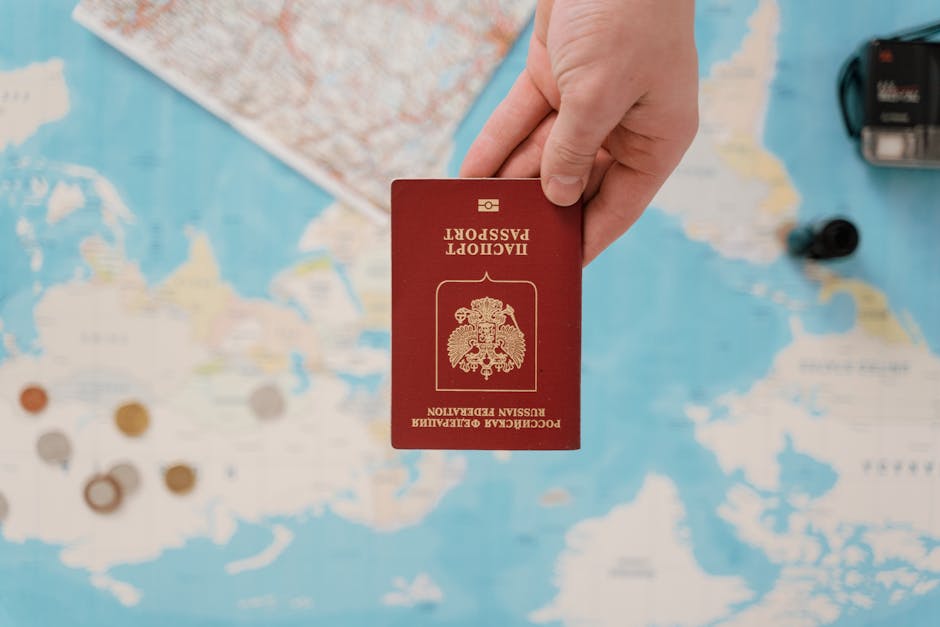
Every country has its own checklist, but some documents are near‑universal. For the U.S. F‑1 visa, you must carry your passport, DS‑160 confirmation, SEVIS fee receipt, I‑20, appointment letter, and financial proof; for the UK Student route, the Confirmation of Acceptance for Studies (CAS) and proof of funds meeting the 28‑day rule are central. Canada’s study permit typically requires an acceptance letter, proof of funds covering at least the first year, and, from 2024, higher cost‑of‑living thresholds than in previous years.[3]
What often decides borderline cases is not the number of papers in your folder but whether they form a coherent financial picture. Bank statements should be recent, traceable, and consistent with declared income. Sudden large deposits without explanation can trigger doubts. Scholarship letters must be official and verifiable. Property documents or fixed deposits can support the case but rarely substitute for liquid funds that cover tuition and living costs.
Cultural Cues, Red Flags, and How to Practice
Visa interviews are not meant to be personality tests, but cultural expectations do influence how answers are read. In the U.S. and Canada, concise and direct responses are valued; long, rehearsed monologues can sound memorized or evasive. In some Asian and European consulates, a slightly more formal tone is common, but the core remains the same: answer the question asked, with specific facts, in your own words. Common red flags include inconsistent information with your forms, inability to explain your course choice, unrealistic post‑study plans, or clear signs that an agent filled everything without your understanding. Several countries, including Australia and Canada, have warned publicly about fraudulent “consultants” and document mills. Practicing with a trusted mentor or university advisor, using real interview questions and your actual documents, is far more effective than generic coaching that teaches stock phrases.
 Agriculture
Nidhi Bhasin Leads Digital Green Trust to Revolutionize Indian Agriculture with Tech and Sustainability
Nidhi Bhasin heads Digital Green Trust in scaling digital and sustainable farming solutions across India, impacting millions and reshaping rural…
Read More →Counterpoint
Critics of current student visa regimes argue that the interview itself has become an unreliable filter. They point out that decisions are often made in under three minutes in high‑volume posts, leaving little room to distinguish between a nervous but genuine applicant and one coached to sound confident. Research by migration scholars has also highlighted how discretionary judgments around “home ties” and “future intent” can disadvantage first‑generation students or applicants from countries with weaker labor markets. From this perspective, the focus on brief, high‑pressure interviews risks turning complex educational journeys into snap judgments. Opponents of interview‑heavy systems advocate greater reliance on documented academic merit, institutional vetting, and post‑arrival monitoring rather than front‑loaded skepticism at the consulate window.
Research by migration scholars has also highlighted how discretionary judgments around “home ties” and “future intent” can disadvantage first‑generation students or applicants from countries with weaker labor markets.
Making the Interview Work for Your Career
Treating the visa interview as a career conversation, not just a bureaucratic hurdle, changes how you prepare. When you can explain how a master’s in data science in Toronto or a nursing diploma in Melbourne fits into labor market demand and your long‑term plans, you sound more like a future professional than a tourist in disguise. Countries that allow post‑study work, such as the U.S. Optional Practical Training, the UK Graduate route, or Canada’s Post‑Graduation Work Permit, expect you to know the basics of those rules without framing them as a migration shortcut. This is where grounded research pays off. Reading your target country’s official immigration pages, labor‑market reports, and even salary surveys helps you articulate realistic goals. Instead of saying “I want to settle abroad,” you might explain that you aim to gain two to three years of experience in a specific sector under a legal post‑study program, then return or transition according to the rules. That level of clarity signals maturity, not hidden intent.
Know your own file cold: course details, costs, funding sources, and how your studies connect to your past and future. Build a clean, traceable financial story with recent bank statements and verifiable sponsors. Practice concise, specific answers to common questions using your real documents, not memorized scripts. Rely on official government and university guidance, not unverified social media advice or aggressive agents. Treat the interview as the first step in your global career, not just a hurdle to clear.
Looking Ahead
Visa interviews will not get easier in the next few years. Demographic trends and tight labor markets mean more young people in emerging economies will compete for limited study seats in the U.S., Canada, the UK, and Australia. At the same time, governments are under pressure to curb irregular migration and protect local housing and services, which often translates into stricter screening of students. For applicants, the most practical response is to professionalize how you approach the process. Treat your visa file like a job application: researched, documented, and rehearsed with care. For universities and policymakers, investing in transparent pre‑departure guidance and cracking down on fraudulent intermediaries could reduce refusals and anxiety on both sides of the glass. Students who learn to navigate this system with clarity and integrity will not just secure visas; they will be better prepared for the complex, rules‑driven workplaces they hope to enter.
 AI
AIHarnessing AI for Smarter M&A Predictions in Startups
AI is revolutionizing M&A predictions, impacting startups and investment banking careers. Discover the future of this dynamic landscape.
Read More →