“It requires authenticity on the part of the guru and respect, dedication, commitment and obedience by the shishya to gain knowledge in the best possible way”
My musical journey began at home when I started learning the violin at the age of seven from my grandfather, my guru, Pandit Joi Srivastava. He was a musician class apart and is one of my greatest inspirations. I always had a musical environment at home and some of my oldest memories are of watching my grandfather teach other students. Hence, learning the violin came very naturally. The roots of this legacy come from Allahabad, where my grandfather was born.
My grandfather became my mentor and guru. The guru-shishya parampara is the only way to learn Indian classical music in India. The violin being a string instrument, I followed the legacy of living in the guru’s house and learning the art form directly. It requires authenticity on the part of the guru and respect, dedication, commitment and obedience by the shishya to gain knowledge in the best possible way.
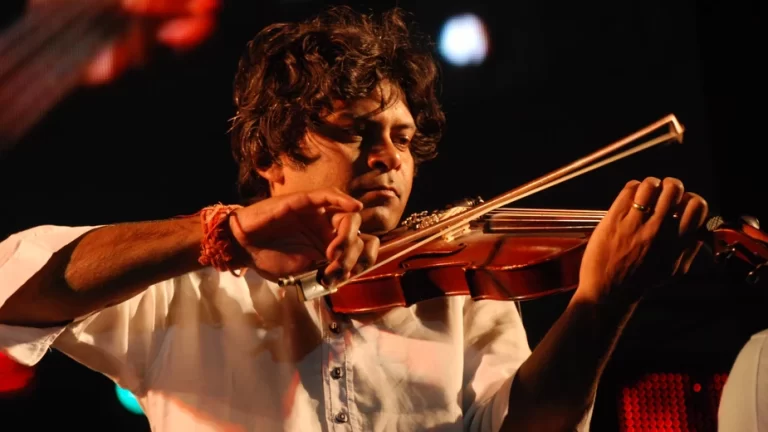
Indian classical violin playing in a rock outfit gave the band a touch of fusion music, which was very successful.
My training in Hindustani music went along side by side with my school education. In 1986, I had the opportunity to play in the UNICEF orchestra curated by Ustad Amjad Ali Khan. 1992 was a special year when I joined India’s premier rock band Parikrama. Indian classical violin playing in a rock outfit gave the band a touch of fusion music, which was very successful. The nineties saw huge changes in the Indian music scene, when albums were beginning to be made solely for pop musicians, along with music videos. Punjabi pop and independent musicians also made a mark. New music channels as well as cable television gave further momentum to these developments in Indian music. Being a part of Parikrama at this time was a great learning experience for me and helped me create my own fusion band. In 1999, I formed my fusion / world music band Mrigya. This gave me the freedom to experiment with different genres of music, and I experimented with our own beautiful Indian Raagas with different genres of music. Our unique sound of Raag-based fusion was hugely popular. Immediately after our first concert we received an offer to perform at the prestigious Edinburgh Fringe festival in 2001. The band had a successful tour and we got a 5-star rating and won several awards. Our unique sound gave us many international tours.
Read the full article here in our April 2021 issue.