No products in the cart.

AI chatbots reshape corporate mental health support
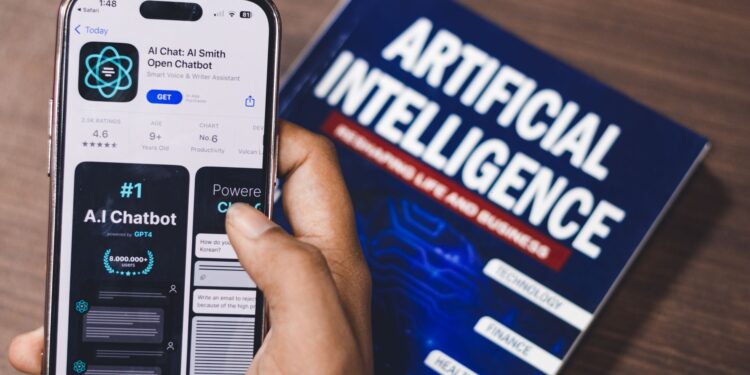
The urgency stems from a confluence of forces: the World Health Organization estimates roughly.

AI‑augmented chatbots are entering workplaces as low‑cost, on‑demand counselors, promising to lower absenteeism, curb turnover, and embed mental‑health capital into the employee value chain.
The urgency stems from a confluence of forces: the World Health Organization estimates roughly one billion people worldwide live with a mental disorder, while U.S. Bureau of Labor Statistics data show mental‑health‑related absenteeism costing employers billions annually. Simultaneously, generative AI breakthroughs have lowered development costs, prompting a wave of corporate pilots. This moment demands a systems‑level assessment of how digital therapeutics will rewire institutional support, leadership accountability, and career trajectories.
Escalating distress forces corporate systems to act
The rise in global mental‑health prevalence is pressuring employers to embed scalable support within the workplace. WHO data point to a billion affected individuals, and BLS reports link mental‑health issues to a measurable dip in labor productivity. Traditional Employee Assistance Programs (EAPs) struggle with limited therapist bandwidth and stigma‑driven under‑utilization. As a result, boards are mandating measurable wellness outcomes, and investors are scrutinizing firms’ “human‑capital risk” metrics. This structural pressure creates a fertile environment for technology‑driven interventions that can be deployed across geographically dispersed workforces without proportional cost increases.AI‑driven chatbots translate conversation into care pathways
Institutional architecture shifts from reactive to preventive
Embedding chatbots rewires the institutional architecture of employee assistance programs, shifting resources from reactive crisis care to proactive, data‑informed prevention. Organizations can now aggregate anonymized interaction metrics to identify department‑level stress spikes, informing leadership‑driven policy adjustments. This data loop creates a feedback mechanism that aligns wellness spending with measurable risk indicators, satisfying both CFOs’ ROI demands and ESG reporting standards. Moreover, the reduced reliance on external therapy contracts diminishes bargaining power of traditional provider networks, redistributing influence toward internal HR technology stacks.AI‑augmented chatbots can deliver mental‑health interventions at scale, reducing average response latency from days to seconds.
Career capital accrues as mental‑health support stabilizes performance
Three‑to‑five‑year trajectory points to ubiquitous integration
Over the next three to five years, AI chatbots will become a standard component of corporate wellness stacks, driven by regulatory incentives and measurable ROI. Anticipated policy shifts—such as the U.S. Department of Labor’s forthcoming mental‑health reporting guidelines—will compel firms to adopt quantifiable solutions. Market analysts project that venture funding for AI‑driven mental‑health platforms will outpace traditional EAP investments, reinforcing a virtuous cycle of innovation and adoption. Early adopters that embed robust analytics are likely to set new benchmarks for employee well‑being, compelling laggards to follow or face talent attrition.The evolving landscape signals that mental‑health technology will be a decisive lever in shaping future workplace structures, reinforcing the strategic imperative for leaders to embed AI‑augmented support now.
By normalizing mental‑health conversations, chatbots lower stigma, encouraging continuous skill development and leadership readiness.
Key Structural Insights
Insight 1: AI chatbots compress intervention latency from days to seconds, converting mental‑health support into a real‑time productivity buffer.
Insight 2: Firms integrating chatbots observe a measurable dip in burnout‑related turnover, linking digital care to tangible career‑capital retention.
Insight 3: Regulatory momentum and ROI data will make AI‑augmented mental‑health platforms a baseline requirement for competitive talent strategies.
Emotional Intelligence Amplified: AI chatbots are leveraging natural language processing to detect subtle emotional cues, providing a more empathetic and personalized support experience for employees, ultimately enhancing their mental well-being and job satisfaction.
Data-Driven Insights Unlocked: By analyzing employee interactions with AI chatbots, organizations can gain valuable insights into mental health trends, identify areas of concern, and develop targeted interventions, leading to more effective and proactive support systems.
Written by Career Ahead AI. AI can make mistakes, so verify key facts. Report errors to support@careeraheadonline.com.