


Personalized, AI-Generated Music Can Lift Focus Enough to Change Daily Output, But the Science Is Still Mixed.
The Struggle to Stay Focused
When senior Wonnie Kim walked across Georgetown’s campus, she slipped on AirPods and queued a lo-fi playlist to drown out the chatter of passing students. She’s not alone. A 2024 survey by the Pew research Center found that 62% of U-21 workers admit their attention drifts every hour because of notifications. The same poll showed that half of respondents try music to stay on task, yet most report “mixed results.” The constant ping of a message, the lure of a meme, and the endless scroll of TikTok turn any quiet desk into a battlefield. For freelancers, remote teams, and entry-level analysts, the cost of that battle shows up as missed deadlines, shaky code, and a lingering sense of burnout.
The Science Behind Focus-Enhancing Music
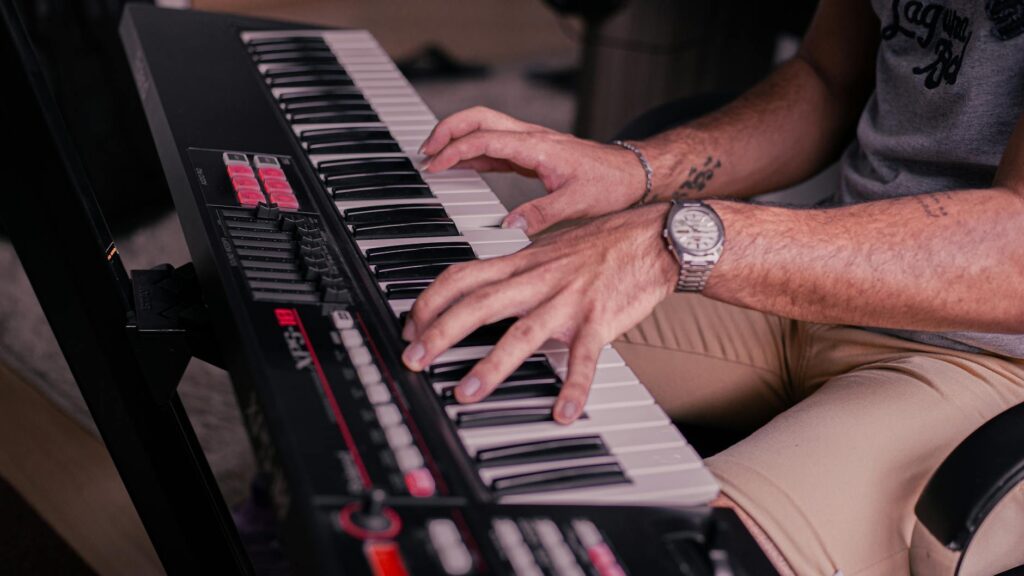
Researchers have long known that sound can shape cognition. A Georgetown University report highlighted that rhythmic, low-frequency tracks can synchronize brain waves in the 8-12 Hz “alpha” band, a state linked to relaxed alertness. In a controlled experiment, participants who listened to a 10-minute “deep-focus” soundscape completed a Stroop test 15% faster than those in silence. The study also noted that lyrical pop songs slowed reaction time, confirming that lyrics compete for verbal processing resources.
Neuroscientists point to the “entrainment” effect: when auditory patterns match the brain’s natural oscillations, the mind settles into a stable rhythm. A 2023 paper in Frontiers in Human Neuroscience found that binaural beats at 40 Hz boosted working-memory scores by 7% in a group of graduate students. However, the same paper warned that individual variability—age, hearing sensitivity, and personal music preference—can flip the benefit into distraction.
A 2023 paper in Frontiers in Human Neuroscience found that binaural beats at 40 Hz boosted working-memory scores by 7% in a group of graduate students.
The Cost of Decreased Productivity
The ripple effect of scattered attention reaches beyond a single spreadsheet. McKinsey’s 2025 productivity index estimated that U.S. firms lose roughly $1.2 trillion annually to “attention fragmentation.” For a mid-level marketer earning $85k, that translates into about 80 hours of unrecovered work each year. On a larger scale, the World Economic Forum warned that chronic digital overload may raise employee turnover by 12% across tech sectors, as burnout fuels resignations.
Mental health stakes are equally stark. A longitudinal study published in JAMA Psychiatry linked high-frequency multitasking with a 30% increase in reported anxiety symptoms over two years. When focus falters, cortisol spikes, sleep quality drops, and the feedback loop of stress-driven distraction intensifies.
 AI & Technology
AI tools, productivity pressure and the strain of software work
AI coding tools promise faster software development, but the reality is more complicated. Developers report growing pressure to deliver sooner, while research has found that…
Read More →The Emergence of AI-Generated Soundscapes
Enter AI-crafted audio. Brain.fm, a pioneer in neuro-adaptive music, claims its algorithms remix tonal layers in real time based on a listener’s reported focus level. In a 2025 randomized trial, 212 participants using Brain.fm’s “focus” channel reported a 22% increase in task completion speed compared with a generic Spotify playlist. The company attributes the gain to “dynamic modulation,” where the AI subtly shifts tempo and harmonic density to keep the brain in the optimal alpha range.
Other startups, such as Endel and Mubert, follow a similar playbook, feeding user data—time of day, heart-rate, even ambient light—into generative models that output endless, copyright-free soundscapes. Critics argue that the evidence remains anecdotal and that placebo effects may drive much of the perceived boost.
The Future of Focus-Enhancing Music
As generative AI models become more sophisticated, we can expect soundscapes that adapt not just to biometric inputs but also to task type. Imagine a coding session that triggers a low-drone, high-frequency mix, while a creative brainstorming sprint swaps in a sparse, melodic texture. Tech giants like Apple and Google have filed patents for “context-aware audio engines,” suggesting that platform-level integration is on the horizon.
The Emergence of AI-Generated Soundscapes AI-Crafted Soundscapes Are Quietly Rewiring How We Work Enter AI-crafted audio.
Future research must untangle the web of variables that determine success: genre preference, cultural background, and even the acoustics of one’s workspace. Large-scale field studies—ideally with diverse participant pools—will be needed to move AI-music from novelty to a reliable productivity tool.
Outlook
In the meantime, the safest bet for most workers is to experiment with AI-generated playlists, track personal output metrics, and stay skeptical of bold claims lacking peer-reviewed backing. When used wisely, a well-tuned soundscape can become a silent teammate that steadies the mind without stealing the spotlight.
 Career Guidance
Posts Spread After Call to Identify Jane Doe
More than eleven thousand accounts made almost twenty-five thousand posts purporting to name Jane Doe, according to Gudea’s analysis.
Read More →Written by Career Ahead AI. AI can make mistakes, so verify key facts. Report errors to support@careeraheadonline.com.





