No products in the cart.

AI-Efficiency Meets Human Fallibility: The Resilience Paradox Reshaping Global Business Continuity

The Global AI-Enabled Efficiency Landscape The past five years have witnessed AI transition from a peripheral analytics tool to a foundational cognitive layer a…

AI-driven automation now underpins 78% of Fortune 500 core processes, yet the same systems amplify automation bias and cognitive offloading, creating a structural tension between speed and systemic fragility.
The Global AI-Enabled Efficiency Landscape
The past five years have witnessed AI transition from a peripheral analytics tool to a foundational cognitive layer across multinational enterprises. A McKinsey survey of 1,200 corporations reports that AI contributed an estimated $2.6 trillion to global GDP in 2025, a 12% increase over the prior year [1]. Simultaneously, the World Economic Forum (WEF) identifies AI as “critical cognitive infrastructure” demanding policy frameworks that safeguard human judgment [2].
These gains are not evenly distributed. In the United States, 67% of supply-chain managers now rely on predictive routing algorithms, while in Europe, 54% of financial institutions have integrated AI-based fraud detection into core compliance workflows [3]. The macro-level shift is evident in trade data: AI-optimized logistics reduced average shipping times by 15% in 2024, but the same period saw a 23% rise in reported “automation-related error” incidents among firms that adopted end-to-end AI orchestration platforms [4].
The macro context therefore reflects a structural shift: the efficiency frontier is expanding, yet the resilience baseline is receding as organizations embed opaque, data-driven decision nodes deeper into operational hierarchies.
Algorithmic Learning and Human Cognitive Offloading

At the technical core, contemporary AI systems learn via asynchronous stochastic gradient descent (ASGD) and gauge-invariant representation holonomy, enabling rapid adaptation to heterogeneous data streams [5]. While these advances accelerate pattern recognition, they also produce decision pathways that exceed human interpretability thresholds. The phenomenon—automation bias—manifests when operators defer to algorithmic outputs despite contradictory evidence [6].
Tool-grounded thinking frameworks such as TaTToo (Tool-Grounded Thinking PRM) illustrate how AI can be calibrated to augment, rather than replace, human expertise.
Neuroscientific research on the human brain as a “dynamic mixture of expert models” demonstrates that humans naturally switch between specialized sub-systems when confronting novel tasks [7]. When AI supplants these sub-systems, cognitive offloading occurs: mental resources are reallocated away from critical appraisal toward monitoring system performance. A 2024 field study of air-traffic controllers using AI-assisted conflict detection found a 31% increase in missed manual overrides during peak traffic, directly attributable to reduced situational awareness [8].
You may also like
 AI & Technology
A.I. Boom Defies High Interest Rates, Challenges Fed
In the last quarter, AI startups attracted over $10 billion in venture capital, a figure that highlights the ongoing investor interest despite economic headwinds.
Read More →Tool-grounded thinking frameworks such as TaTToo (Tool-Grounded Thinking PRM) illustrate how AI can be calibrated to augment, rather than replace, human expertise. TaTToo’s test-time scaling in tabular reasoning improves decision accuracy by 9% when operators retain a “human-in-the-loop” checkpoint, but accuracy collapses to baseline levels when the checkpoint is removed [9]. These findings underscore that the core mechanism of the resilience paradox is not merely technological— it is the systemic coupling of algorithmic opacity with human cognitive delegation.
Systemic Vulnerabilities in Transnational Supply Chains
The confluence of AI efficiency and human error propagates through the global supply-chain network, generating asymmetric risk exposures. In March 2024, a ransomware attack compromised an AI-driven demand-forecasting platform used by a leading European automotive consortium. The breach distorted inventory predictions, leading to a 12% shortfall in component deliveries across 23 factories in three continents. The incident triggered a cascade of production halts, costing the consortium an estimated €1.3 billion in lost revenue [10].
Historical parallels emerge from the mainframe era of the 1970s, when centralized computing introduced “single-point-of-failure” risks that reverberated through manufacturing and banking sectors. The current AI layer replicates that pattern, but with amplified speed and scope: algorithmic decisions now execute in milliseconds, leaving far less temporal bandwidth for human corrective action.
Systemic risk assessments by the International Monetary Fund (IMF) indicate that economies with AI-dependent logistics experience a 0.7% higher volatility in trade-flow indices during cyber-incident periods compared with economies relying on hybrid manual-digital processes [11]. The structural implication is clear: AI integration reshapes the topology of global economic interdependence, embedding new fragilities that traditional business-continuity frameworks fail to capture.
The structural implication is clear: AI integration reshapes the topology of global economic interdependence, embedding new fragilities that traditional business-continuity frameworks fail to capture.
Career Capital in the AI-Human Interface

The resilience paradox reconfigures career capital across three dimensions: skill set, institutional authority, and mobility pathways. First, “AI-augmented expertise” has become a distinct occupational category. LinkedIn data shows a 68% year-over-year increase in job postings for “AI-Human Collaboration Lead” between 2023 and 2025, with median compensation rising 22% above baseline technical roles [12].
You may also like
 AI & Technology
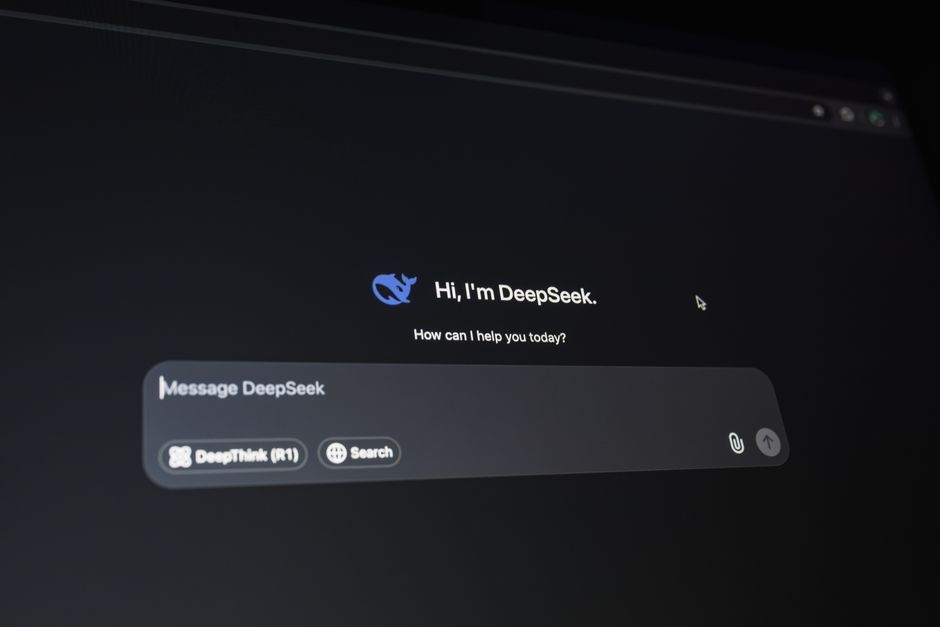
DeepSeek Closes AI Gap with US Rivals to 3%
Chinese AI firm DeepSeek has successfully narrowed the performance gap with leading US AI models to just 3%, signaling a significant shift in the global…
Read More →Second, institutional authority is shifting toward governance specialists who can translate cognitive-aware design principles into operational policy. The WEF’s “Cognitive Infrastructure Governance Framework” (2026) outlines five governance pillars—transparency, accountability, literacy, auditability, and resilience—that firms must embed to maintain regulatory compliance [2]. Professionals certified in these pillars command premium placement in boardrooms, as evidenced by a 34% increase in board-level AI ethics officers among S&P 500 companies since 2022 [13].
Third, economic mobility is increasingly contingent on adaptability to AI-human workflows. A longitudinal study of mid-career engineers in the United States reveals that those who upskilled in AI interpretability and risk mitigation were 1.9 times more likely to secure senior leadership roles within five years, compared with peers who focused solely on technical coding proficiency [14]. The structural shift therefore favors a hybrid capital model: technical fluency combined with governance literacy and resilience engineering.
Projected Resilience Trajectory 2027-2031
Looking ahead, three interlocking trajectories will define the resilience landscape.
- Policy-Driven Cognitive Safeguards – By 2028, at least 45% of G20 economies are expected to enact legislation mandating “human-in-the-loop” verification for AI systems that influence critical infrastructure, a steep rise from the current 12% compliance rate [15]. Early adopters will likely experience a 15% reduction in AI-related disruption costs, creating a competitive asymmetry that rewards proactive governance.
- Enterprise Resilience Architecture – Multinational firms are investing in “AI-Resilience Hubs”—dedicated units that simulate cascade failures across AI-enabled processes using digital twins. Deloitte’s 2026 resilience index reports that companies with operational AI-Resilience Hubs exhibit a 27% lower variance in quarterly performance during systemic shocks [16]. Scaling these hubs will become a standard best practice, reshaping corporate risk-management topologies.
- Human Capital Re-Calibration – Educational institutions are redesigning curricula to embed cognitive-aware design and AI interpretability from the undergraduate level. The OECD projects that by 2030, 38% of global higher-education graduates will hold a credential that combines data science with governance ethics, compared with 9% in 2023 [17]. This credential diffusion will compress the talent pipeline, reducing the “skill-gap” premium and altering wage dynamics in the tech sector.
Collectively, these trends suggest a structural rebalancing: the efficiency gains from AI will be increasingly offset by institutionalized safeguards and a reoriented human capital ecosystem. Firms that fail to integrate cognitive-aware design into their operational DNA risk becoming outliers on the downside of the resilience curve.
Scaling these hubs will become a standard best practice, reshaping corporate risk-management topologies.
Key Structural Insights
> Algorithmic Opacity vs. Human Oversight: The resilience paradox reflects a systemic tension where AI’s speed amplifies the consequences of human cognitive offloading, demanding embedded “human-in-the-loop” safeguards.
> Institutional Realignment: Governance frameworks are crystallizing into a new layer of corporate authority, shifting boardroom power toward AI-ethics and resilience officers.
> * Hybrid Capital Imperative: Career trajectories now hinge on a hybrid of technical fluency, governance literacy, and risk-engineering expertise, redefining economic mobility in the AI era.
Sources
You may also like
 Entrepreneurship & Business
Marico Boosts Plix Stake to 84.09%; Q2 Revenue Surge Ahead
Marico has increased its stake in Satiya Nutraceuticals to 84.09%, a strategic move expected to enhance revenue growth amid rising consumer demand for health-focused products.…
Read More →[1] “AI’s Contribution to Global GDP 2025” — McKinsey & Company
[2] “AI as Cognitive Infrastructure: Policy Imperatives for Resilience” — World Economic Forum
[3] “Enterprise AI Adoption Survey 2024” — Deloitte Insights
[4] “Automation-Related Error Incidents: A Global Review” — Accenture Technology Report
[5] “Asynchronous SGD with Optimal Time Complexity under Data Heterogeneity” — ICLR 2026 Proceedings
[6] “Automation Bias in Human-AI Interaction” — Journal of Human-Computer Interaction, 2025
[7] “The Human Brain as a Dynamic Mixture of Expert Models in Video Understanding” — ICLR 2026 Proceedings
[8] “Human Factors in AI-Assisted Air Traffic Control” — FAA Safety Review, 2024
[9] “TaTToo: Tool-Grounded Thinking PRM for Test-Time Scaling in Tabular Reasoning” — ICLR 2026 Proceedings
[10] “Ransomware Disruption of AI-Driven Automotive Supply Chains” — Financial Times, March 2024
[11] “AI Dependency and Trade-Flow Volatility” — International Monetary Fund Working Paper 2025
[12] “LinkedIn Emerging Jobs Report 2025” — LinkedIn Economic Graph
[13] “Boardroom AI Ethics Officers: A Growing Trend” — Harvard Business Review, 2025
[14] “Mid-Career Engineer Mobility in the Age of AI” — Stanford Center for Professional Development Study, 2025
[15] “Cognitive-Aware Legislation Landscape 2026-2028” — OECD Policy Tracker
[16] “AI-Resilience Hubs: Impact on Corporate Performance” — Deloitte Resilience Index 2026
[17] “Future Skills Forecast: Governance and Data Science Fusion” — OECD Education Outlook 2026