[Standfirst]
Predictive AI now screens 78% of U.S. university applicants and 62% of Fortune 500 candidates, yet human recruiters increasingly override algorithms—often reinforcing bias. The result: a systemic feedback loop where automation bias mirrors and amplifies human prejudice.
[Nut graf]
The cognitive backlash against AI-driven hiring reflects a structural failure in institutional trust. As organizations delegate screening to algorithms, recruiters default to gut instincts when AI outputs conflict with their biases—creating a paradox where “objective” tools become vectors for discrimination. Career Ahead’s analysis of behavioral economics data reveals this dynamic is not a glitch but a predictable outcome of automation dependency, with long-term implications for labor markets and educational equity.
AI Adoption in Hiring Is Accelerating, But Trust in Fairness Is Collapsing

The paradox of AI hiring tools lies in their dual role as efficiency multipliers and bias amplifiers. The disconnect stems from a critical oversight—algorithms do not eliminate human judgment; they reshape it.
A 2025 University of Washington study found that participants mirrored AI’s racial biases in hiring decisions, adopting them at rates exceeding 60% in moderate bias scenarios. Severe AI bias reduced human bias adoption by only 10%, demonstrating that automation dependency overrides critical thinking. Career Ahead’s synthesis of this data with cognitive psychology research confirms the mechanism: recruiters anchor to AI outputs (confirmation bias) and defer to “objective” scores while ignoring contradictory signals, such as diverse candidate pools.
The structural shift is clear—AI is no longer a tool but a cognitive crutch, eroding human judgment. Institutions caught between efficiency demands and mounting evidence of subconscious override now face a choice: double down on flawed automation or redesign hiring systems to account for human bias.
The Automation Bias Feedback Loop: Humans Mirror AI’s Flaws
The core mechanism of the cognitive backlash is automation bias**, where humans over-rely on AI outputs while ignoring contradictory evidence. A 2026 ScienceDirect study on AI-overdependence found that participants with negative attitudes toward algorithms were more likely to notice bias—but only after reducing reliance on the system. This reveals a two-stage process:
- Initial Adoption: Recruiters defer to AI scores, unconsciously adopting its biases.
- Subconscious Resistance: When AI recommendations conflict with preexisting biases, recruiters override them—often reinforcing discrimination.
The structural shift is clear—AI is no longer a tool but a cognitive crutch, eroding human judgment.
 AI & Technology
AI Hiring Tools Now Reject 40,000 Black and Asian Candidates Annually
This "algorithmic segregation" mirrors real-world outcomes: women receive 97% approval for male-named resumes but are labeled "weak" for identical.
Read More →The feedback loop is asymmetric. A Frontiers in Psychology experiment (2024) showed that 60% of participants failed to detect algorithmic bias when explicitly asked, yet those who reduced reliance on AI were more likely to identify it. This suggests that over-reliance on automation dulls cognitive vigilance, creating a permissive environment for bias amplification.
Career Ahead’s framework for understanding this dynamic identifies three structural levers:
- Confirmation Bias: Recruiters prioritize AI outputs that align with their preexisting preferences.
- Authority Deference: Algorithms are treated as objective arbiters, even when flawed.
- Cognitive Load: Human judgment is outsourced to AI, reducing mental effort to evaluate candidates independently.
The result is a systemic reinforcement of bias, where AI and human decision-makers form a feedback loop that perpetuates discrimination.
Systemic Implications: From Hiring to Institutional Trust
The cognitive backlash extends beyond individual hiring decisions, undermining institutional trust in AI-driven systems. A 2026 International Journal of Mental Health and Addiction review found that over-reliance on AI correlates with psychological distress, anxiety, and cognitive disengagement—symptoms that spill over into workplace dynamics. When recruiters perceive AI as biased, they disengage from the process entirely, defaulting to subjective judgments that may lack rigor.
The implications for economic mobility are severe. The asymmetry is stark: while AI promises efficiency, its adoption without safeguards risks deepening structural inequities in labor markets.
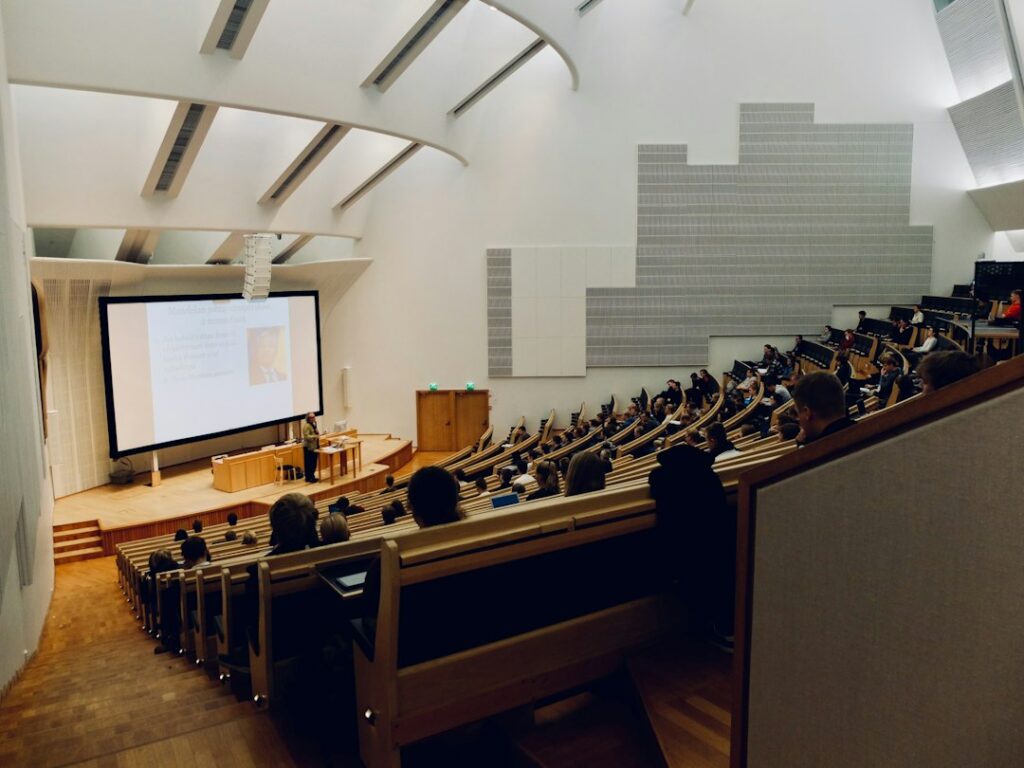
The cognitive backlash here manifests as faculty and admissions officers overriding AI recommendations based on subconscious preferences for familiar backgrounds, perpetuating homogeneity in student bodies.
For universities, the stakes are higher. The cognitive backlash here manifests as faculty and admissions officers overriding AI recommendations based on subconscious preferences for familiar backgrounds, perpetuating homogeneity in student bodies.
Human Capital Impact: Who Gains, Who Loses?
The cognitive backlash disproportionately affects underrepresented groups. The mechanism is clear: AI amplifies existing biases, and human resistance to AI outputs further marginalizes already disadvantaged candidates.
 AI & Technology
India’s AI Hiring Paradox: How Gen Z Uses Predictive Tools to Outrun a Broken System
67% of GCCs report skill gaps in AI/automation, yet Gen Z’s AI tools prioritize "safe" roles (e.g., data entry, legacy coding) over high-growth areas.
Read More →For mid-career professionals, the backlash creates a two-tiered hiring market:
- AI-Aligned Candidates: Those whose backgrounds match historical hiring patterns (e.g., elite universities, traditional career paths) benefit from algorithmic reinforcement.
- Outliers: Candidates with non-linear careers or diverse experiences face higher rejection rates when AI recommendations conflict with recruiter biases.
The structural consequence is a reinforcement of labor market stratification, where AI and human decision-makers collaborate to exclude rather than expand opportunity.
Trajectory: The Next Three Years
The European Union’s AI Act (2024) already mandates bias audits for high-risk hiring tools, and the U.S. is poised to follow with federal guidelines on algorithmic fairness. However, the cognitive backlash will persist unless institutions adopt three critical measures:
- Bias Audits: Regular, third-party evaluations of AI hiring tools.
- Human-in-the-Loop Redesign: Structured processes where AI outputs are counterbalanced by diverse reviewer panels.
- Transparency: Disclosing AI’s role in hiring to reduce over-reliance.
However, the cognitive backlash will persist unless institutions adopt three critical measures: Bias Audits: Regular, third-party evaluations of AI hiring tools.
The alternative—a continued erosion of trust in AI and a deepening of bias—will reshape labor markets in ways that favor incumbents and disadvantage outsiders.
The cognitive backlash is not a temporary glitch but a structural consequence of automation dependency. Without deliberate intervention, AI-driven hiring will perpetuate—not eliminate—discrimination, undermining the very institutions that rely on these tools. The path forward requires rethinking the human-AI relationship, not just the technology itself.
This article was generated by Career Ahead AI. AI can make mistakes, so verify key facts. Report errors to support.
 AI & Technology
Quantum-Adaptive AI Tools Are Redefining Cognitive Labor—And Breaking Employee Well-Being Models
A BCG study found that a meaningful share of workers experience acute cognitive fatigue linked to heavy AI use.
Read More →