


Data-driven interview bots can cut hiring time and level the playing field, but only if firms guard against hidden bias.
The Broken Hiring Process
Traditional hiring methods rely heavily on résumés and one-off interviews, resulting in slow and uneven processes. A 2024 survey by the Society for Human Resource Management found that 62% of recruiters admit to “unconscious bias” influencing decisions. This can lead to companies losing time, money, and talent, while candidates feel frustrated by opaque criteria.
AI simulations promise objectivity by recording responses, analyzing speech patterns, and comparing results against a benchmark. However, critics warn that algorithms inherit the data they learn from, which can perpetuate bias if the data is skewed.
The Context of AI in Hiring

CodeSignal’s platform offers simulated interviews for software engineers, product managers, and sales reps. The tool generates realistic scenarios, provides instant feedback, and allows candidates to replay their performance. Other firms, like HireVue and Pymetrics, deploy AI to gauge communication style, cultural fit, and stress tolerance.
AI simulations promise objectivity by recording responses, analyzing speech patterns, and comparing results against a benchmark.
The market is booming, with a Gartner report predicting that AI hiring tools will be used by 70% of large enterprises by 2027. Start-ups tout “fairer” hiring, while venture capital pours money into the niche.
The High Stakes of AI-Powered Hiring
When an AI flag removes a candidate, the loss is personal and corporate. A recent analysis showed that women and minority groups were 12% more likely to be rejected on the basis of “soft-skill” scores. Companies that ignore bias risk brand damage, as seen in a 2023 lawsuit against a major retailer.
On the flip side, firms that get AI right can hire faster and at lower cost. A multinational tech firm reported a 30% reduction in time-to-offer after integrating interview simulations.
Responding to the Challenges of AI-Powered Hiring

Job seekers can level the playing field by training on these platforms, improving articulation and confidence. Candidates should also request score breakdowns to spot any unexpected patterns. Employers must embed fairness checks into their AI pipelines, including independent audits, diverse training data, and clear documentation.
CodeSignal’s training module teaches interviewers how to interpret AI scores, not just trust them. The program stresses calibration sessions, where hiring teams compare AI output with real-world performance.
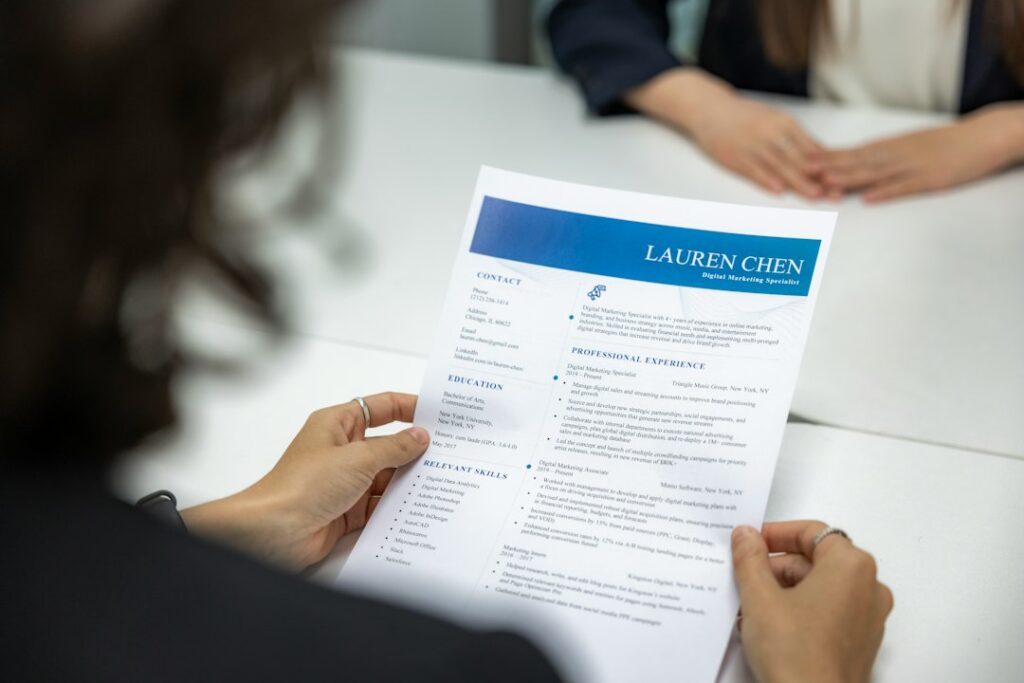 Career Guidance
How to Prepare for a Job Interview with Ethics in Mind
A paper on job interview ethics links preparation and conduct to a candidate’s value. It offers no criteria for take-home tasks.
Read More →Candidates should also request score breakdowns to spot any unexpected patterns.
The Future of Job Screening
The next wave will blend AI with human judgment, preserving efficiency while retaining empathy. Beyond hiring, AI may screen for work-permit eligibility, background checks, and continuous performance monitoring. However, the path forward demands vigilance, with transparency dashboards, bias-mitigation research, and open-source models crucial to ensuring fairer hiring.
In the end, AI interview simulations are reshaping recruitment, but only if companies confront the bias built into their data. The balance between algorithmic speed and human insight will decide whether the new system truly levels the field or simply moves the gatekeeper behind a screen.
Written by Career Ahead AI. AI can make mistakes, so verify key facts. Report errors to support@careeraheadonline.com.





