No products in the cart.

AI models are starting to crack high-level math problems

City, Country — OpenAI's latest model, ChatGPT, is making waves by successfully solving high-level mathematics problems. This breakthrough is significant for the AI community and mathematicians alike, as it demonstrates the potential of AI to tackle complex challenges in a field traditionally dominated by human intellect. Neel Somani, a software…

OpenAI’s latest model, ChatGPT, is making waves by successfully solving high-level mathematics problems. This breakthrough is significant for the AI community and mathematicians alike, as it demonstrates the potential of AI to tackle complex challenges in a field traditionally dominated by human intellect. Neel Somani, a software engineer and former quant researcher, recently conducted an experiment that revealed ChatGPT’s ability to provide full solutions to intricate math problems, a development that could reshape the landscape of mathematical research.
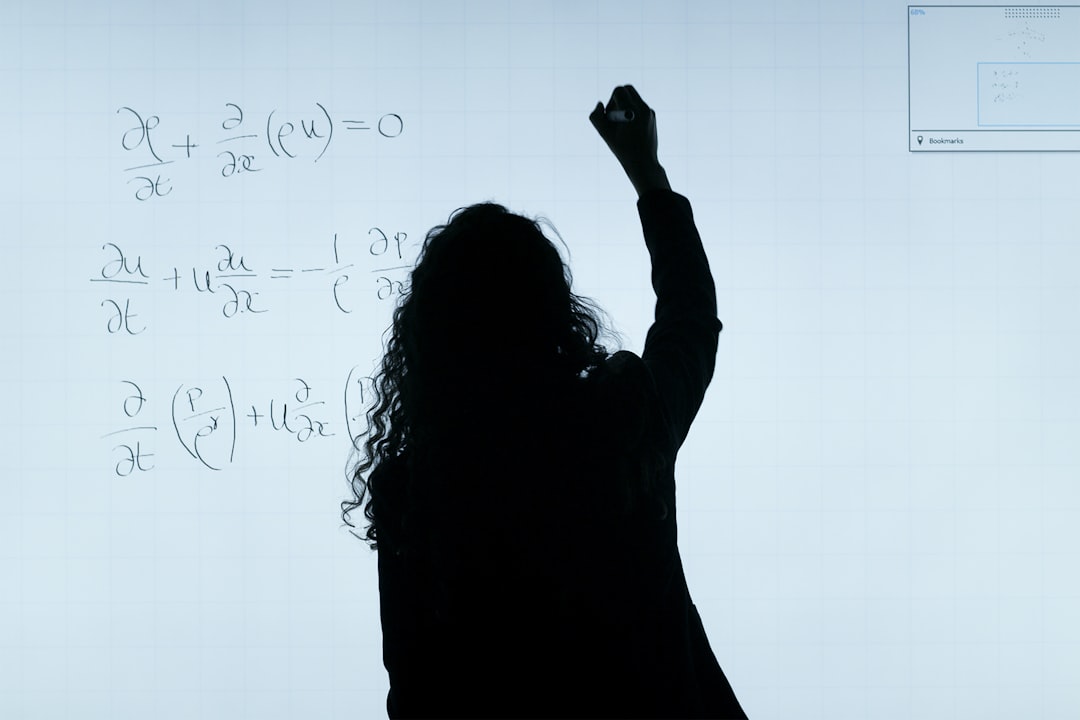
Somani tested the capabilities of ChatGPT by inputting challenging math problems and allowing the model to process them for 15 minutes. The results were astonishing. ChatGPT not only produced solutions but also showcased its understanding of mathematical axioms and theorems, such as Legendre’s formula and Bertrand’s postulate. This marks a significant leap forward in the application of large language models (LLMs) in mathematics, especially considering the historical context where such tasks were considered the realm of only the most skilled mathematicians.
According to Somani, the latest iteration, GPT 5.2, appears to be more adept at mathematical reasoning than its predecessors. Since its release, AI models have tackled numerous open problems, particularly those posed by the renowned mathematician Paul Erdős. The Erdős problems, a collection of over 1,000 conjectures, have long been a proving ground for mathematical talent. Recently, 15 of these problems have transitioned from “open” to “solved,” with 11 solutions attributed directly to AI models.
Why OpenAI’s ChatGPT Matters for Mathematics
The implications of ChatGPT’s advancements are profound. Historically, AI’s role in mathematics has been limited to assisting researchers rather than independently solving problems. However, the recent successes suggest a shift in this paradigm. As AI continues to evolve, its potential to contribute meaningfully to mathematical discoveries becomes increasingly apparent.
 Global Affairs
The Rise of STEAM: Integrating Art into STEM Education
The integration of art into STEM education is reshaping how we approach learning and innovation. This shift is crucial for…
Read More →However, the recent successes suggest a shift in this paradigm.
Mathematicians like Terence Tao have noted the significance of AI’s ability to tackle the long tail of obscure Erdős problems. Tao suggests that the scalable nature of AI makes it particularly suited for these challenges, many of which have straightforward solutions that humans may overlook. The automation of mathematical reasoning could lead to a more efficient exploration of complex mathematical landscapes.
Furthermore, tools such as Harmonic’s Aristotle and Microsoft’s Lean have emerged, facilitating the formalization of proofs. This shift towards formalization is crucial as it allows for easier verification and extension of mathematical reasoning. The ability to automate these processes not only enhances productivity but also encourages collaboration between mathematicians and AI systems.
As AI models like ChatGPT become more integrated into mathematical research, the demand for skills in both mathematics and AI will likely rise. For professionals in the field, this presents an opportunity to adapt and expand their expertise. Understanding how to leverage AI tools effectively could become a vital skill set for mathematicians and researchers.
How to Position Yourself in the Evolving Math Landscape
For those looking to capitalize on this trend, here are actionable steps to enhance your career in mathematics and AI:
 Career Development
PM Modi’s Rozgar Melas: A Catalyst for Youth Empowerment in India
PM Modi's Rozgar Melas are revolutionizing youth employment and skill development in India, creating pathways for a brighter future.
Read More →- Learn AI Tools: Familiarize yourself with AI models like ChatGPT and Harmonic’s Aristotle. Online courses and tutorials are available to help you understand their applications in mathematical research.
- Engage in Collaborative Projects: Seek opportunities to work on interdisciplinary projects that combine mathematics and AI. Collaborating with computer scientists can broaden your understanding and open new avenues for research.
- Stay Updated on AI Developments: Follow the latest advancements in AI and machine learning. Joining professional organizations or attending conferences can keep you informed about emerging trends and technologies.
However, experts caution that while AI’s progress is impressive, it may not replace human mathematicians entirely. According to Terence Tao, the nuances of mathematical reasoning and creativity still require human insight. AI can assist in solving problems, but the depth of understanding and innovative thinking remains a distinctly human trait.
Understanding how to leverage AI tools effectively could become a vital skill set for mathematicians and researchers.
The Future of AI in Mathematical Research
As we look ahead, the role of AI in mathematics is likely to expand further. The ability of models like ChatGPT to solve complex problems could lead to unprecedented advancements in mathematical research. This evolution may attract a new generation of mathematicians who are eager to explore the intersection of AI and traditional math.
Moreover, as AI tools gain acceptance among esteemed mathematicians, we may see a cultural shift in how mathematical research is conducted. The integration of AI could foster a more collaborative environment where human and machine intelligence work together to push the boundaries of knowledge.
What new problems will AI tackle next, and how will this reshape our understanding of mathematics? The future holds exciting possibilities for those willing to embrace the synergy between human creativity and artificial intelligence.
 Banking & Finance
Chile’s Economy Unexpectedly Slowed After Upbeat Forecasts
Chile's economy has shown unexpected signs of slowing down despite earlier optimism. This article explores the implications for job seekers…
Read More →