


The surge in algorithmic talent platforms is displacing degree‑centric recruiting, forcing institutions, workers, and leaders to reconfigure the architecture of career advancement.
From Credentialism to Capability: The Macro Shift in Recruitment
Over the past five years, the recruitment ecosystem has undergone a structural realignment driven by two converging forces: the diffusion of machine‑learning‑based talent platforms and the strategic pivot of Fortune‑500 firms toward skills‑first hiring. A 2026 LinkedIn survey finds that 75 % of companies now deploy AI‑enabled tools to source, screen, or interview candidates【1】. Simultaneously, a Business Insider analysis reports 60 % of employers rank demonstrable skills above formal degrees when evaluating applicants【2】.
These metrics reflect a broader economic transition. In the post‑industrial era, credentialism functioned as a gatekeeping mechanism that concentrated career capital within higher‑education institutions. The current trajectory mirrors the early 20th‑century shift from apprenticeship to formal schooling, but the catalyst is algorithmic assessment rather than legislative reform. The macro implication is a reallocation of institutional power: universities, traditionally the primary arbiters of human capital, now contend with platform providers that can certify competence through data‑driven validation.
Algorithmic Matching: The Core Mechanism Redefining Talent Flows
AI‑driven hiring platforms operationalize skills‑based selection through three interlocking components:
- Skill Extraction and Ontology Mapping – Natural‑language processing parses resumes, portfolios, and public code repositories to translate heterogeneous experience into a standardized skill taxonomy. Companies such as IBM’s “Watson Talent” have reported a 30 % reduction in time‑to‑hire after integrating this layer, as the system surfaces candidates whose demonstrated competencies align with role‑specific competency matrices【2】.
- Predictive Fit Modeling – Supervised learning models, trained on historical performance data, generate a probabilistic fit score that balances technical proficiency, soft‑skill indicators, and cultural alignment. Unilever’s partnership with Pymetrics illustrates a 25 % uplift in “quality of hire” metrics, measured by six‑month performance reviews, after replacing traditional screening with AI‑derived fit scores【2】.
- Bias Mitigation Protocols – Blind screening modules strip demographic identifiers, while fairness‑aware algorithms enforce parity constraints across protected groups. Early adopters have documented a 20 % increase in diversity hires, attributable to the decoupling of candidate evaluation from legacy bias vectors【1】.
Collectively, these mechanisms constitute a systemic reengineering of the talent pipeline: the “resume” is supplanted by a dynamic, data‑rich profile, and the hiring decision is reframed as an algorithmic inference problem rather than a discretionary judgment.
Predictive Fit Modeling – Supervised learning models, trained on historical performance data, generate a probabilistic fit score that balances technical proficiency, soft‑skill indicators, and cultural alignment.
Systemic Ripples Across Education, Labor Markets, and Corporate Governance
 Career Guidance
How to Switch Industries Mid-Career Without Starting Over
Bridge roles can reduce risk, while targeted skills and industry-specific applications help you make the case for a new field.
Read More →The diffusion of AI‑mediated skills hiring reverberates through three interdependent systems:
Educational Realignment
Higher‑education institutions are recalibrating curricula to preserve relevance. Data from the National Center for Education Statistics shows a 12 % year‑over‑year increase in enrollment for micro‑credential programs that align with industry‑defined skill clusters, such as “cloud architecture” and “data ethics”【2】. Universities like Arizona State have partnered with AI talent platforms to embed competency‑based assessments directly into degree pathways, effectively outsourcing part of the credentialing function to algorithmic validators. This shift attenuates the monopoly of traditional degrees on career capital, redistributing it toward modular, stackable credentials.
Labor Market Fragmentation and Mobility
The gig economy’s expansion—now encompassing 40 % of the workforce in some advanced economies【1】—is both a cause and consequence of skills‑first hiring. Freelancers leverage AI marketplaces (e.g., Upwork’s “SkillScore”) to showcase validated competencies, reducing entry barriers for workers lacking formal qualifications. However, the asymmetry of access to high‑quality data—such as prior performance metrics—creates a bifurcated mobility landscape: digitally literate workers accelerate upward, while those without platform exposure risk marginalization.
Corporate Leadership and Institutional Power
CEOs are repositioning talent strategy as a competitive lever. The 2025 “Future of Work” summit recorded that 68 % of S‑&P 500 CEOs now prioritize AI‑enabled talent analytics in their board agendas, citing “strategic workforce agility” as a core objective. This institutional endorsement amplifies the bargaining power of platform providers, prompting antitrust scrutiny in the EU and US over potential data monopolies that could entrench a new class of gatekeepers.
Advantaged Groups – Workers with strong digital footprints, continuous upskilling habits, and fluency in AI‑mediated self‑branding gain disproportionate access to high‑growth roles.
Winners and Losers in the Human Capital Equation
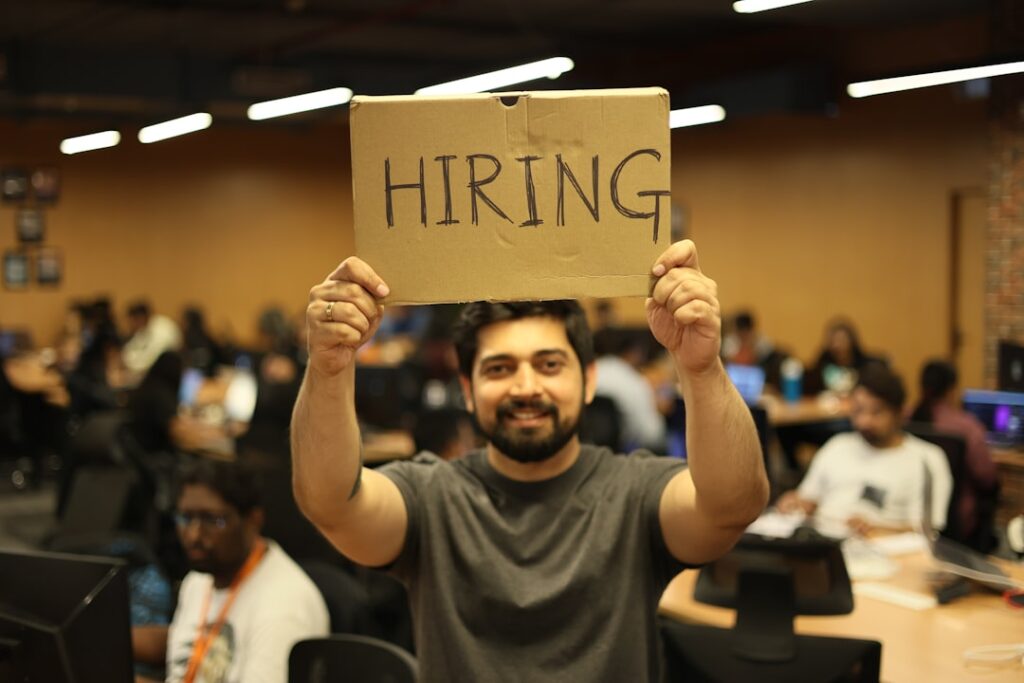
The structural shift redefines who accrues career capital:
 Career Guidance
Gujarat Boosts Teachers with Career Guidance Training
Gujarat has initiated a comprehensive training program for teachers aimed at enhancing their ability to guide students in making informed career choices, addressing a critical…
Read More →Advantaged Groups – Workers with strong digital footprints, continuous upskilling habits, and fluency in AI‑mediated self‑branding gain disproportionate access to high‑growth roles. A case study of a former retail associate who leveraged AI‑curated learning pathways to transition into a data‑analytics position within 18 months illustrates the velocity of skill‑based mobility.
Disadvantaged Groups – Individuals in low‑digital‑access regions, older cohorts less comfortable with AI interfaces, and occupations with limited quantifiable skill signals encounter heightened friction. The “skill‑signal gap”—the disparity between actual capability and algorithmic representation—exacerbates existing inequities, echoing historical patterns observed during the mechanization of manufacturing when workers lacking measurable output metrics were displaced.
- Institutional Actors – Universities that swiftly integrate AI validation into curricula retain relevance, whereas those clinging to degree‑only models risk enrollment decline. Similarly, labor unions are reorienting collective bargaining to include provisions for AI‑mediated assessment transparency, signaling a shift in institutional power dynamics.
Outlook: Structural Trajectories Through 2030
Projecting the next five years, three systemic trajectories emerge:
- Standardization of Skill Taxonomies – Industry consortia (e.g., the World Economic Forum’s “Skills Framework”) will converge on universal ontologies, enabling cross‑border portability of AI‑validated credentials. This will deepen the decoupling of career progression from geography.
- Regulatory Calibration – Antitrust and data‑privacy regulators are poised to impose “algorithmic fairness audits” for hiring platforms, mandating explainability and bias‑impact reporting. Compliance costs will incentivate consolidation among platform providers, potentially re‑centralizing institutional power.
- Human‑Centric Augmentation – Leadership development programs will embed AI‑assisted coaching tools that map skill gaps to personalized learning pathways, reinforcing the feedback loop between corporate talent needs and individual upskilling. This will institutionalize a continuous, data‑driven career development model, reshaping the concept of lifelong learning.
In sum, AI‑powered skills hiring is not a fleeting trend but a structural reconfiguration of how career capital is generated, signaled, and allocated. Stakeholders that align their strategies with the emergent data ecosystem will shape the next phase of economic mobility and institutional influence.
Human‑Centric Augmentation – Leadership development programs will embed AI‑assisted coaching tools that map skill gaps to personalized learning pathways, reinforcing the feedback loop between corporate talent needs and individual upskilling.
Key Structural Insights
- The migration from degree‑centric to AI‑validated skill assessment reallocates career capital from traditional academia to algorithmic platforms, redefining institutional authority.
- Bias‑mitigation modules embedded in hiring AI generate measurable diversity gains, yet the underlying data asymmetry creates a new axis of inequality for digitally underserved workers.
- By 2030, standardized skill ontologies and regulatory oversight will crystallize a systemic framework that makes AI‑driven talent analytics the default conduit for economic mobility.
Written by Career Ahead AI. AI can make mistakes, so verify key facts. Report errors to support@careeraheadonline.com.





