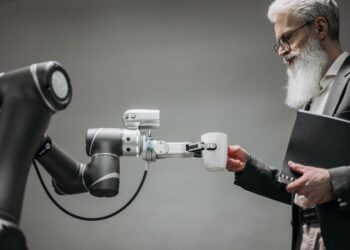
AI-driven generative models are redefining how artists create, monetize, and claim authority in visual, musical, and narrative domains.Open-source collaborations emerging from leading universities enable creators to steer algorithmic output, turning AI from a novelty into a strategic partner.
The convergence of high‑capacity generative models, open‑source ecosystems, and corporate investment creates a structural inflection point for creative labor. As artists integrate algorithmic partners, the distribution of career capital—skill, reputation, and market access—reconfigures, challenging legacy institutions that have long mediated artistic production. This analysis examines the mechanisms reshaping that system and the implications for economic mobility within the cultural sector.
AI‑augmented creative labor redefines career pathways
AI‑augmented creative labor is redefining career pathways across the arts. Open‑source toolkits released by university research groups lower entry barriers, allowing emerging creators to produce market‑ready work without traditional apprenticeships. According to Career Ahead’s analysis of recent institutional investments, the surge in AI‑augmented creative tools is expanding the pool of marketable skills beyond conventional technique. Established galleries and studios are now evaluating portfolios for algorithmic fluency as much as for aesthetic merit, prompting a reallocation of hiring budgets toward interdisciplinary teams. This shift compresses the timeline from concept to commercial release, accelerating talent turnover and reshaping the hierarchy of artistic gatekeepers.
Generative models function as collaborative substrates
AI tools reshape artistic career capital
Generative models serve as collaborative substrates that translate human intent into novel artifacts. Stanford scholars have demonstrated open‑source frameworks that let artists guide model outputs through iterative prompting, effectively turning the AI into a responsive co‑author. By learning from extensive image and audio datasets, these systems surface stylistic variations that artists can select, remix, or reject, expanding the palette of possibilities and turning constraints into collaborative prompts. The resulting workflow blurs the line between tool and partner, allowing creators to allocate cognitive resources toward high‑level narrative structuring while the model handles pattern generation. This division of labor mirrors established software development practices, suggesting a durable reconfiguration of creative production pipelines.
Material Engagement Theory maps relational dynamics
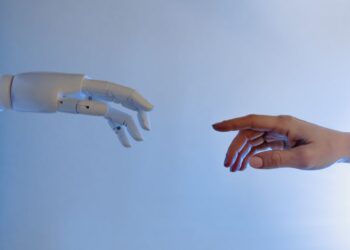
Material Engagement Theory (MET) provides a lens for understanding the reciprocal ties among artist, algorithm, and artifact. The ACM study reframes co‑creativity as an ongoing material relationship rather than a one‑off tool use, emphasizing that the AI system itself becomes part of the artistic medium. In practice, artists iteratively adjust prompts, observe generated outputs, and physically manipulate the digital artifact, creating a feedback loop that reshapes both the model’s latent space and the creator’s aesthetic vocabulary. This relational framing reveals that authority in the creative process is co‑produced, diluting the traditional notion of singular authorship and redistributing credit across human‑machine ensembles.
(Institutions that recognize MET‑based collaborations can design evaluation metrics that capture joint provenance, thereby aligning incentives with the emergent collaborative ecology.)
Redistribution of institutional power and economic mobility
AI tools reshape artistic career capital
The diffusion of AI‑enhanced co‑creation rebalances institutional power by decentralizing production resources. Cloud‑based AI platforms grant independent creators access to compute that previously required studio backing, flattening the hierarchy of artistic patronage. Consequently, career capital accrues through demonstrable proficiency with generative tools, enabling freelancers to command rates comparable to agency‑affiliated peers. However, large firms that embed proprietary models into distribution channels retain leverage over data ownership and revenue streams, creating a dual‑track system of mobility. Workers who acquire hybrid expertise—artistic sensibility paired with prompt engineering—experience measurable upward movement, while those confined to legacy techniques face diminishing market relevance. This bifurcation underscores the need for policy frameworks that ensure equitable access to training and protect creators’ rights in AI‑generated works.
Three‑year trajectory for AI‑human co‑creation
In the next three to five years, AI‑human co‑creation is likely to become a standard production paradigm across cultural industries. Anticipated advances in multimodal models will enable seamless integration of text, image, and sound, allowing artists to orchestrate complex installations through single prompt sequences. Corporate investment in proprietary model APIs will intensify, prompting open‑source communities to adopt federated learning approaches that preserve creator data sovereignty. Educational curricula at art schools are expected to embed AI fluency as a core competency, reshaping talent pipelines. As these dynamics mature, the labor market will reward hybrid skill sets, and institutional gatekeepers will increasingly evaluate candidates on their ability to navigate collaborative AI ecosystems rather than on isolated technical or artistic mastery.
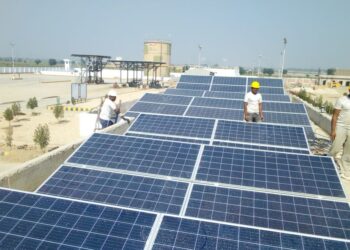
Adani Skills & Education and Kachchh University have launched a Centre of Excellence for Green Energy in Kutch, India, aimed at training over 10,000 students…
According to Career Ahead’s analysis of recent institutional investments, the surge in AI‑augmented creative tools is expanding the pool of marketable skills beyond conventional technique.
The evolving partnership between algorithmic systems and creators signals a reallocation of career capital that will shape the cultural economy for years to come, reinforcing the structural shift outlined in the opening analysis.
Key Structural Insights
[Insight 1]: Open‑source generative AI tools democratize access to high‑capacity models, allowing creators without traditional patronage to generate market‑ready work, thereby expanding the pool of valuable career capital.
[Insight 2]: Material Engagement Theory reframes AI as a co‑material, illustrating that authority in artistic production is jointly constructed and necessitating new evaluation metrics that capture human‑machine provenance.
[Insight 3]: Over the next three to five years, hybrid expertise in prompt engineering and artistic vision will become the primary driver of economic mobility in the cultural sector, outpacing conventional technique alone.
Breaking Creative Barriers: AI-powered tools have democratized access to artistic skills, allowing individuals with varying levels of experience to produce high-quality work, thereby expanding the scope of artistic expression and challenging traditional notions of expertise.
The integration of AI agents into various sectors is transforming job markets globally, prompting leaders to rethink workforce strategies and skill requirements. This shift raises…
Evolving Artistic Partnerships: As AI assumes more creative responsibilities, human artists are shifting their focus towards high-level decision-making, strategic planning, and emotional resonance, ultimately leading to a more symbiotic relationship between humans and machines in the creative process.



Future Skills & Work
Future Skills & Work