No products in the cart.

Airlines Struggle as Oil Prices Soar: Challenges Ahead
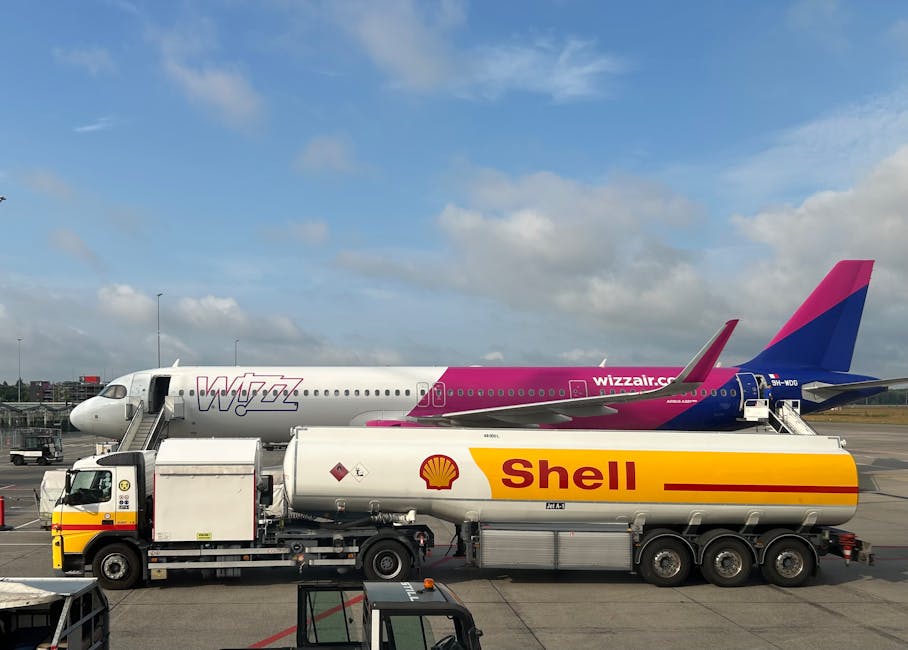
Rising oil prices leave airlines vulnerable, facing high jet fuel costs and limited pricing power. Explore the impact and strategies for survival.


“`html
Jet Fuel Costs: A Major Challenge for Airlines
When crude oil prices rise, airlines feel the impact immediately. Jet fuel, essential for flights, takes up 20% to 30% of an airline’s operating budget, trailing only labor costs. On March 5, jet fuel prices in New York jumped to $4.11 per gallon, compared to $1.92 last May. This increase can cost a mid-sized airline operating 150 aircraft several hundred million dollars, as each plane uses about 5,000 gallons on a typical transcontinental flight.
Unlike shipping companies and freight railways, airlines can’t easily add a fuel surcharge to ticket prices. They sell a limited product—seats on scheduled flights—where demand is sensitive to price changes and competition is intense. A small fare increase could reduce demand, especially as consumers face rising gasoline prices and inflation.
In 2025, U.S. airlines aimed to recover from losses caused by tariffs under President Donald Trump. However, optimism faded quickly as oil prices approached $100 per barrel amid the ongoing U.S.–Israel–Iran conflict. The combination of high fuel costs and limited pricing flexibility leaves airlines with “nowhere to hide,” according to industry analysts. They warn that profit losses may become a regular issue for financially weak carriers.
Geopolitical Tensions Driving Price Increases
The recent rise in oil prices stems from geopolitical unrest. The U.S.–Israel air campaign against Iran has raised concerns about potential disruptions in the Strait of Hormuz, a key route for global oil transport. By March 11, West Texas Intermediate (WTI) futures rose 4.6%, reaching over $87 a barrel, which is $20 higher than before the conflict.
By March 11, West Texas Intermediate (WTI) futures rose 4.6%, reaching over $87 a barrel, which is $20 higher than before the conflict.
You may also like
 Career Development
Can technology-led career platforms replace traditional coaching in India?
As technology reshapes career development, can digital platforms truly replace traditional coaching methods in India?
Read More →To counter the surge, the International Energy Agency (IEA) announced a historic release of 400 million barrels from emergency reserves. This move, double the size of a similar release after Russia’s invasion of Ukraine, highlights the severity of the supply shock. While this release may ease prices for Canadian crude, a shortage of medium-sour barrels from the Persian Gulf remains, keeping the market tense.
This situation creates a cycle: rising tensions push oil prices higher, which leads oil-rich nations to use energy as a strategic tool. For airlines, this means consistently high fuel costs, diminishing the effectiveness of hedging strategies. Even airlines with forward contracts at lower rates now face “basis risk,” where the difference between contract prices and spot market prices widens, affecting cash flow.
Strategies for Airlines in Crisis
With fuel-price volatility and limited pricing power, airlines are working to strengthen their finances. They are renegotiating fuel contracts, seeking volume discounts, and shifting to “pay-as-you-go” models that align purchases with market prices. Some airlines are using algorithmic hedging platforms to adjust their exposure daily, a strategy previously used by only the largest carriers.
Operational efficiency is also crucial. Airlines are adjusting flight schedules to cut low-yield routes, optimizing aircraft rotations, and using more fuel-efficient jets on medium-haul flights. Small improvements, like winglet retrofits and lighter cabin interiors, can significantly reduce fuel consumption.
On the technology front, the industry is speeding up its search for alternative energy sources. Sustainable aviation fuel (SAF), made from waste oils and biomass, costs $1–$2 more per gallon but qualifies for government tax credits that help offset the price. Several U.S. airlines have signed long-term SAF purchase agreements, hoping that increased production will lower prices to match conventional jet fuel.
Airlines are adjusting flight schedules to cut low-yield routes, optimizing aircraft rotations, and using more fuel-efficient jets on medium-haul flights.
You may also like
 Artificial Intelligence
Market Volatility in Asia: Insights on Energy and AI
Explore how recent market fluctuations in Asia reveal the impact of energy costs and AI investments on economic dynamics.
Read More →Airlines are also diversifying revenue. While raising fares could hurt demand, they are increasing ancillary fees—like baggage and seat selection—to generate extra income without changing ticket prices. In-flight sales, such as premium meals and Wi-Fi subscriptions, are being revamped into a digital marketplace, allowing airlines to monetize passenger engagement in real time.
However, consumer sentiment is unpredictable. Higher fuel costs lead to higher ticket prices, and as discretionary travel recovers from the pandemic, airlines must balance short-term cash needs with the risk of losing price-sensitive customers. Recent market research shows that a 5% fare increase could reduce passenger volume by up to 2% on routes served by low-cost carriers, a trade-off many legacy airlines are reluctant to make.
Strategic Perspective
The current oil-price crisis forces airlines to rethink their approach to fuel costs. Resilience now depends on a combination of financial hedging, operational efficiency, and a shift toward sustainable fuels. Airlines that successfully integrate these strategies will maintain margins and market share, while those that do not may be outpaced by more agile competitors or market forces.
Critical Insights
- Fuel cost exposure is structural. Jet fuel can account for up to one-third of operating expenses, making price spikes impactful.
- Geopolitical risk is a pricing factor. Airlines must consider conflict scenarios alongside traditional demand forecasts.
- Innovation is essential. SAF, advanced hedging, and data-driven scheduling are now critical tools.
- Consumer sensitivity limits fare increases. Airlines will increasingly rely on ancillary revenue to offset higher costs.
The Long-Term View
The oil-price surge indicates a shift in the global energy landscape. As nations face supply chain challenges and climate issues, volatility may become the norm. Airlines that prioritize flexibility—through diverse fuel sources, adaptable aircraft designs, and a commitment to continuous efficiency—will be better equipped to succeed in an environment where oil prices can fluctuate dramatically due to geopolitical events.
Its future will depend not just on the altitude of its flights, but also on its strategic foresight.
Ultimately, the aviation industry must adapt to the turbulence below. Its future will depend not just on the altitude of its flights, but also on its strategic foresight.
You may also like
 Business
Ford and GM’s Dilemma in China’s Electric Vehicle Market
As China dominates the EV market, Ford and GM face tough choices: adapt to local competition or risk obsolescence. Explore their strategic crossroads.
Read More →
<img width="867" height="650" src="https://careeraheadonline.com/wp-content/uploads/2026/03/10826404.jpg" class="oaa-inline-image" alt="" style="display:block; margin:20px auto; max-width:100%; height:auto; border-radius:8px;" decoding="async" srcset="https://careeraheadonline.com/wp-content/uploads/2026/03/10826404.jpg 867w, https://careera