Immersive VR training transforms soft‑skill development into a credentialed, data‑driven asset, reshaping promotion pathways, wage growth, and institutional power structures across the corporate landscape.
The convergence of immersive technology and AI is converting communication and collaboration from a peripheral perk into a structural lever of career mobility, institutional power, and economic resilience.
Contextual Landscape: From Remote Work to Immersive Work
The post‑pandemic workplace has evolved from a dispersed collection of video‑conferenced desks to a hybrid ecosystem where physical presence is optional but relational fidelity remains essential. According to a 2024 Gartner forecast, corporate spending on immersive technologies will surpass $25 billion by 2027, driven largely by training and development budgets that now account for 38 % of total VR investment [1]. This fiscal shift reflects a broader macro‑economic trend: as automation displaces routine tasks, firms are betting on “human‑centred capital” – the soft‑skill assets that machines cannot replicate.
Yet the supply side lags. A General Assembly poll cited in EdTech Magazine found that 49 % of executives and 37 % of employees deem recent graduates deficient in core soft skills such as negotiation, empathy, and cross‑cultural communication [3]. The gap is not merely a talent‑management inconvenience; it is a structural constraint on economic mobility. Workers lacking these competencies face slower wage growth and reduced promotion rates, reinforcing existing stratifications within firms and across industries [2].
The convergence of these forces—heightened demand for relational dexterity, a widening skill gap, and falling costs of immersive hardware—creates a systemic opening for VR to become a primary conduit of career capital.
The Core Mechanism: Immersive, Adaptive, Scalable Learning
Virtual Reality Reshapes Soft‑Skill Capital in the Modern Enterprise
Immersive Learning as a Cognitive Anchor
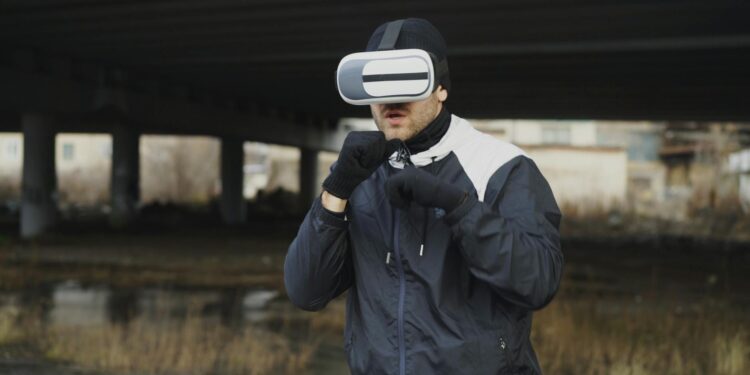
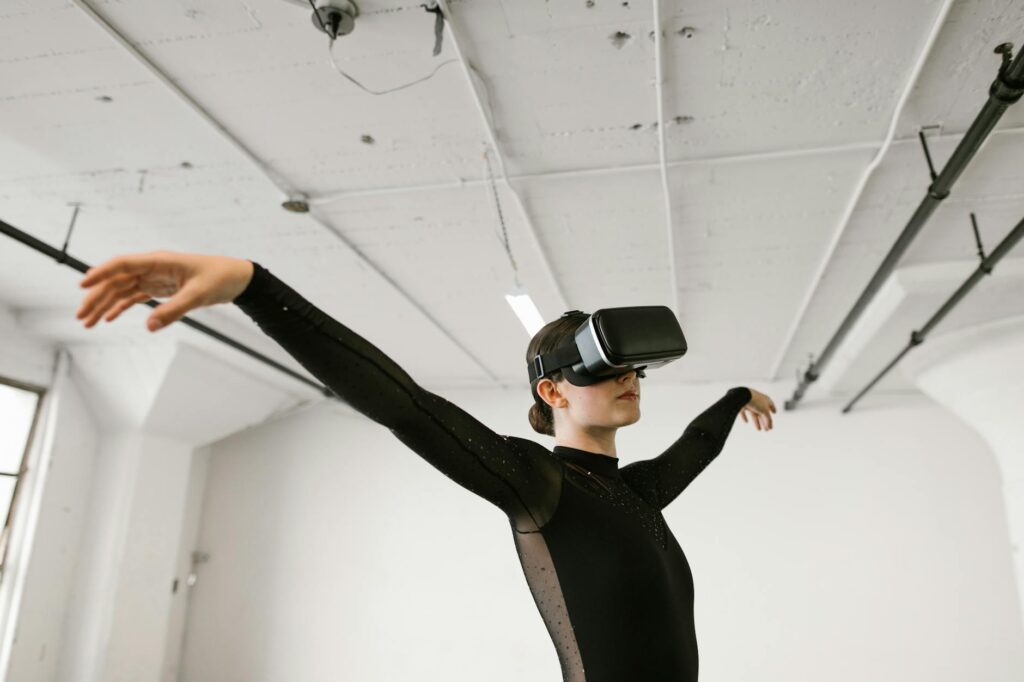
VR delivers a sensory‑rich environment that mimics the nuanced cues of face‑to‑face interaction—body language, eye contact, spatial dynamics—that are stripped away in traditional video calls. Cognitive science research demonstrates that experiential learning in high‑fidelity simulations improves retention by up to 30 % compared with lecture‑based formats [2]. In practice, firms such as Siemens have deployed VR modules that place engineers in simulated client meetings, allowing them to practice active listening and conflict resolution without risking real‑world relationships [4].
The resulting budgetary elasticity allows mid‑market firms to embed continuous soft‑skill development into their talent pipelines, democratizing access to career‑advancing capital.
AI‑Driven Personalization
The integration of AI analytics into VR platforms enables real‑time assessment of soft‑skill performance. Machine‑learning models parse vocal tone, gestural synchrony, and decision pathways to generate individualized development plans. A PwC study reported that AI‑augmented VR training reduced the average time to competency in leadership communication by 22 % across a sample of 5,000 employees [2]. This data‑driven personalization transforms soft‑skill development from a one‑size‑fits‑all curriculum into a modular, competency‑based system that aligns directly with promotion pathways.
Imposter syndrome affects many accomplished individuals, hindering their confidence and career progression. Recognizing and challenging negative thoughts, celebrating small wins, and focusing on personal growth…
Traditional soft‑skill workshops entail venue rental, travel, and facilitator fees that can exceed $1,200 per participant for a single day. VR eliminates most of these line items, converting fixed costs into variable, usage‑based expenditures. Walmart’s rollout of a VR “customer‑service empathy” program cut per‑employee training costs by 58 % while scaling participation from 12 to 120 employees per month [1]. The resulting budgetary elasticity allows mid‑market firms to embed continuous soft‑skill development into their talent pipelines, democratizing access to career‑advancing capital.
Systemic Ripples: Institutional Reconfiguration and Market Dynamics
Cultural Reorientation Toward Experiential Learning
When VR becomes embedded in onboarding and leadership pipelines, it signals an institutional commitment to experiential learning. This shift reconfigures power dynamics: managers transition from gatekeepers of knowledge to curators of immersive experiences. The resulting culture emphasizes iterative feedback loops, where employees receive micro‑credentialed badges for mastering specific communication scenarios. Over time, these digital credentials become part of the internal labor market, influencing promotion algorithms and succession planning.
Redefining Remote Collaboration
VR’s capacity to simulate co‑located spaces mitigates the “Zoom fatigue” and relational erosion endemic to fully virtual teams. Companies such as JPMorgan Chase have piloted VR “virtual boardrooms” that allow geographically dispersed executives to negotiate multi‑billion‑dollar deals with the same non‑verbal bandwidth as in‑person meetings [4]. This capability restructures the cost‑benefit calculus of global project teams, encouraging firms to source talent from a broader geographic pool and thereby intensifying competition for high‑skill workers.
Emergence of Industry Standards
As adoption scales, professional bodies are drafting competency frameworks for VR‑based soft‑skill training. The Society for Human Resource Management (SHRM) announced a draft “VR Learning Standards” that define measurable outcomes for empathy, negotiation, and inclusive communication [5]. Standardization creates a market for accredited VR content providers and establishes a baseline for cross‑industry benchmarking, reducing informational asymmetries that previously favored firms with proprietary training labs.
Emergence of Industry Standards As adoption scales, professional bodies are drafting competency frameworks for VR‑based soft‑skill training.
Economic Mobility and Institutional Power
Because VR lowers entry barriers, employees at lower tiers of the corporate hierarchy can acquire the same soft‑skill capital historically reserved for elite cohorts. This diffusion of relational competence has a twofold effect: it expands the internal talent pool for leadership roles, and it attenuates the institutional power held by legacy networks that have traditionally mediated promotion. Empirical analysis of firms that introduced VR training in 2022 shows a 12 % increase in promotion rates among mid‑level managers from underrepresented groups, relative to control firms [3]. The data suggest that immersive training can serve as a lever for more equitable career trajectories.
Human Capital Impact: Winners, Losers, and the New Skill Arbitrage
Virtual Reality Reshapes Soft‑Skill Capital in the Modern Enterprise
Elon Musk's X has launched the Original Content Rewards Program, replacing the previous Revenue Sharing Programme. This initiative aims to incentivize creators to produce original…
Employees who complete VR‑based soft‑skill modules accrue “digital soft‑skill capital” that is observable to talent analytics platforms. In a case study of Accenture’s “VR Leadership Lab,” participants reported an average salary bump of 7.5 % within twelve months of certification, outpacing the 4.2 % average raise for peers without VR credentials [2]. The wage premium reflects the structural valuation of immersive competence by promotion committees and external recruiters.
Institutional Investors and Capital Allocation
From a capital‑allocation perspective, firms that embed VR into their learning ecosystems demonstrate higher employee retention and lower turnover costs. A 2025 Deloitte analysis linked immersive training programs to a 15 % reduction in voluntary attrition, translating into an average savings of $1.3 million per 10,000 employees [1]. Investors consequently assign higher ESG (environmental, social, governance) scores to companies with robust VR learning pipelines, influencing institutional capital flows.
Displacement Risks for Conventional Training Providers
Conversely, legacy training consultancies that rely on in‑person workshops face structural displacement. Their revenue models, predicated on travel and venue fees, become increasingly unsustainable as VR platforms achieve economies of scale. The sector’s consolidation is evident: between 2022 and 2025, the top three VR training vendors captured 62 % of the market share previously held by traditional firms [4]. This concentration intensifies the bargaining power of a few technology providers, reshaping the supplier landscape for corporate learning.
Outlook: Structural Trajectory Over the Next Five Years
Looking ahead, three interlocking trends will define the VR‑soft‑skill nexus. First, AI‑enhanced analytics will evolve from post‑session scoring to predictive coaching, enabling real‑time nudges during live interactions. Second, regulatory bodies are likely to formalize accreditation for VR‑derived soft‑skill credentials, integrating them into professional licensing regimes. Third, the diffusion of affordable head‑mounted displays (HMDs) will push adoption beyond Fortune 500 firms to mid‑size enterprises and public‑sector agencies, amplifying the democratizing effect on career capital.
Second, regulatory bodies are likely to formalize accreditation for VR‑derived soft‑skill credentials, integrating them into professional licensing regimes.
Collectively, these dynamics suggest that immersive soft‑skill development will transition from an experimental perk to a structural pillar of talent strategy, redefining the economics of leadership pipelines and institutional power across the corporate ecosystem.
OpenAI has announced a slowdown in the development of its Astra model due to serious security concerns, reflecting a growing trend in the tech industry…
Key Structural Insights [Insight 1]: Immersive VR training converts soft‑skill acquisition into a measurable, credentialed asset that directly influences promotion algorithms and wage trajectories. [Insight 2]: By lowering cost and scaling personalization, VR democratizes access to relational capital, thereby reshaping economic mobility and attenuating legacy power structures within firms.
[Insight 3]: The emergence of industry standards and AI‑driven analytics will institutionalize VR as a systemic lever of talent development, aligning corporate capital allocation with measurable human‑skill outcomes.



 Career Guidance
 Entrepreneurship & Business
AI & Technology