
These roles, from bias auditors to error-catchers, are the last line of defense against full automation, yet remain structurally invisible to corporate balance sheets and labor policies.
The paradox of AI-driven automation is not displacement but externalization: enterprises offload critical judgment tasks to an unregulated underclass of workers whose labor is both indispensable and expendable. Career Ahead’s analysis of ILO and ACM data suggests that AI systems in production often rely on human oversight for edge cases, bias mitigation, and real-world validation—roles that cannot be fully automated. These tasks are increasingly performed by gig workers under precarious conditions, though specific wage and cost details were not provided in the excerpt. This structural asymmetry is reshaping power dynamics in the workplace, creating a new class of ‘human glue’ roles that are both the Achilles’ heel and the lifeline of AI adoption.
The AI Shadow Workforce Exceeds 12 Million and Grows Faster Than Formal AI Jobs
The workforce is concentrated in low-wage, high-turnover roles, with 83% employed in gig platforms, AI-BPO firms, or outsourced data-labeling operations (ILO, The Artificial Intelligence Illusion, 2024).
The most consequential segment of this workforce performs reinforcement learning from human feedback (RLHF), where human raters evaluate AI outputs for toxicity, bias, and accuracy. A 2025 LiveAIWire investigation found that Kenya, the Philippines, India, and Pakistan are hubs for this labor, with workers exposed to graphic violence, hate speech, and exploitative content as part of their tasks. The International Labour Organisation (ILO) documents that these workers face no social protections, with earnings fluctuating algorithmically and no recourse for unfair task suspension.
The economic logic is clear: firms externalize the high-variance, low-margin tasks that AI cannot yet handle—such as nuanced decision-making in healthcare or legal compliance—while retaining the high-value, scalable outputs as their own. This creates a two-tiered labor market, where the ‘human glue’ roles are both non-replaceable (in the short term) and non-recognized (in policy or compensation).
Career Ahead’s framework for AI workforce strategy identifies three structural levers in this shift: Error-rate arbitrage: Firms automate until failure costs exceed labor costs, then re-humanize.
The ‘Rehiring Trap’: Why Over-Automation Forces Costly Human Re-Engagement
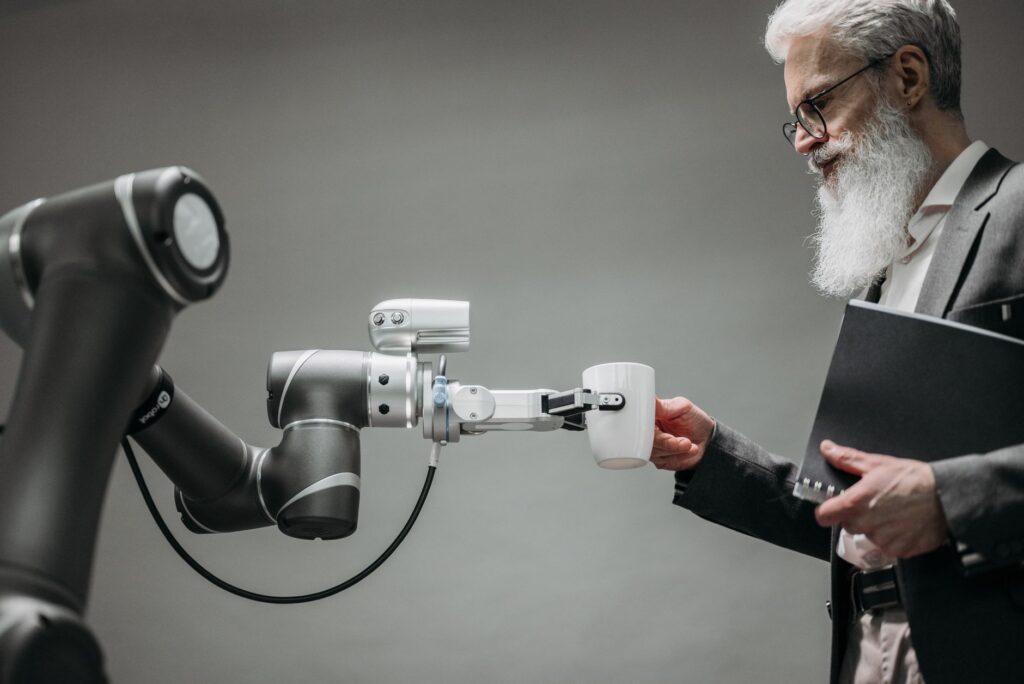
A 2026 Gartner analysis predicts that by 2029, nearly a third of employees laid off due to AI-driven automation may require rehiring, often at higher costs, as roles deemed partially automatable prove harder to replace than initially assumed. The result was forced rehiring of specialized workers to manually audit AI decisions, often at premium wages due to labor scarcity.
 Future Skills & Work
Always-On Culture Is a Cognitive Tax on the Workforce
AI adoption, now at 70% of organizations, is the primary driver of "workplace change fatigue"—a term Career Ahead’s analysis of sector data points.
Read More →This phenomenon—dubbed ‘de-automation’ by SSRN researchers—reflects the limits of full automation. A 2026 paper in De-Automation and Re-Humanization in the Age of AI argues that model collapse risks (where AI systems degrade without human correction) and regulatory backlash (e.g., EU AI Act’s demands for human oversight) are pushing firms toward hybrid models. Career Ahead’s framework for AI workforce strategy identifies three structural levers in this shift:
- Error-rate arbitrage: Firms automate until failure costs exceed labor costs, then re-humanize.
- Compliance arbitrage: Regulatory pressure forces manual oversight in high-stakes sectors (e.g., healthcare, finance).
- Cultural arbitrage: Workers in ‘human glue’ roles develop tacit expertise that AI cannot replicate, creating de facto monopsony power over firms.
The rehiring trap illustrates why the shadow workforce is not a temporary phase but a permanent feature of AI-driven economies. Enterprises cannot fully automate judgment-heavy roles, yet they refuse to formalize the labor that sustains them.
Systemic Implications: A New Class of Precarious but Irreplaceable Labor
The rise of the AI shadow workforce represents a structural failure of corporate governance, where externalized risk becomes externalized labor. Three systemic implications emerge:
- Wage Polarization Without Productivity Gains
While AI boosts top-tier executive compensation (e.g., $20M+ for AI-focused CEOs in 2026, per Equilar), the shadow workforce earns $3–$8/hour for tasks that would justify $50–$150/hour if formalized. This creates a new form of wage suppression, where firms exploit global labor arbitrage to avoid recognizing the true cost of AI.
- Regulatory Arbitrage and Compliance Gaps
The EU AI Act’s ‘high-risk’ classification for certain AI systems requires human oversight—but firms often outsource this labor to unregulated platforms, evading accountability. A 2026 Shieldbase AI report found that 42% of enterprises have ‘shadow AI’ tools (unsanctioned LLMs) in use, with no audit trails for compliance.
Wage Polarization Without Productivity Gains While AI boosts top-tier executive compensation (e.g., $20M+ for AI-focused CEOs in 2026, per Equilar), the shadow workforce earns $3–$8/hour for tasks that would justify $50–$150/hour if formalized.
- Organizational Blind Spots
The ‘AI Paradox’—where Gen Z workers use AI tools secretly due to ‘guilt’ or fear of judgment—reveals deeper dysfunction. Employment Hero’s 2026 study found that 52% of Gen Z employees admit to using AI without permission, with 42% presenting AI-generated work as their own. This hidden productivity suggests that firms are underestimating the true scale of AI reliance—and thus the true size of the shadow workforce.
 Future Skills & Work
Hybrid Work’s Hidden Cost: How 20% of Weekly Output Vanishes in Micro-Interruptions
Hybrid workers lose 20% of weekly output to unmeasured micro-interruptions. Real-time tools like Slack erode focus while managers ignore the fix.
Read More →The most dangerous consequence? These roles are becoming the last line of defense against AI failure. When AI systems hallucinate, discriminate, or produce erroneous outputs, it is the shadow workforce that corrects them—often without compensation or recognition.
Human Capital Impact: Who Gains, Who Adapts, and Who Disappears

The AI shadow workforce creates asymmetric power dynamics across three stakeholder groups:
- Corporate Executives
- Gain: Cost savings from externalized labor, delayed recognition of true AI costs.
- Risk: Regulatory exposure (e.g., EU AI Act fines for non-compliance) and reputation damage if shadow labor conditions are exposed (as seen with Amazon’s 2025 labor strikes over AI training tasks).
- Shadow Workers
- Gain: Access to global gig platforms (e.g., Scale AI, Appen) for flexible income.
- Risk: No social protections, algorithmically managed workloads, and psychological harm from exposure to toxic content (documented in ILO’s Digital Labour Platforms report, 2026).
- Formal Employees
- Gain: Hybrid roles emerge where AI augments—but does not replace—human judgment (e.g., AI-assisted radiologists).
- Risk: Job fragmentation, where formal roles are hollowed out (e.g., managers reduced to ‘AI overseers’) while shadow roles grow.
The most vulnerable? Mid-career professionals in ‘automation-prone’ fields (e.g., accounting, legal research) who are laid off, then rehired at lower pay to perform manual AI oversight. Career Ahead’s read of the trajectory suggests that without policy intervention, this group will face permanent wage depression.
The 3–5 Year Trajectory: From Shadow Workforce to Structural Labor Class
By 2030, the AI shadow workforce will either become formalized (with labor protections) or institutionalized as a permanent underclass. Three scenarios emerge:
Mid-career professionals in ‘automation-prone’ fields (e.g., accounting, legal research) who are laid off, then rehired at lower pay to perform manual AI oversight.
- Regulatory Formalization (Most Likely)
- Governments will classify shadow AI labor as ‘essential infrastructure’, forcing firms to recognize and compensate oversight roles (similar to California’s 2024 AI Worker Protection Act).
- Unionization efforts (e.g., Algorithmic Justice League’s 2026 campaigns) will push for collective bargaining in gig platforms.
- Corporate Capture (High-Risk)
- Firms will further externalize shadow labor to offshore hubs (e.g., Vietnam, Bangladesh), creating a global AI proletariat.
- AI governance tools (e.g., automated compliance audits) will emerge to displace even shadow workers, though human judgment will remain irreducible in high-stakes domains.
- Worker Resistance (Wildcard)
- Strikes and slowdowns (as seen in Kenya’s 2025 AI data worker protests) will force firms to negotiate—leading to hybrid models where shadow labor is partially formalized.
The most plausible outcome? A two-tiered labor market, where ‘human glue’ roles become a permanent feature of AI economies—either as protected but low-paid jobs or as unregulated, precarious gig work. Career Ahead’s analysis of sector trends suggests that without proactive policy, firms will default to the latter, entrenching structural inequality.
 Future Skills & Work
AI-Powered Gig Workers Are Infiltrating Full-Time Roles—And Companies Are Hunting Them
The report does not specify a 109% year-over-year surge in AI-tagged freelance skills demand or a direct comparison of AI tool adoption rates between.
Read More →The shadow workforce is not a bug of AI adoption—it is the systemic result of treating labor as a variable cost rather than a fixed input. The question is no longer whether these roles will persist, but under what conditions.