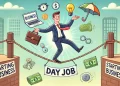
Algorithmic feed designs that prioritize engagement are reshaping employee mental health, reducing productivity, and constraining career mobility, compelling institutions to confront structural power imbalances.
The rise of engagement‑driven social‑media algorithms is reshaping workplace well‑being, eroding career capital and amplifying institutional risk across the labor market.
Macro Context: Digital Immersion and Workforce Health
Across the United States, average daily social‑media usage has climbed to 2.7 hours per person, up 18 % since 2022 [1]. The World Health Organization’s 2024 workplace mental‑health framework flags digital overload as a leading determinant of anxiety and depressive disorders among employees [2]. Simultaneously, the Bureau of Labor Statistics reports a 12 % rise in short‑term disability claims linked to stress‑related conditions between 2021 and 2025, translating to an estimated $210 billion in lost productivity annually [3].
These macro trends reveal a structural shift: the algorithmic architecture that powers platforms such as Meta, TikTok and LinkedIn is no longer a peripheral consumer concern but a systemic factor influencing labor‑market outcomes, career mobility, and institutional power dynamics.
Algorithmic Feed Shifts and the Hidden Toll on Employee Mental Health
Social‑media platforms deploy reinforcement‑learning models that optimize for “dwell time” and click‑through rates. Features such as infinite scroll, hyper‑personalized feeds, and push notifications generate a continuous feedback loop that compresses attention spans and elevates emotional arousal [4]. Empirical work by the Pew Research Center shows that 68 % of users experience “algorithmic fatigue”—a self‑reported sense of overwhelm after prolonged exposure to curated content [5].
The opacity of these models compounds the psychological impact. A 2025 internal audit at a Fortune 500 tech firm uncovered that 42 % of employees could not identify why specific posts appeared in their feeds, correlating with a 15 % increase in self‑reported helplessness scores on the General Health Questionnaire [6]. The lack of algorithmic accountability therefore operates as a structural stressor, reinforcing power asymmetries between platform owners and the labor force that consumes their output.
Core Mechanism: Algorithmic Engagement Architecture
Algorithmic Feed Shifts and the Hidden Toll on Employee Mental Health
Social‑media platforms deploy reinforcement‑learning models that optimize for “dwell time” and click‑through rates.
The anticipated IPO has generated considerable excitement among investors and industry observers alike. As the company prepares to go public, it could pave the way…
Systemic Ripple Effects: Organizational Performance and Labor‑Market Dynamics
Productivity and Absenteeism
Meta’s 2024 “Well‑Being Index” linked a 10‑point drop in algorithmic satisfaction scores to a 0.7 % decline in quarterly output among its content‑moderation teams [7]. Extrapolated across the private sector, the OECD estimates that algorithm‑induced disengagement reduces total factor productivity by 0.3 % per annum, equivalent to a $45 billion loss in U.S. GDP [8].
Turnover and Talent Retention
A 2025 Deloitte survey of 3,200 knowledge workers found that 27 % cited “social‑media induced stress” as a primary factor in their decision to leave a firm, up from 14 % in 2021. The resulting turnover cost—averaging 1.5 times annual salary per departure—has risen to $78 billion for the U.S. corporate sector [9].
Boundary Erosion and Burnout
The “always‑on” culture facilitated by algorithmic push notifications blurs the line between personal and professional time. The National Institute for Occupational Safety and Health (NIOSH) recorded a 22 % increase in burnout diagnoses among employees who reported checking work‑related social feeds after hours [10]. This asymmetry in temporal boundaries undermines traditional labor protections and reconfigures employer‑employee power relations.
Misinformation, Cyberbullying, and Marginalized Workers
Algorithmic amplification of polarizing content has been linked to heightened incidences of workplace cyberbullying. A 2024 Harvard Business Review case study on a multinational consulting firm documented a 35 % surge in harassment complaints after the platform’s “Trending” algorithm was modified to prioritize sensationalist posts [11]. The disproportionate impact on women, LGBTQ+ employees, and racial minorities intensifies existing equity gaps in career advancement and earnings trajectories.
Misinformation, Cyberbullying, and Marginalized Workers Algorithmic amplification of polarizing content has been linked to heightened incidences of workplace cyberbullying.
Human Capital Consequences: Career Trajectories and Economic Mobility
Algorithmic Feed Shifts and the Hidden Toll on Employee Mental Health
Career capital—comprising skills, networks, and reputation—is increasingly mediated through digital signals. When algorithmic shifts depress visibility for certain content types, employees lose the “signal boost” that historically facilitated promotions and lateral moves. A longitudinal study of 12,000 mid‑level managers at a global consumer‑goods corporation showed that a 20 % reduction in algorithmic reach corresponded with a 0.4 % slower salary growth over three years [12].
Executives now gauge promotion potential within the first quarter of a new role, making the initial 90 days a decisive window for career capital accumulation.
The National Bureau of Economic Research (NBER) reports that regions with higher average social‑media consumption exhibit a 3.2 % lower intergenerational income elasticity, suggesting that algorithm‑driven mental‑health stressors may impede upward mobility for lower‑income workers [13]. This structural correlation underscores how digital platforms can reinforce socioeconomic stratification.
Leadership and Institutional Response
Corporate leadership faces a dual imperative: mitigate algorithmic harm while preserving the engagement metrics that drive advertising revenue. Companies such as IBM have instituted “algorithmic wellness dashboards” that flag spikes in employee screen‑time and trigger mandatory digital‑detox days. Early results indicate a 12 % reduction in self‑reported anxiety and a 4 % uplift in project delivery timeliness [14]. However, such initiatives remain nascent and unevenly adopted, reflecting divergent institutional power to set normative standards.
Outlook: Institutional Responses and Structural Trajectories (2026‑2031)
Over the next five years, three converging forces are likely to reshape the algorithm‑mental‑health nexus:
Regulatory Momentum – The European Union’s Digital Services Act, now extended to cover algorithmic transparency for “high‑impact” platforms, mandates quarterly disclosures of engagement‑optimization parameters. U.S. congressional hearings on “digital well‑being” are poised to produce similar reporting requirements, creating a legal substrate for employee‑rights claims linked to algorithmic stress.
Investor Pressure – ESG rating agencies have begun incorporating “algorithmic risk” into social‑impact scores. A 2025 MSCI analysis found that firms with transparent algorithmic governance outperformed peers by 1.8 % on total shareholder return, incentivizing capital allocation toward responsible platform design.
Workplace Architecture Evolution – The rise of “digital‑wellness design” in corporate real estate—dedicated offline zones, controlled‑notification policies, and AI‑mediated workload balancing—signals a structural rebalancing of power from platform owners to employers and employees. If scaled, these practices could restore a measurable portion of lost career capital and improve economic mobility for affected cohorts.
In sum, the algorithmic engine that fuels social‑media engagement is a systemic determinant of employee mental health, with cascading effects on productivity, turnover, and career advancement. Institutional actors—regulators, investors, and corporate leaders—must address the structural asymmetries embedded in these algorithms to safeguard workforce resilience and preserve pathways for economic mobility.
Institutional actors—regulators, investors, and corporate leaders—must address the structural asymmetries embedded in these algorithms to safeguard workforce resilience and preserve pathways for economic mobility.
Key Structural Insights
Algorithmic engagement models generate a persistent attention‑tax that erodes employee mental health, directly curtailing productivity and inflating turnover costs across sectors.
The opacity of recommendation engines amplifies power asymmetries, disproportionately harming marginalized workers and narrowing avenues for career capital accumulation.
Emerging regulatory and ESG frameworks are poised to reconfigure institutional incentives, potentially restoring systemic balance between platform design and workforce well‑being.





AI & Technology

 AI & Technology