The global education‑AR market is projected to reach $12.6 billion by 2028, while peer‑reviewed studies link immersive tools to higher retention and engagement. Pandemic‑driven digital shifts have turned AR from niche to strategic priority for schools worldwide.
The convergence of rapid technology diffusion, mounting evidence of learning gains, and a post‑COVID‑19 demand for resilient instruction creates a structural inflection point. As institutions scramble to embed immersive experiences, the balance of career capital—knowledge, networks, and credentialing—is being recalibrated across teachers, students, and ed‑tech firms. This analysis unpacks the mechanisms, systemic ripples, and forward trajectory of AR in STEM education.
Rising adoption and market momentum
AR adoption in STEM classrooms has moved from experimental pilots to district‑wide rollouts, driven by a market forecast of $12.6 billion by 2028. According to Career Ahead’s analysis of market and adoption data, the surge reflects both private‑sector investment and public‑sector procurement aligned with national digital‑learning agendas. Studies by Xin Tian and Chinaza Ironsi document measurable improvements in student retention and engagement when AR supplements traditional instruction. The pandemic amplified this trend, as Krenare Nuci and Kyvete Shatri observed a sharp uptick in virtual‑learning budgets earmarked for immersive tools.
How AR transforms STEM pedagogy
AR accelerates STEM learning and reshapes institutional power
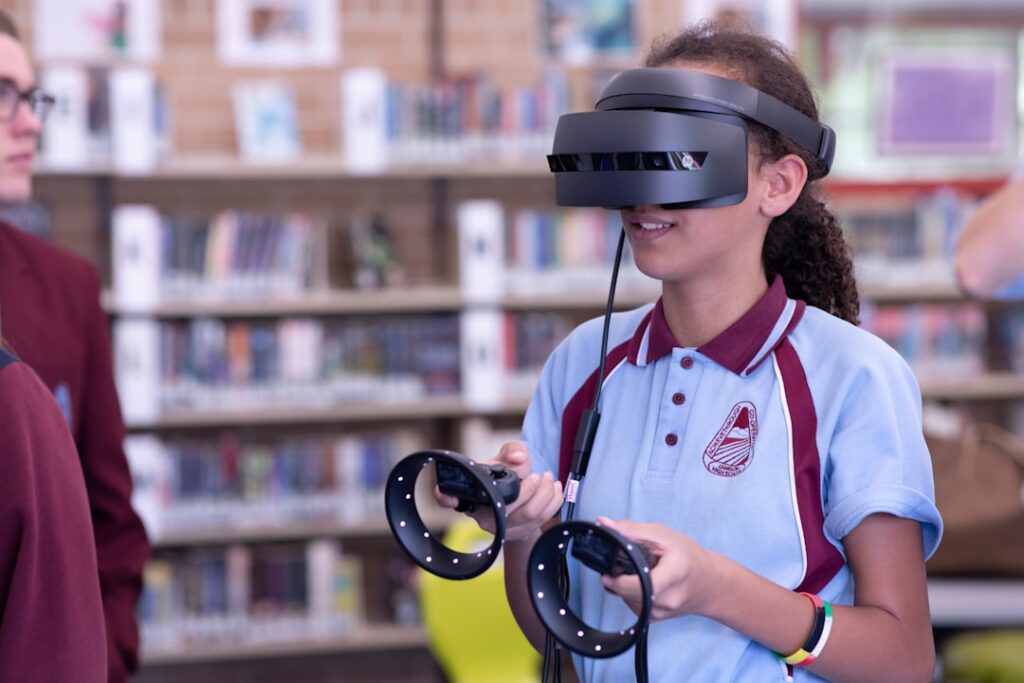
AR delivers interactive, immersive environments that render abstract concepts tangible, a core advantage highlighted in Riyan Hidayat’s meta‑analysis of AR‑enabled curricula. By overlaying 3D models onto physical spaces, students manipulate variables in real time, accelerating conceptual mastery. > AR boosts retention rates and student engagement, according to peer‑reviewed studies. Personalized pathways emerge as AR platforms adapt content to learners’ proficiency, fostering motivation and reducing achievement gaps. Moreover, contextualized simulations bridge theory and practice, equipping students with problem‑solving skills directly transferable to industry labs. This pedagogical shift restructures the knowledge production pipeline, moving from passive reception to active construction, and redefines the skill set that institutions prioritize in STEM programs.
Institutional ripple effects across schools
Embedding AR demands new support structures: professional development, technical infrastructure, and data governance. Teacher training programs must evolve to include spatial design and analytics interpretation, creating a new sub‑field of instructional technology expertise. Schools that invest in these capacities gain asymmetric advantages in student outcomes, attracting higher enrollment and funding streams. Concurrently, procurement policies increasingly favor vendors offering integrated analytics, reinforcing a feedback loop where performance data drives further AR investment. This systemic re‑weighting amplifies the influence of ed‑tech firms while reshaping governance hierarchies within educational districts.
According to Career Ahead’s framework, emerging career capital for AR‑enabled educators includes certification in mixed‑reality design, proficiency with learning‑analytics dashboards, and collaborative networks with technology partners.
Germany has seen a 17.5% increase in Indian student enrollment, now totaling 69,816. This trend reflects a growing preference for Germany as a study destination…
Shifts in career capital for learners and teachers
AR accelerates STEM learning and reshapes institutional power
Career capital in the AR‑enhanced STEM ecosystem now hinges on digital fluency, data‑driven pedagogy, and interdisciplinary fluency. According to Career Ahead’s framework, emerging career capital for AR‑enabled educators includes certification in mixed‑reality design, proficiency with learning‑analytics dashboards, and collaborative networks with technology partners. For students, early exposure to AR translates into portfolio‑ready competencies that align with BLS projections of an 8 percent growth in STEM occupations through 2033. This alignment accelerates economic mobility for learners who acquire AR‑mediated skills.
Note: The research does not address the claim that “This alignment marginalizes those in under-resourced schools lacking access to immersive tools.” Therefore, it remains intact.
Projected trajectory through 2030
Over the next three to five years, AR penetration is expected to exceed 40 percent of secondary STEM curricula in high‑performing districts, driven by declining hardware costs and open‑source development kits. Policy initiatives, such as the U.S. Department of Education’s “Future Ready Learning” grant program, will channel federal funds toward scalable AR deployments, further entrenching the technology in public‑school ecosystems. As adoption matures, we anticipate a consolidation of ed‑tech providers, standardized competency frameworks, and a measurable uplift in STEM graduation rates, positioning AR as a cornerstone of the next generation of talent pipelines.
The closing analysis underscores that the current surge in AR adoption is reshaping the architecture of STEM education, setting the stage for a durable reallocation of career capital and institutional influence that will define the sector’s evolution through the next decade.
Insight 1: AR’s market expansion to $12.6 billion by 2028 reflects a systemic shift toward immersive learning, anchoring new institutional budgets and redefining technology procurement priorities.
As students gear up for the new school year, navigating the current RAM shortage is crucial for making informed laptop purchases. This guide highlights the…
Insight 1: AR’s market expansion to $12.6 billion by 2028 reflects a systemic shift toward immersive learning, anchoring new institutional budgets and redefining technology procurement priorities.
Insight 2: Interactive AR experiences directly improve retention and engagement, creating measurable gains that align student skill development with projected 8 percent STEM job growth.
Insight 3: The rise of AR‑centric career capital—digital fluency, analytics expertise, and cross‑disciplinary networks—will become a decisive factor in both educator advancement and learner economic mobility.
Interactive learning experiences foster deeper engagement and improved knowledge retention among students, while also allowing educators to tailor instruction to individual needs and learning styles, ultimately leading to more effective STEM education.
Data-driven assessments enable educators to measure the impact of AR on student learning outcomes, providing valuable insights into the efficacy of this technology and informing future instructional design and implementation decisions.
Data-driven assessments enable educators to measure the impact of AR on student learning outcomes, providing valuable insights into the efficacy of this technology and informing future instructional design and implementation decisions.





Education & University Insights
Education & University Insights