China's Baidu launched Apollo World on Tuesday, an AI system designed to simulate real-world environments for training robotaxis.
Apollo World Generates Simulated Driving Data
China's Baidu launched Apollo World on Tuesday, an AI system designed to simulate real-world environments for training robotaxis. The system is built around simulated driving rather than only real-world road tests. Its stated purpose is specific: create environments in which robotaxis can be trained. Baidu’s launch puts that simulation system at the centre of its robotaxi training work.¹
Apollo World can generate up to 100,000 km of simulated driving daily. That amount is equivalent to about three years of real-world testing by a safety-driver-equipped autonomous vehicle. The comparison describes the scale of the system’s daily output in terms of time on the road: simulated driving produced in a day matches roughly three years of testing by a vehicle with a safety driver.¹
The system produces real-time multimodal data streams, including camera and lidar observations. Multimodal means that the output includes more than one type of input or observation; here, the examples are camera and lidar. These streams are part of the simulated environment Apollo World supplies for training. The system therefore generates both driving scenarios and the kinds of observations specified in its description.¹
The stated use connects the simulation system to an existing fleet: Apollo World is not described only as a tool under development, but as a system already being used for Apollo Go training.¹
Apollo Go Is Already Using the Training System
 AI & Technology
Hyundai Launches Bayon, Targets 250,000 Mid-Size SUV Sales
Hyundai plans seven new nameplates in India by 2030 and intends the Bayon for more than 50 global markets.
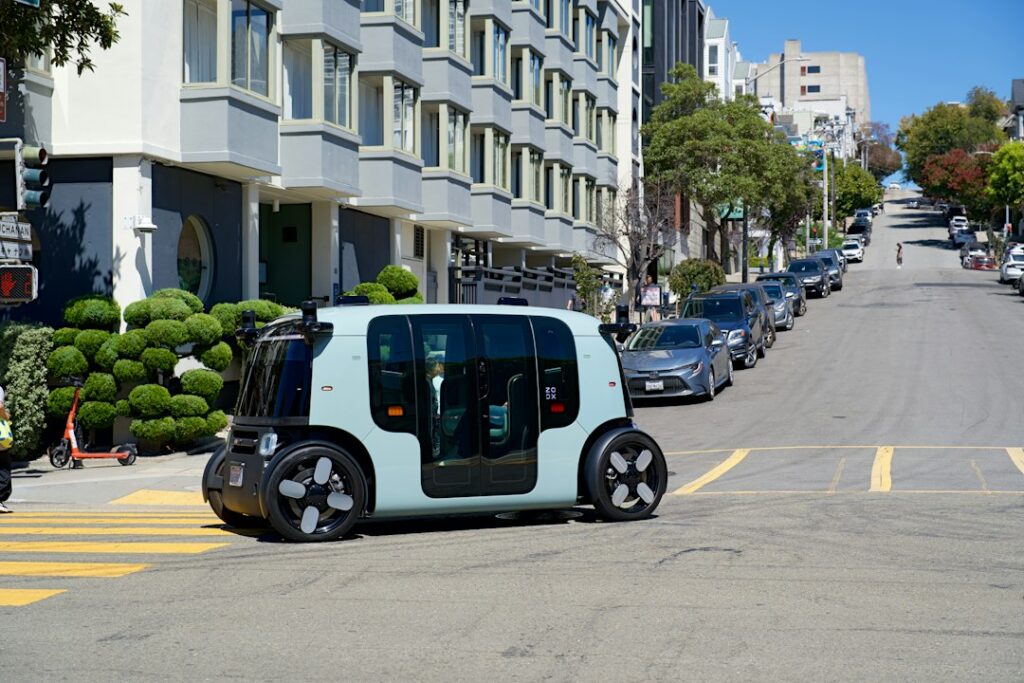
Read More →Baidu said Apollo World is already being used to train Apollo Go’s robotaxi fleet, which is to be operated globally. Apollo Go is owned by Baidu and is China’s largest robotaxi service operator. The stated use connects the simulation system to an existing fleet: Apollo World is not described only as a tool under development, but as a system already being used for Apollo Go training.¹
Apollo Go competes with WeRide, Pony.ai and Momenta Global. Volkswagen’s Chinese partner XPeng also plans to launch robotaxi operations in 2027. These names place Baidu’s service alongside other companies in the robotaxi field, including one partner whose operations are planned for a stated year. The information identifies competitors and XPeng’s plan without giving further details about their fleets or technology.¹
Morgan Stanley has estimated that China’s robotaxi fleet could grow to 1 million vehicles by 2035. The estimate gives a potential fleet size and a date for the projection. It is an estimate about China’s robotaxi fleet as a whole, rather than a figure for Apollo Go alone. The estimate does not specify how many vehicles each operator would have or how the fleet would be distributed.¹
Training Costs and Technology Shape the Discussion
Frank McCleary, an expert in autonomous mobility and urban transportation at Arthur D. Little, said companies still face the capital expenditure of training models and vehicles. “They still have the capex of training models… and vehicles, a challenge that every autonomous vehicle company is going to face,” he said. His comment identifies model training and vehicles as areas where autonomous vehicle companies face capital costs.¹
McCleary also said launch speed depends on a technology’s capacity to learn an environment. “The speed at which you can launch comes down to your technology's ability to adapt and understand and learn that environment,” he said. The comment points to adaptation, understanding and learning as the abilities he associates with launch speed. It does not set out a launch timetable for Apollo World or any of the named robotaxi operators.¹
 AI & Technology
IIT Madras Launches UDYOG Biotech Finishing School
The training pathway includes online courses, laboratory training, pilot-scale exposure and opportunities for industry internships.
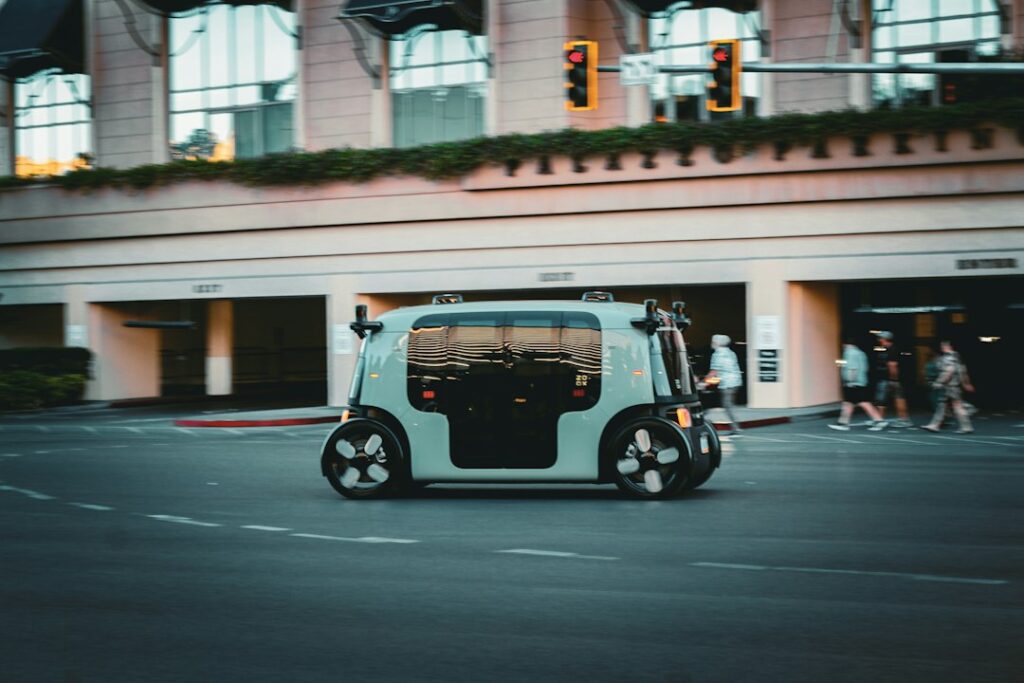
Read More →Tesla is seeking to expand its Cybercab robotaxi fleet. The company uses an end-to-end neural network trained on video of human driving to develop its self-driving technology. This is the training approach specified for Tesla: video of human driving is used to train the neural network. The available details describe Tesla’s method and its effort to expand the Cybercab fleet, without setting out a direct comparison with Apollo World.¹
The comment points to adaptation, understanding and learning as the abilities he associates with launch speed.
Simulation skills now matter for autonomy careers
If you are evaluating roles in autonomous vehicles, the shift toward simulation changes what employers value. Apollo World generates 100,000 km of simulated driving daily, equal to about three years of real-world testing by a safety-driver-equipped vehicle. That means engineers who can build or operate simulation environments, especially those handling multimodal camera and lidar data, become more central to training pipelines. When negotiating a role, ask whether the company invests in simulation infrastructure, since Frank McCleary notes that training models and vehicles remain a major capital expense for every autonomous vehicle company.¹
For those choosing between robotaxi employers, compare training approaches directly. Apollo Go, China's largest robotaxi operator, already uses Apollo World for global fleet training, while Tesla relies on an end-to-end neural network trained on video of human driving. This difference suggests that skills in simulation-based training versus video-based learning may lead to different career paths. Also, with XPeng planning robotaxi operations in 2027 and Morgan Stanley estimating China's fleet could reach 1 million vehicles by 2035, demand for engineers who can accelerate learning in new environments is likely to grow. Plan for roles that emphasize adaptability and environment understanding, as launch speed depends on those abilities.¹
Sources
Written by Career Ahead AI. AI can make mistakes, so verify key facts. Report errors to support@careeraheadonline.com